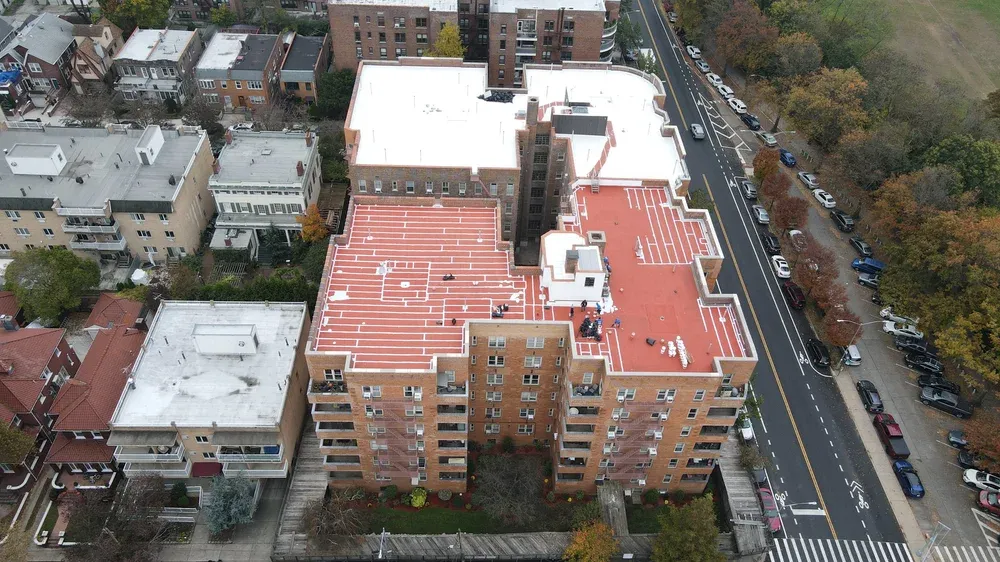

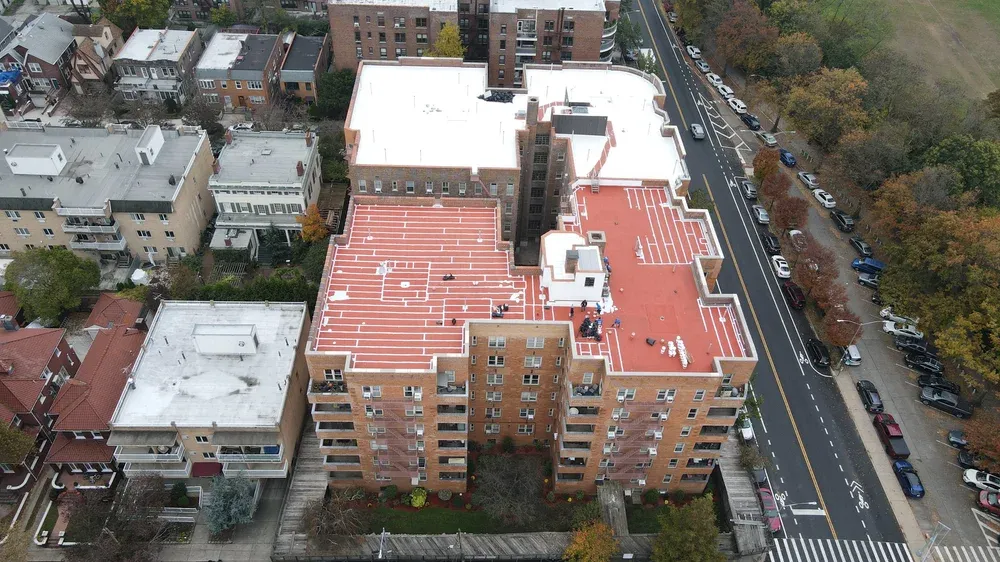
Every few years, a chunk of masonry falls from a New York City building facade. Sometimes it's a loose brick. Sometimes it's a larger section of parapet wall. In the worst cases, people get hurt. That's not speculation, it's documented history, and it's exactly why Local Law 11 exists.
For building owners, co-op boards, and property managers across the five boroughs, Local Law 11 isn't just a regulatory box to check. Misunderstanding the process, missing a deadline, or hiring the wrong team can result in violations, financial penalties, and, most seriously, a building facade that's genuinely unsafe for the people below it.
Here's what experienced professionals in NYC's facade restoration industry consistently recommend before the next inspection cycle begins.
What Local Law 11 Actually Requires
Local Law 11, formally known as the Facade Inspection Safety Program (FISP), requires owners of buildings taller than six stories in New York City to have their exterior walls and appurtenances inspected by a Qualified Exterior Wall Inspector (QEWI) on a recurring cycle. The current cycle, Cycle 9, runs through February 2025, with Cycle 10 deadlines already being phased in.
The inspection results in one of three possible designations:
- Safe, the facade is in good condition with no immediate repairs needed
- SWARMP (Safe With a Repair and Maintenance Program), conditions exist that require attention within a defined timeline
- Unsafe, immediate action is required; the NYC Department of Buildings must be notified and protective measures installed within 24 hours
Each designation triggers different obligations. A Safe filing closes the cycle. A SWARMP designation opens a repair timeline that must be completed before the next cycle. An Unsafe designation activates emergency protocols, including sidewalk sheds and potentially a DOB violation if the owner fails to act promptly.
What catches many building owners off guard is the scope of what counts as a "facade." It's not just the visible brick face of a building. Local Law 11 inspections cover parapet walls, balconies, fire escapes, cornices, window lintels, sills, caulking, and any exterior appendage that could pose a falling hazard.
Why the QEWI You Choose Matters More Than Most Owners Realize
Not everyone who calls themselves a facade inspector is qualified to file a FISP report with the Department of Buildings. Under Local Law 11, inspection reports must be prepared and certified by a licensed professional engineer or registered architect who holds QEWI designation. This isn't a formality, it's a legal requirement, and reports submitted by unqualified individuals are rejected and can leave a building in violation status.
Beyond credentials, the experience of the QEWI and the Local Law 11 contractors NYC building owners engage makes a significant practical difference in outcomes.
An experienced QEWI does more than walk the perimeter at street level. A thorough inspection involves close-up assessment, often via scaffolding, suspended scaffold, or drone-assisted imaging, to evaluate conditions that aren't visible from the ground. Hairline cracks in mortar joints, spalling behind a veneer, or corrosion in embedded steel anchors are the kinds of findings that a ground-level assessment misses and that later become unsafe conditions.
The difference between a SWARMP designation caught early and an Unsafe designation requiring emergency sidewalk shed installation often comes down to how thorough the initial inspection was.
The SWARMP Designation: What It Means and What Comes Next
Of the three possible inspection outcomes, SWARMP is the one most building owners underestimate. It sounds relatively benign, the building is safe, after all, but the designation carries real obligations.
Under FISP rules, SWARMP conditions must be repaired before the next filing deadline. That typically means a window of roughly five years, but it can be shorter depending on the cycle and when in the cycle the inspection occurs. The repair work must be certified as complete by the same QEWI who identified the conditions, and documentation must be filed with the DOB.
Industry professionals consistently flag two mistakes building owners make with SWARMP designations:
Waiting too long to begin repairs. Five years sounds like plenty of time. In practice, construction seasons in New York City are compressed by weather, permitting timelines, and contractor availability. Buildings that delay repairs until the final year of the cycle frequently face cost spikes and scheduling pressure that compromise quality.
Treating the repair list as a minimum. A SWARMP repair plan addresses the conditions the QEWI identified at the time of inspection. It doesn't account for conditions that develop between cycles. Buildings that use the repair process as an opportunity for comprehensive facade assessment, rather than just checking required boxes, tend to have fewer emergency situations and lower costs over time.
What a Responsible Local Law 11 Facade Inspection Actually Looks Like
The quality of Local Law 11 facade inspection services varies considerably across the NYC market. Some inspection firms are primarily administrative operations that subcontract the physical inspection and prioritize volume over thoroughness. Others bring qualified engineers who understand masonry behavior, water infiltration patterns, and the structural dynamics of older NYC building stock.
A responsible inspection process should include:
- A pre-inspection review of prior FISP filings and any existing DOB violations
- Ground-level and close-up visual assessment of all facade elements
- Documentation of every condition found, including photographs and location mapping
- A written report that clearly explains findings in terms a building owner or property manager can act on
- A repair scope that prioritizes conditions by severity and provides a realistic timeline
Roman NYC Restoration, which operates as a certified QEWI team serving buildings across all five boroughs, structures its inspections to give building owners a clear understanding of both current compliance status and what's coming. That kind of forward visibility is particularly valuable for co-op boards and property managers who need to budget for facade work over multi-year capital plans.
Violations, Penalties, and the Cost of Non-Compliance
Missing a FISP filing deadline is not a minor administrative issue. The NYC Department of Buildings issues civil penalties for late filings that begin at $1,000 per month for buildings that fail to file by the cycle deadline. Buildings with outstanding Unsafe designations that aren't addressed promptly face additional penalties and potential DOB enforcement action.
Beyond the financial penalties, there's the liability exposure. A building owner who receives an Unsafe designation and fails to install protective measures faces personal liability if someone is injured by falling facade material. New York courts have consistently held property owners to a high standard of care in these situations.
The sidewalk shed itself, the scaffolding structure required when an Unsafe designation is in place, carries its own costs. In New York City, sidewalk shed rental can run several thousand dollars per month depending on building size and configuration. Buildings that stay ahead of their FISP cycle through regular maintenance and early repair typically avoid the shed altogether. Those that don't can find themselves paying shed rental costs for months or years while violations get resolved.
A Practical Timeline for the Next Cycle
For building owners who want to approach their next FISP filing without the pressure of a looming deadline, experienced Local Law 11 contractors NYC professionals recommend the following sequence:
Start the conversation with a qualified QEWI at least 18 to 24 months before the filing deadline. This allows time to schedule and complete the inspection, develop a repair scope if needed, obtain permits, complete work during a favorable construction season, and file the completed report before the deadline.
Buildings with known existing conditions, prior SWARMP designations, visible cracking, or deferred maintenance, should start earlier. Emergency facade repairs in New York City are significantly more expensive than planned work, and the costs compound when violations are involved.
The facade of a New York City building is a public safety matter as much as a private property concern. The law reflects that reality. Building owners who treat Local Law 11 compliance as a long-term asset management discipline rather than a periodic regulatory burden are consistently better positioned, financially and legally, than those who don't.
Billy Duka is a facade restoration specialist and second-generation contractor with over 35 years of experience working on New York City buildings. He leads Roman NYC Restoration, a certified Local Law 11 compliance and facade repair firm serving building owners, co-op boards, and property managers across all five boroughs. Learn more at romanll11nycrestoration.com.
















Sign in to leave a comment.