

The concept of "loose parts" was first introduced by architect Simon Nicholson in the 1970s, who proposed that the degree of inventiveness and creativity in an environment is directly proportional to the number and kind of variables within it. In early childhood education, loose parts refer to open-ended materials that can be moved, carried, combined, redesigned, lined up, and taken apart and put back together in multiple ways. Unlike traditional toys, which often have a single intended purpose, loose parts empower children to become the directors of their own play. This theoretical framework is a staple in modern pedagogical approaches, as it fosters critical thinking and problem-solving.
Selecting and Sourcing Quality Resources
One of the most appealing aspects of loose parts play is that the resources are often inexpensive or even free, yet they offer infinite possibilities. Materials can be categorized into natural items—such as pinecones, stones, seashells, and sticks—and upcycled or man-made items like cardboard tubes, wooden pallets, old tires, and fabric scraps. The key is to provide a wide variety of textures, weights, and sizes to stimulate the senses and encourage diverse physical movements. When sourcing these materials, practitioners must ensure they are safe, clean, and durable enough for heavy use.
The Role of the Adult in Facilitating Play
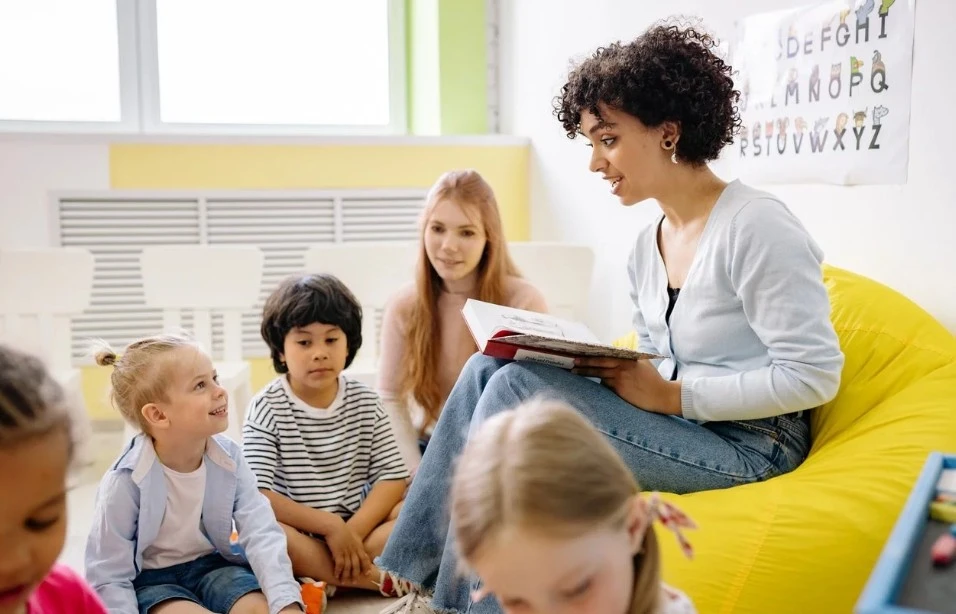
Facilitating loose parts play requires a shift in mindset for many educators; it is about "stepping back" rather than leading. The adult’s role is to observe, document, and occasionally offer "scaffolding" to extend the child's thinking without taking over the activity. This requires a high level of professional patience and the ability to recognize "teachable moments" that arise naturally during play.
For example, if a child is struggling to balance a plank on two logs, the facilitator might ask an open-ended question rather than fixing the structure for them. Developing this nuanced approach to interaction is a significant focus for those studying for a diploma for the children and young people's workforce, as it emphasizes the importance of child-led learning and the psychological development of the young mind.
Supporting Holistic Development and Skills
Loose parts play is not just about fun; it is a rigorous workout for a child’s holistic development. Physically, children develop fine and gross motor skills by lifting, stacking, and manipulating various objects. Cognitively, they engage in mathematical concepts like sorting, counting, and understanding spatial relationships. Socially, loose parts often require children to negotiate and collaborate, as they might need to work together to move a heavy object or build a complex structure. The ability to observe and assess these developmental milestones is a critical competency for any childcare provider.
Designing the Physical Play Environment
The layout of the play space is just as important as the materials themselves. Loose parts should be stored in a way that is accessible to children, using transparent containers or low shelving to encourage independence. The environment should be "inviting," with materials presented in a way that sparks curiosity—sometimes referred to as an "un-curated provocation." This might involve placing a basket of river stones next to a collection of mirrors to see how children explore reflections and patterns.
Addressing Challenges and Sustainability
While the benefits of loose parts are clear, practitioners often face challenges such as managing the "mess" or convincing parents of the educational value of playing with "junk." Effective communication is vital here; educators must be able to articulate the learning outcomes to stakeholders. Furthermore, maintaining a loose parts collection requires ongoing effort to replace broken items and introduce new variables to keep the play fresh.
The Future of Play-Based Learning
As we look toward the future of education, the move away from rigid, plastic-based toys toward more organic and open-ended materials seems set to continue. Loose parts play aligns perfectly with modern values of sustainability and creative resilience. By encouraging children to see the potential in ordinary objects, we are preparing them for a world that requires innovative thinking and the ability to adapt to new situations.

























Sign in to leave a comment.