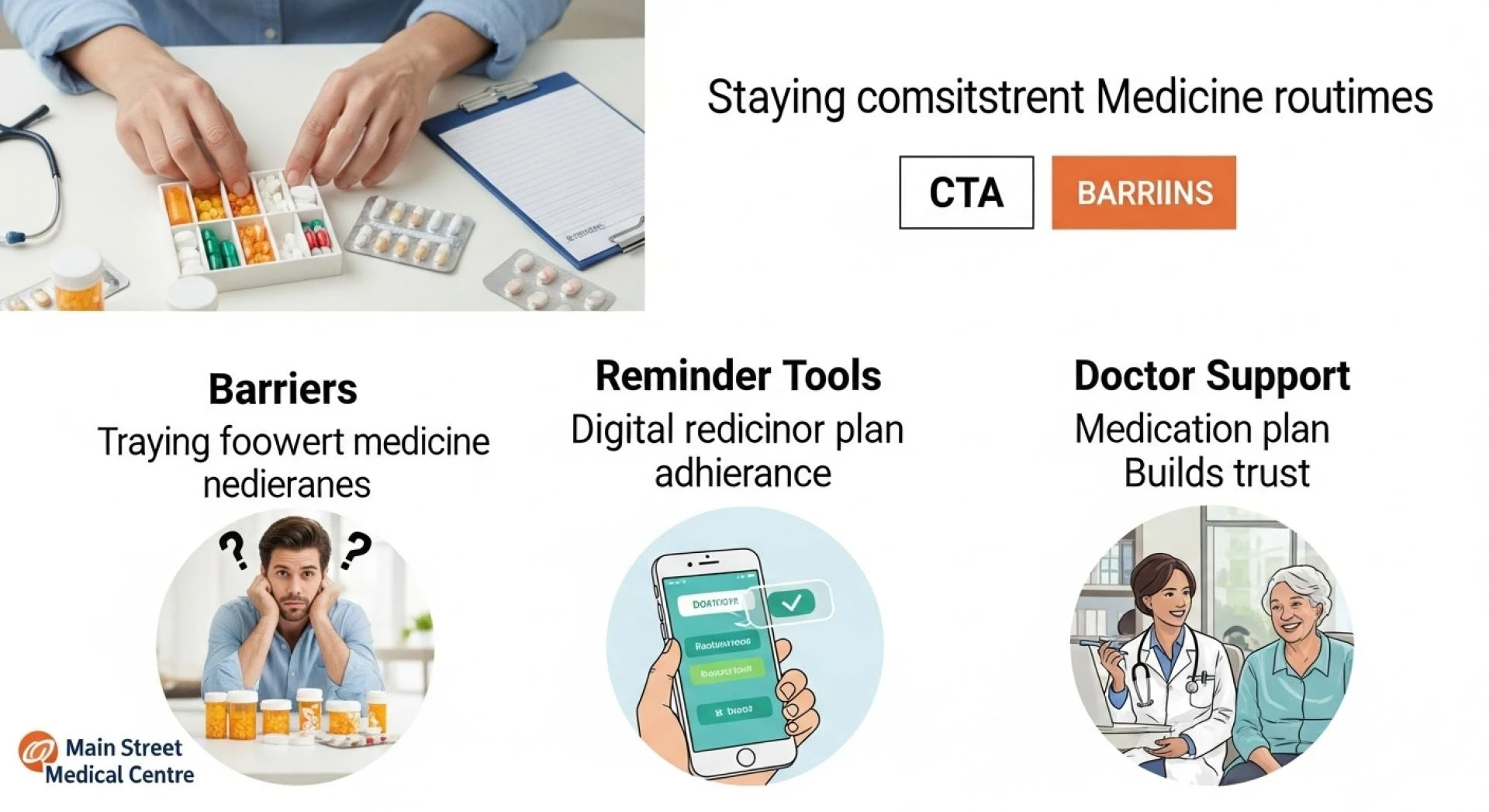
Managing a chronic condition is a lifelong commitment.
Between doctor visits, diet changes, and remembering the pill schedule, you feel exhausted. Most people don’t mean to skip a dose or stop a medication, it just happens.
Life gets busy, routines slip, and you say to yourself, “I’ll take it later.” But in chronic disease management, this “later” can cost you BIG. Because medication adherence is the lifeline of your recovery process & staying out of hospital.
Most layman don’t even know its importance and are risking their lives.
Main Street Medical Centre can help you through this struggle. As a GP-owned and managed family practice in Osborne Park, Perth, we provide medical and allied health services with empathy, education, and continuity.
Let’s understand the research behind why adherence to treatment plan can take you toward a healthier life, and what are the consequences otherwise.
Importance of Medication Adherence in Chronic Disease Management
As most of you already know, chronic conditions are those who stay with you forever. E.g. heart disease, diabetes, chronic obstructive pulmonary disease (COPD), arthritis.
They can’t be cured, only managed. Hence, they depend heavily on consistent medication to prevent complications and stay stable. Research shows if you don’t maintain adherence to treatment plans, there are more chances of worsening, and can even lead to death.
But if we look at data, most patients don’t realise importance of taking medicine on time. Researches revealed that about half of all patients don’t take their medications as prescribed. A review on COPD revealed nonadherence rates range 22 % to 93 % among patients.
In Australia alone, around 4 in 10 people with chronic conditions admit to missing doses or stopping medicines without their doctor’s advice. Why? Let’s find out.
Barriers to Medication Adherence
Understanding the reasons behind medication nonadherence allow us to address the issue. Research points out toward multiple overlapping barriers.
1. Patient Beliefs and Perceptions
Beliefs about the necessity of medicines influence if a patient follows their regimen. Plus, there are some fears about becoming dependent too.
In studies of mental health disorders, misperception about medications, low insight, stigma, fear of addiction, and concern about adverse effects were repeatedly identified. These beliefs are completely understandable, but they can affect patient compliance.
2. Treatment Complexity
The more medications, dosing times, and instructions, the harder it is to follow them all.
Studies show that complicated treatment plans mostly lead to missed doses. Diabetic medication adherence reviews clearly found the link of heavy dosing and long medication histories with poorer adherence.
3. Tolerance to Drugs
Sometimes medicines don’t make you feel great right away. Side effects like nausea, dizziness, or tiredness can make you want to stop taking them. In COPD, rheumatic diseases, and diabetes studies, this is a consistent barrier.
Patients weigh the discomfort of side effects more than abstract benefit of disease control.
4. Disease Severity & Symptom Changes
This one’s very common. If symptoms are mild or intermittent, people stop taking medication because they think the disease is cured. At the same time, severe disease or worse symptoms can also make adherence harder.
The review of major depressive disorders linked non-adherence rates to illness severity.
5. Comorbidities & Mental Health
Having more than one chronic illness means more medicines and appointments. And even if you have no other condition, there are chances of depression to co-exist with chronic diseases. That’s when most patients leave their chronic illness medication routine.
The scientific reviews found depression to be a strong predictor of nonadherence.
6. Socioeconomic Status
Cost of medications, health insurance or subsidy gaps, low health literacy, unstable housing or work schedules affect ability to maintain long term treatment management. The scoping review of chronic diseases found that cost of medications is among the top barriers.
The Australian observational study also showed that male gender, ageing and life-status correlate with nonadherence.
7. Access to Care & Health System Barriers
When regular GP visits are hard to schedule or medication reviews are missed, it’s easier to fall behind on treatment. Difficulty obtaining refills, seeing multiple prescribers, differences in pharmacies, and fragmented care, all add up.
Australian patients in chronic disease management plans don’t show adherence due to systemic or process issues.
Feeling Better Leads to Skipping Doses: Paradox of Medication Adherence
Okay so, let’s talk about one of the common phenomena behind non-adherence.
When patients start to feel better, they assume they no longer need the medication, and start skipping. E.g. for cardiovascular medications in Australia, persistence and adherence drop off significantly after the first year.
But that’s a trap only, because chronic diseases can’t be cured completely. Stopping or skipping medication exposes patients to relapse, exacerbation, or irreversible harm. For example, blood sugar levels can spike, or blood pressure can rise again.
Let’s discuss the consequences in detail.
Impact of Nonadherence on Health Outcomes & System Costs
The consequences of nonadherence are serious, due to both health and legal reasons. Research has shown that not taking medicines as prescribed leads to:
· Worsened disease outcomes
Increased rates of hospitalisation, progression of disease and severe symptoms.
· Higher risk of complications and mortality
The control of disease slips out of your hand. E.g. hypertension leads to stroke & heart failure, while mental illness moves toward suicide risk.
· Increased health care utilisation and cost
The healthcare system will pay the price too. An Australian pharmacy-led intervention report estimated nonadherence cost over AUD 10.4 billion annually.
· Reduced quality of life
There’ll be worsening condition, complications, & reduced independence.
These outcomes remind us that how essential patient compliance is for both individual wellbeing and sustainable care. So, let’s find a solution together.
Proven Strategies to Increase Medication Adherence
Research shows that multi-component, patient-centred approaches are more effective than single interventions. Below are evidence-based strategies:
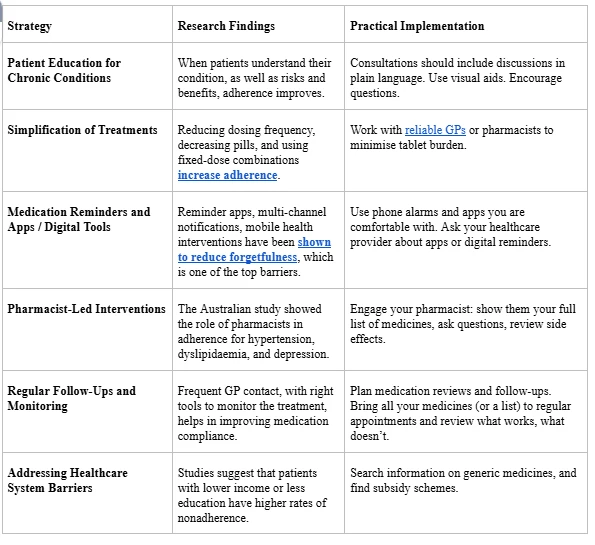
Let’s summarise with some quick and easy-to-follow tips for y’all.
Best Practices for Patients & Families
1. Keep a medication schedule chart or use a weekly pill organiser.
2. Set reminders (alarms, phone apps, sticky notes) for regular doses.
3. Keep a written list of all medications, including over-the-counter and supplements, and
share this with every healthcare provider.
4. Discuss side effects openly with your GP and DO NOT stop without guidance.
5. Involve family or support persons in the journey. Sometimes having someone check in can
help adherence.
6. Use community services, home medication reviews, or chronic disease care plans.
7. Always consult to a trusted GP for chronic disease management.
Need support staying on your chronic illness medication routine?
Main Street Medical Centre: Your Partner in Medication Adherence
We provide dedicated chronic disease management, medicine reviews, patient education, and close follow-up for a comprehensive chronic disease management.
As an AGPAL-accredited clinic owned and run by GPs in Osborne Park, we uphold high standards of clinical excellence and patient safety. Let’s work together to overcome barriers, ensure patient compliance, and help you live your best long-term healthy life.
























Sign in to leave a comment.