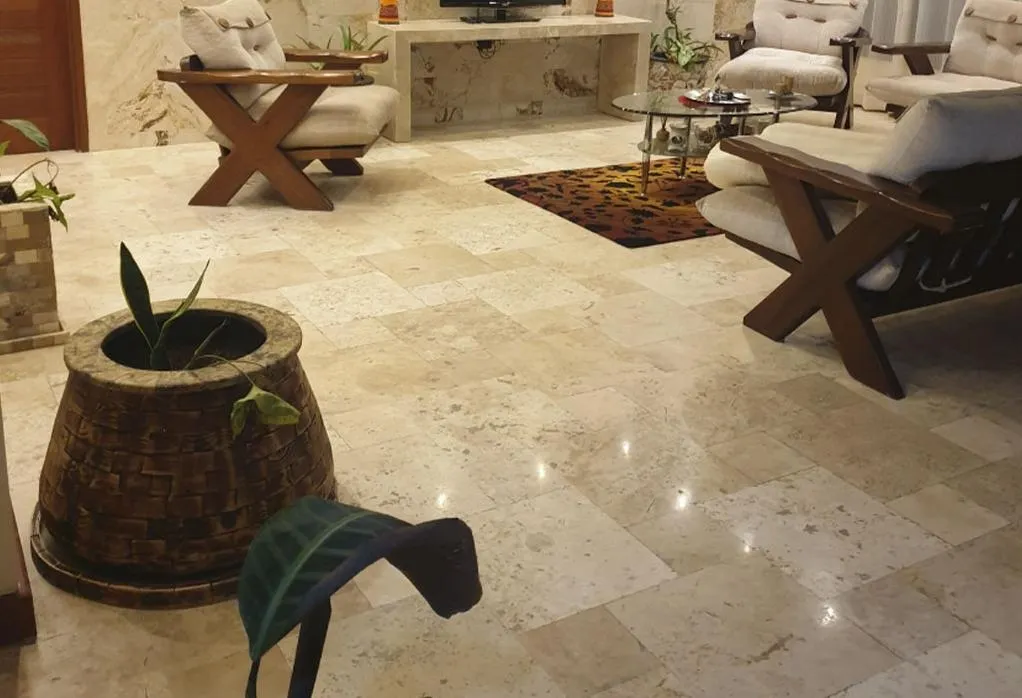

Preserving the structural integrity and surface quality of natural stone involves a logical understanding of its chemical composition. For homeowners who have installed travertine tiles kenya, maintenance is not about frequent labor but about consistent, calculated care. Travertine is a calcium-based sedimentary rock, which means its reaction to external substances is mathematically predictable. As a design firm, we view maintenance as a technical protocol to maintain the stone's performance and market value.
The Chemistry of Travertine Care
The most important variable in stone care is the pH scale. Because travertine is composed of calcium carbonate, it reacts instantly to acidic substances. This reaction, known as etching, is a physical change where the acid dissolves a thin layer of the stone.
Avoiding Acidic Reactions
To keep your surfaces intact, you must eliminate acidic cleaners from your inventory.
- Common Culprits: Lemon juice, vinegar, and many "all-purpose" supermarket cleaners contain citric or acetic acids.
- The Result: These liquids create dull spots on the stone that look like water rings but are actually surface damage.
- The Solution: Use only pH-neutral detergents specifically formulated for natural masonry. This prevents the chemical breakdown of the stone’s face.
Daily and Weekly Maintenance Protocols
In the Kenyan environment, dust and grit are the primary abrasive forces. If left on the floor, these particles act like sandpaper under the weight of foot traffic, gradually grinding down the finish of your travertine tiles kenya.
Dry Surface Management
Frequent sweeping or vacuuming is a functional requirement. Removing loose debris prevents micro-scratches that dull the stone over time. Use a soft-bristle broom or a vacuum without a beater bar to avoid mechanical impact on the tile edges.
Damp Mopping Techniques
When mopping, the ratio of cleaner to water must be precise. Over-saturating the stone with water is unnecessary and can lead to streaks if the water is hard.
- Water Quality: If you live in an area with high mineral content in the water, consider using filtered water for cleaning to avoid "calcification" on the stone surface.
- Mop Selection: Use a microfiber mop. It is more effective at lifting dirt from the natural pits of the travertine than a traditional string mop.
- Drying: Always dry the surface with a clean cloth after mopping to prevent the settlement of dissolved solids in the stone's pores.
The Mathematical Necessity of Sealing
Travertine is naturally porous. If you look at it under magnification, the surface is filled with microscopic voids. Without a barrier, liquids will migrate into these voids via capillary action, leading to deep-seated staining.
Selecting the Right Sealer
There are two primary types of sealers for travertine tiles kenya:
- Topical Sealers: These sit on the surface. They provide a high-gloss finish but can wear off in high-traffic zones, requiring frequent reapplication.
- Impregnating Sealers: These penetrate below the surface. They do not change the look of the stone but fill the internal pores to repel oil and water.
Reapplication Frequency
How often you seal depends on the volume of use. A kitchen floor may need sealing every twelve months, while a decorative wall feature might only require it every three to five years. A simple test is to drop a small amount of water on the tile; if the water beads up, the sealer is active. If it soaks in and darkens the stone, it is time to reapply.
Dealing with Pits and Holes
One of the defining characteristics of travertine is its naturally occurring holes. Over years of use, the factory-applied filler in these holes may occasionally pop out or wear down.
Repairing Voids
If you notice a new hole, it is a straightforward fix. You can use a stone epoxy or a specialized polyester resin colored to match your tile. This prevents dirt from accumulating in the void and maintains the flat plane of the floor. Filling these gaps as they appear is a smart way to avoid more extensive restoration costs later.
Grout Line Upkeep
The grout between your travertine tiles kenya is often more porous than the stone itself. If the grout becomes dark, it creates a visual "grid" that detracts from the stone's beauty. Using a specialized grout brush and a neutral cleaner will keep the lines looking fresh. Avoid using bleach, as it can weaken the grout structure over time.
Long-Term Value and Restoration
Unlike ceramic tiles, which must be replaced if they are badly scratched, travertine can be professionally refinished. If the stone has lost its luster after a decade of use, a technician can use diamond-grit pads to grind away the top micron of the stone, revealing a fresh layer beneath. This ability to be "renewed" makes stone a superior financial choice for permanent residences.
Managing the condition of your stone is about understanding the physics of the material. By following a neutral cleaning routine and maintaining the sealer barrier, you keep the stone in its peak state. At Stone Arts, we provide the technical guidance and high-quality materials required to make your stone installations remain a high-value asset in your Kenyan home. We believe that stone is a lifelong investment that simply requires the right logic to maintain.

























Sign in to leave a comment.