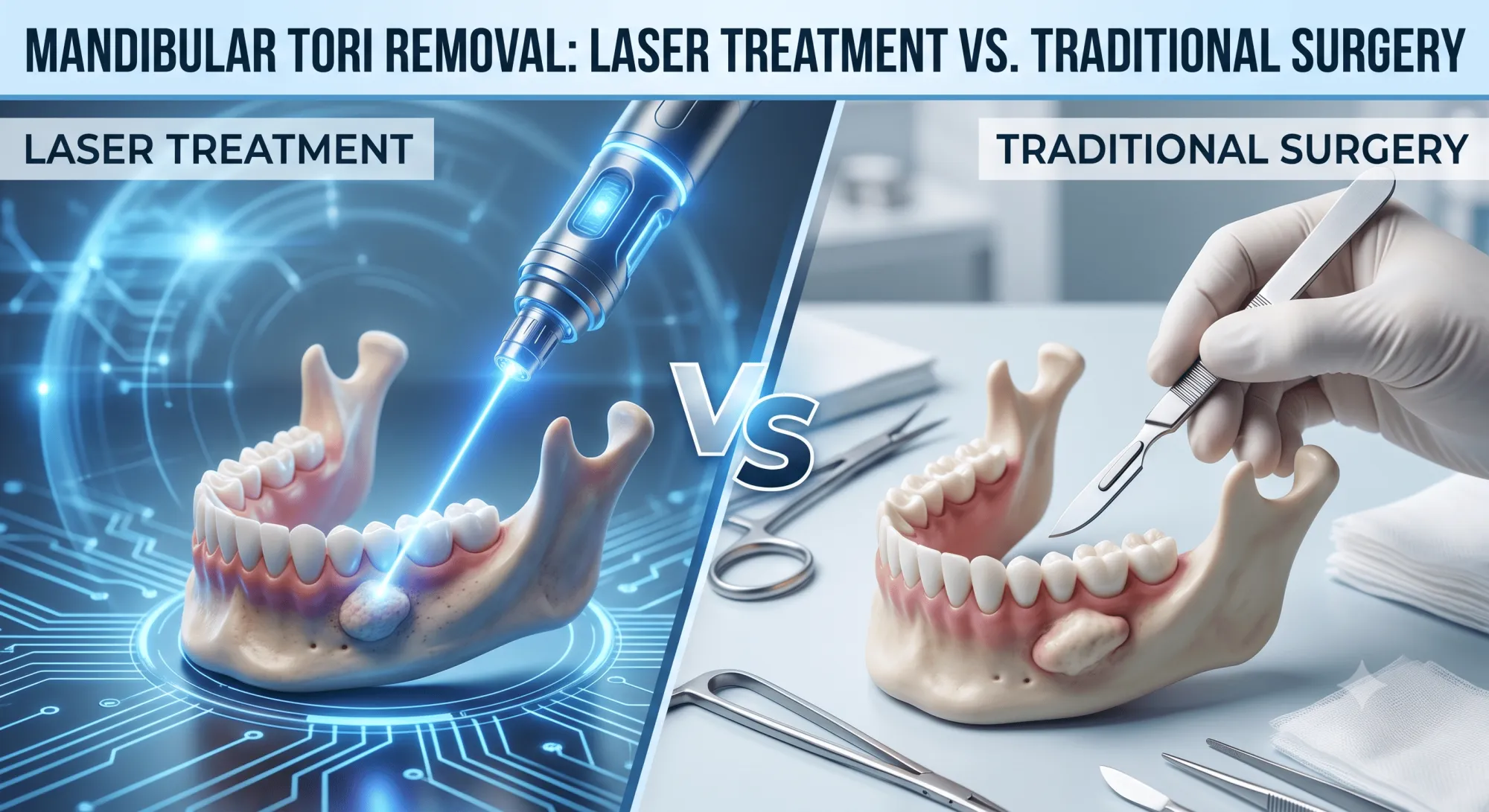

Running your tongue along the inside of your lower jaw and feeling a firm, bony bump can be alarming the first time you notice it. In most cases, that bump is completely harmless. It is a mandibular torus, a slow-growing bony growth on the jawbone that is far more common than most people realize. This guide explains what causes these growths, when they actually need attention, and how laser Mandibular Tori treatment compares with traditional surgical removal.
What Are Mandibular Tori?
Mandibular tori are bony protrusions that develop on the inner surface of the lower jaw, usually near the premolars, underneath the tongue. According to research published by the National Institutes of Health, these growths are found almost exclusively in adults and, in more than 90 percent of cases, appear on both sides of the jaw at once.
They are made of dense, healthy bone rather than any kind of tumor, and the exact cause is not fully understood. Researchers believe genetics plays a strong role, since mandibular tori tend to run in families, and chronic teeth grinding or clenching (bruxism) is also thought to contribute by placing repeated stress on the jawbone.
Do Mandibular Tori Need to Be Treated?
Most of the time, no. Mandibular tori are typically painless and are often discovered by accident during a routine dental exam or an imaging scan taken for an unrelated reason. If a torus is small, symmetrical, and not causing any problems, your dentist will usually simply monitor it at future visits.
Removal is generally recommended only when growth starts to interfere with daily life. Common reasons dentists suggest treatment include:
- The tori are large enough to make chewing, speaking, or brushing difficult
- The overlying tissue keeps getting irritated, bitten, or ulcerated during meals
- A denture, retainer, or other dental appliance cannot fit properly because of the growth
- The tori continue to grow noticeably larger over time
If none of these apply, there is usually no rush to intervene. Mandibular tori do not resolve on their own, but they also do not require treatment simply because they exist.
Mandibular Tori Removal: Laser vs. Traditional Surgery
When removal is genuinely needed, there are two main approaches, and understanding the difference helps you know what to expect.
| Factor | Traditional Surgery | Laser Removal |
| Technique | An incision is made in the gum tissue to expose the bone, which is then reshaped or removed with surgical instruments. | A laser is used to reduce or remove the bony growth, often with little to no incision needed. |
| Bleeding | Some bleeding is expected, similar to other minor oral surgeries. | Bleeding is typically minimal, since the laser seals tissue as it works. |
| Healing time | Recovery generally takes one to two weeks, with stitches to manage. | Recovery is often faster and more comfortable due to less tissue trauma. |
| Best suited for | Larger or more complex tori that need more extensive reshaping. | Smaller to moderate tori where a less invasive option is appropriate. |
| Regrowth | Tori can regrow in some cases regardless of the removal method used, especially if grinding or clenching continues. | Same risk of regrowth as traditional surgery if the underlying cause is not addressed. |
Traditional Surgical Removal
In traditional Mandibular Tori treatment, the area is numbed with local anesthetic, an incision is made in the gum, and the excess bone is carefully removed or smoothed down. The gum is then closed with stitches. This approach has a long track record and remains the standard choice for larger or more complicated growths.
Laser Removal
Laser removal uses focused light energy to reduce the bony growth, often without a traditional incision. Because the laser seals blood vessels during treatment, patients typically experience less bleeding and a more comfortable recovery. It is a good option for smaller to moderate tori, though very large growths may still require a traditional surgical approach.
Neither method fully guarantees the tori will not return, particularly if an underlying habit like bruxism continues, so managing that root cause with a night guard or other treatment is an important part of a long-term plan.
What to Expect During Recovery
Whichever method is used, most patients can expect:
- Mild swelling and tenderness for the first few days
- A soft-food diet for about a week while the tissue heals
- Some numbness or altered sensation near the site, which usually improves with time
- A follow-up visit to confirm the area is healing as expected
Full healing can take up to four weeks, though most people are back to normal eating and speaking well before that.
Making the Right Choice for You
The right approach comes down to the size of the tori, your overall oral health, and your dentist's recommendation after an exam. Smaller tori that cause mild irritation are often good candidates for laser removal, while larger, more complex growths may still require traditional surgery. What matters most is getting an accurate evaluation, not guessing based on symptoms alone.
When to See a Dentist
You do not need to see a dentist simply because you discover a bony bump on the inside of your jaw. But it is worth scheduling an evaluation if the growth is painful, growing larger, interfering with a denture or appliance, or making it hard to eat or speak comfortably. A dentist can confirm the diagnosis, rule out anything else, and help you decide whether watching and waiting or Mandibular Tori treatment is the right next step.
The Bottom Line
Mandibular tori are a common, usually harmless finding, and most people never need to have them removed. When treatment is necessary, both laser and traditional surgical removal are safe, well-established options, each with its own advantages depending on the size and complexity of the growth. If a bony bump under your tongue is starting to bother you, an experienced dental team can walk you through your options and help you choose the approach that fits your situation best.

























Sign in to leave a comment.