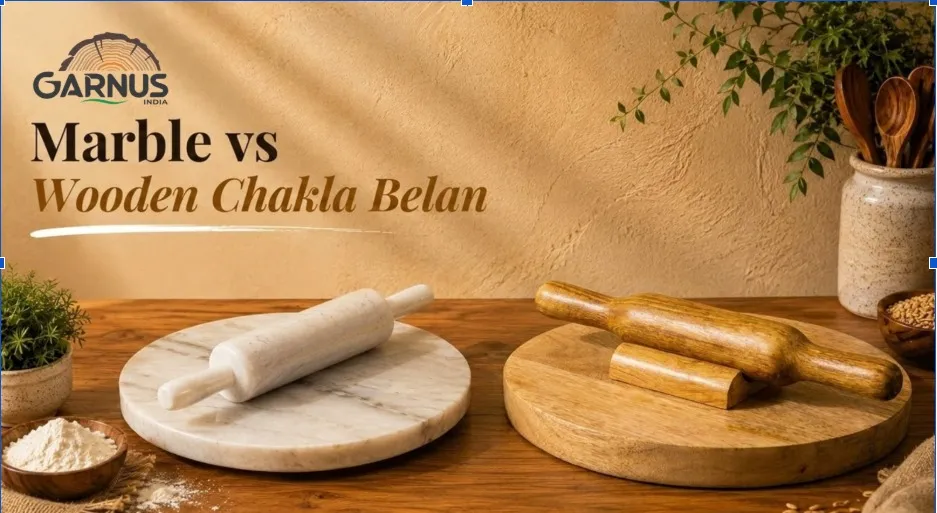

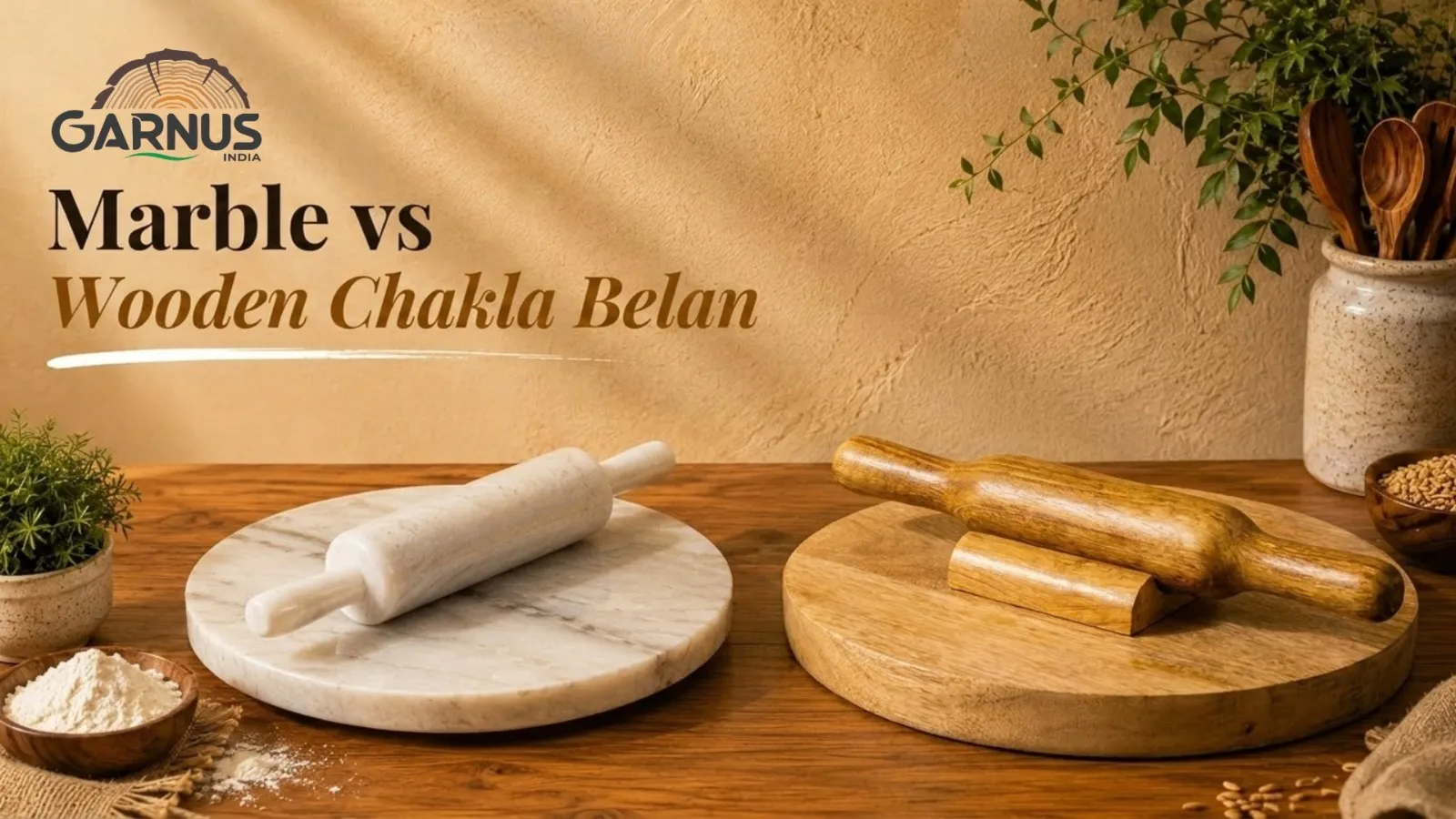
“Millions of Indian kitchens, one common thing— chakla belan. But there is one question that every new house has: marble or wooden, which one to buy? This is not only a choice of material, this is a choice of your cooking habit, kitchen space, and long-term convenience.
What You’ll Learn
In this blog you’ll learn the difference between marble and wooden chakla belan and what’s the better choice for your kitchen. You’ll understand why marble’s cool surface is ideal for pastry work and why wooden chakla belan is a more practical option for Indian cooking. Along with this we’ll also discuss between teak wood, sheesham and fusion chakla belan which will be most suitable according to your need. And at last we’ll learn why wooden chakla belan is not just a tool, but an eco-friendly, long-lasting investment.
Understand The Role
Chakla belan is the foundation of the Indian kitchen. But there are so many options available in the market that confusion becomes inevitable. Both marble and wood give different feelings— and both have their own strong points.
Now lets understand:
Marble chakla Belan
The biggest advantage of marble chakla belan is that its surface is naturally cold. Dough doesn’t stick to it easily, and rolling is smooth. This is the reason confectionery and pastry lovers prefer marble. But its weight is considerably heavy. And if dropped neither the chakla nor the floor will survive. Its maintenance is also sensitive— certain cleaners can damage its surface.
Wooden Chakla Belan
If we talk about wooden chakla belan then it is a more pragmatic choice for Indian cuisine. Because of its light weight they’re easy to handle, comfortable for daily use. Teak wood chakla & belan with a stand is one step ahead— because of the stand, the storage problem is sorted. This is not just a kitchen tool, it’s a one complete setup.
If you want a more premium and rustic feel, then sheesham chakla and belan is an excellent option. Sheesham wood is known for its durability and dark rich tone— this brings a warm, earthy aesthetic to the kitchen that you can’t see in marble.
And if you want modern functionality with a traditional look, then fusion chakla and belan is an interesting choice— in which you’ll find contemporary design sensibility with a wooden base.
Then What’s the Actual Difference?
Marble has a heavy and cold surface which is perfect for pastry work, but can be impractical for daily Indian cooking.
Wooden chakla belan are lightweight, warm, and versatile— they perform consistently. Wooden products age gracefully— with time their value and feel becomes better, whereas marble has the risk of cracking.
One more important point— wooden chakla belan are eco-friendly. Made with sustainable wood sources and chemical-free better for your kitchen and environment.
Conclusion
If you want to invest in a product that can be used daily and is reliable, visually representable and work for years— then wooden chakla belan is clearly a better choice.
And if you want your choice genuinely premium, then you can explore Garnus India handcrafted wooden kitchen collection.
From teak wood to sheesham wood, every product has craftsmanship and quality.

























Sign in to leave a comment.