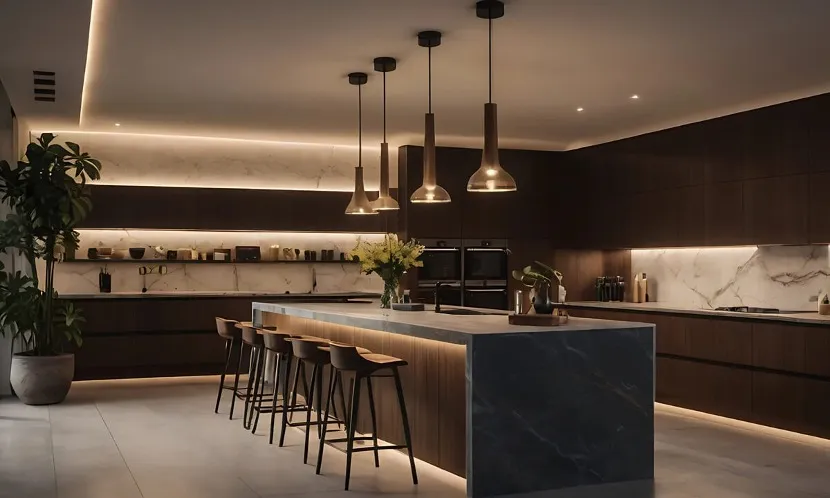

LED strip and linear lighting have evolved from simple decorative accents into core tools for shaping how modern spaces look, feel, and perform. For lighting designers, engineers, contractors, and integrators, mastering these systems is no longer optional—it is essential to delivering projects that balance aesthetics, efficiency, and long-term reliability.
This guide distills practical, field-tested knowledge about LED strip and linear lighting so professionals can specify, design, and implement solutions with confidence. From photometric fundamentals and product selection to installation details, control strategies, and emerging trends, you will find a structured overview that connects technical detail with real-world application.
What Makes LED Strip & Linear Lighting Unique?
At first glance, LED strip lights and linear fixtures may appear similar—both offer continuous lines of light—but the distinction lies in design intent and construction.
- LED Strip Lights are flexible PCBs mounted with small diodes, ideal for accent and indirect lighting.
- Linear Lighting Systems are rigid or modular fixtures designed for precision, uniform distribution, and architectural integration.
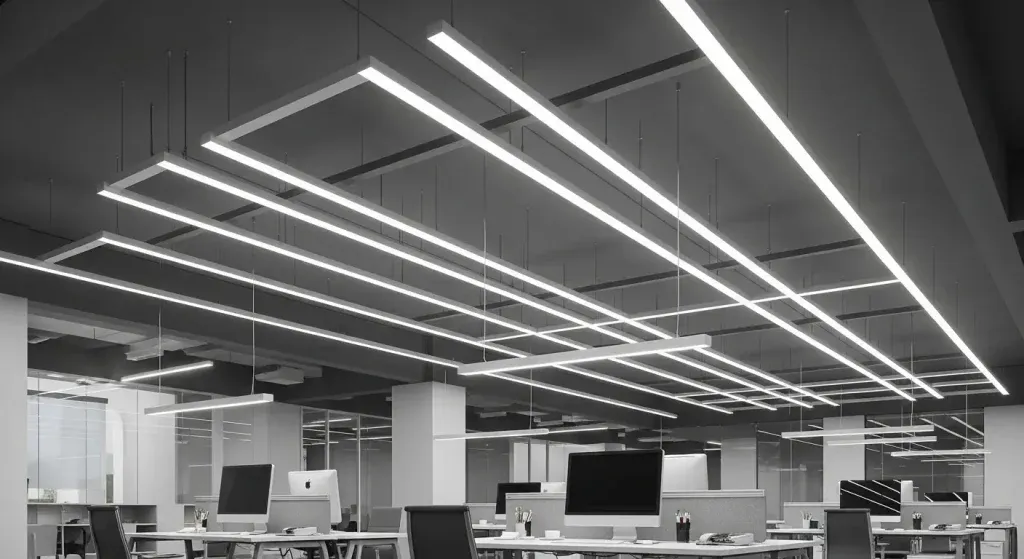
While LED strips excel in adaptability and ease of installation, linear lighting provides structural integrity, professional optics, and complex control options. The key for professionals is understanding where each type fits best within a project.
The Evolution of LED Linear Design
Early LED strips were simple—adhesive backing, single color, and limited brightness. Today’s designs are more sophisticated thanks to advancements such as:
- COB (Chip-on-Board) technology, which eliminates visible light dots by densely packing diodes.
- Adjustable white and RGBW configurations, offering customizable ambience and mood control.
- Integrated control systems, compatible with DALI, DMX, Casambi, and smart home platforms.
- Precision optics, using diffusers and lenses for glare-free illumination.
These innovations enable professionals to treat LED strip and linear lighting not only as decoration but as primary light sources in modern architecture.
Understanding Key Photometric Concepts
For professional lighting design, performance metrics matter as much as visual aesthetics. The following parameters are critical when evaluating LED strips and linear systems:
- Luminous Efficacy (lm/W): Efficiency of light output relative to power consumption.
- CRI (Color Rendering Index): Indicates color accuracy; high-end applications require CRI ≥ 90.
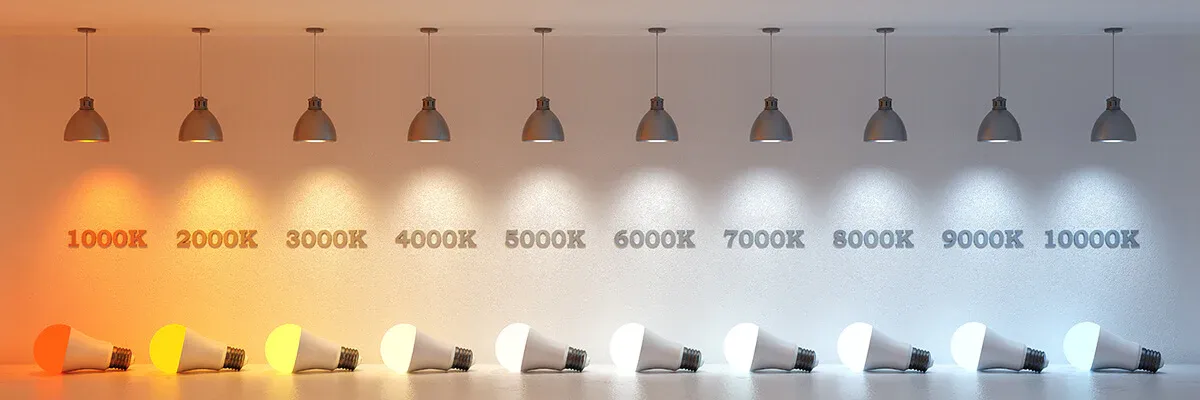
CCT (Correlated Color Temperature): Defines warmth or coolness of light, typically between 2200–6500 K.
- R9 Value: Represents red color rendering capability—often overlooked but critical for retail and hospitality.
- MacAdam Steps/Binning: Ensures color consistency across products and batches.
- UGR (Unified Glare Rating): Relevant to linear fixtures, UGR < 19 is preferred in workplaces.
Lighting professionals rely on these metrics to specify products that balance energy savings with visual comfort and design integrity.
Selecting the Right LED Strip for Each Application
Every project has unique technical and aesthetic demands. The following guidelines help match LED strip types to professional applications:
- Accent Lighting (Cove, Display, Furniture): Choose flexible strips with a medium power density (10–15 W/m), 90+ CRI, and 2700–4000 K CCT.
- Task Lighting (Desks, Kitchens, Workshops): Opt for high-output strips (≥20 W/m) with uniform diffusion and dimmable drivers for performance focus.
- Architectural or Commercial Installations: Use COB or side-emitting strips with aluminum profiles for seamless aesthetics and heat dissipation.
- Outdoor or Wet Environments: Ensure IP65–IP68 protection with silicone encapsulation to withstand moisture and UV exposure.
- Dynamic and Entertainment Spaces: Employ RGB, RGBW, or addressable digital strips (WS2812, SPI) for programmable effects.
Choosing LED strips with correct specifications determines not just lighting quality—but long-term reliability and maintenance cost.
Integration with Linear Profiles and Diffusers
Linear lighting isn’t only about LEDs—it’s also about mechanical and optical integration. Aluminum profiles, also known as extrusion channels, are essential for both aesthetic and functional reasons. They:
- Act as a heat sink to improve LED lifespan
- Enable uniform diffusion with opal or frosted covers
- Offer sleek mounting options (surface, recessed, suspended)
Pairing LED strips with suitable linear housings ensures professional-grade light quality and durability.
Power and Control Systems for Professionals
Behind every successful lighting system lies careful electrical planning and control design. Professionals must calculate voltage drop, choose proper drivers, and ensure safe and efficient operation.
1. Voltage and Wattage Calculation
- Total length × power per meter = total wattage.
- Add 10–15% headroom to driver capacity.
- Choose 12V or 24V DC based on installation length and voltage-drop tolerance.
2. Dimming and Control
Modern LED systems support diverse control interfaces:
- 0–10V dimming for simple commercial setups.
- PWM control for flicker-free performance.
- DALI or DMX for large-scale architectural projects.
- Wireless control (Bluetooth Mesh, Zigbee, or Wi-Fi) for flexible smart integrations.
A well-designed system balances energy efficiency with user experience.
Heat Management and Lifespan Considerations
LED performance degrades with temperature. Professionals must address thermal management through proper installation and component selection:
- Always mount strips on thermally conductive materials (aluminum profiles).
- Ensure adequate ventilation in enclosed spaces.
- Evaluate ambient temperature during operation.
Reliable manufacturers publish lumen maintenance data, e.g., L80B10 @ 50,000 hours, indicating that 80% of light output remains after that usage time—an essential metric for long-term planning.
Understanding IP Ratings and Durability
When selecting linear lighting for demanding environments, professionals should assess ingress protection (IP) ratings:
- IP20 – Indoor, dry conditions.
- IP44–54 – Moisture-resistant, bathroom or corridor use.
- IP65–67 – Wet or outdoor applications.
- IP68 – Fully waterproof, suitable for submerged installations.
Material quality—such as silicone encapsulation, UV-resistant housing, and corrosion-free connectors—further ensures performance longevity.
Aesthetic Detailing: Uniformity and Light Quality
In high-end environments like galleries, hotels, or luxury residences, visual uniformity defines craftsmanship. Professionals should evaluate:
- Distance between LEDs and diffuser cover
- Consistency in brightness along extended runs
- Matching of color temperature across multiple drivers
Using optical diffusers or high-density COB strips ensures smooth, homogeneous luminance without “hotspots,” maintaining architectural integrity.
Linear Lighting in Modern Architecture
The popularity of linear lighting lies in its fusion of form and function. Designers use continuous light lines to sculpt spatial perception—highlighting edges, defining planes, and guiding movement.
Common professional implementations include:
- Recessed linear slots in ceilings and walls
- Perimeter lines to emphasize geometry
- Suspended linear pendants for workspaces
- Integrated lighting in furniture and joinery
With tailored linear systems, professionals can construct seamless, glare-free light experiences that adapt to each environment’s requirements.
Trends Shaping the Future of Linear Lighting
The LED lighting industry evolves rapidly. Professionals should stay ahead of these emerging trends:
- Tunable White and Human-Centric Lighting (HCL): Adaptive lighting that mimics daylight rhythms improves well-being and productivity.
- Smart & IoT-Connected Lighting: Integration with sensors, apps, and networks for automation and analytics.
- Sustainability & Circular Design: New modular systems allow reuse, repair, and material recycling to reduce waste.
- Microlinear Aesthetics: Ultra-compact profiles (<10 mm width) for invisible architectural integration.
- High Visual Comfort Standards: Low-glare optics and diffusers designed for WELL and LEED-certified projects.
Forward-thinking professionals use these innovations not just to illuminate spaces, but to define their atmosphere and sustainability footprint.
Challenges Professionals Commonly Face
Even experienced designers encounter challenges when implementing LED strip or linear projects. The most frequent include:
- Voltage drops across long runs when improperly powered.
- Color mismatch from mixed production bins.
- Inconsistent diffusion when profiles are mismatched to strip density.
- Installation difficulties in tight or curved areas.
- Driver compatibility issues with control systems.
A comprehensive technical plan, detailed product data, and coordination with suppliers can prevent most of these pitfalls.
Collaborating with Reliable Manufacturers
Professional lighting results depend heavily on manufacturer expertise and consistency. A reliable partner should provide:
- Complete photometric and electrical data
- BIS/UL/CE/LM-80 certifications
- Transparent warranty terms
- Customization support for linear profiles and optics
- Continuous innovation and technical backup
Strong manufacturer relationships empower professionals to deliver superior projects and streamline specification workflows.
Final Insights
For professionals, mastery of LED strip and linear lighting lies in combining artistic vision with technical precision. Every component—from LED chips and optics to drivers and controllers—contributes to the harmony of form, function, and durability.
By deepening technical knowledge and maintaining ties with reputable manufacturers, lighting experts can create environments that are not just illuminated—but inspired.





















Sign in to leave a comment.