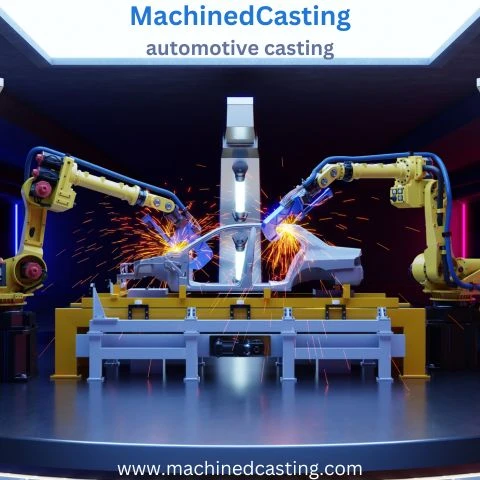

Automotive casting plays a pivotal role in the manufacturing process of vehicles, encompassing a range of techniques to shape various components. From engine blocks to transmission housings, casting methods are essential in creating durable and intricate automotive parts. This guide aims to provide a detailed overview of automotive casting processes, materials, and best practices to help manufacturers optimize their production.
Types of Casting Processes:
Sand Casting: One of the oldest and most versatile methods, sand casting involves creating a mold from compacted sand and pouring molten metal into it. This process is ideal for large, complex parts with intricate designs.
Die Casting: Die casting utilizes reusable metal molds (dies) to produce precise and high-quality parts with tight tolerances. It is commonly used for mass production of components such as engine blocks and transmission cases.
Investment Casting: Also known as lost-wax casting, this process involves creating a wax pattern of the desired part, coating it in a ceramic shell, and then melting away the wax to leave a hollow mold. Investment casting is favored for producing parts with intricate geometries and fine details.
Permanent Mold Casting: In permanent mold casting, a reusable metal mold is used to shape molten metal into the desired form. This method offers better dimensional accuracy and surface finish compared to sand casting and is suitable for high-volume production runs.
Materials Used in Automotive Casting:
- Aluminum: Lightweight and corrosion-resistant, aluminum is commonly used in automotive casting for parts such as engine blocks, cylinder heads, and wheels.
- Iron: Cast iron offers excellent strength and wear resistance, making it suitable for components like brake rotors, exhaust manifolds, and engine blocks.
- Steel: Steel casting provides exceptional durability and heat resistance, making it ideal for critical components like crankshafts, gears, and transmission housings.
Best Practices for Automotive Casting:
- Design Optimization: Work closely with design engineers to optimize part geometries for the casting process, minimizing the need for complex molds and reducing production costs.
- Material Selection: Choose the appropriate casting material based on performance requirements, cost considerations, and environmental factors.
- Quality Control: Implement rigorous quality control measures throughout the casting process to ensure consistency, dimensional accuracy, and defect-free parts.
- Process Efficiency: Continuously evaluate and refine casting processes to improve efficiency, reduce cycle times, and minimize scrap rates.
- Environmental Sustainability: Explore eco-friendly casting techniques and materials to minimize environmental impact and comply with regulations.
Conclusion: Mastering automotive casting requires a deep understanding of casting processes, materials, and best practices. By leveraging the right techniques and materials, manufacturers can produce high-quality automotive components that meet performance, durability, and cost targets, driving innovation and advancement in the automotive industry.



























Sign in to leave a comment.