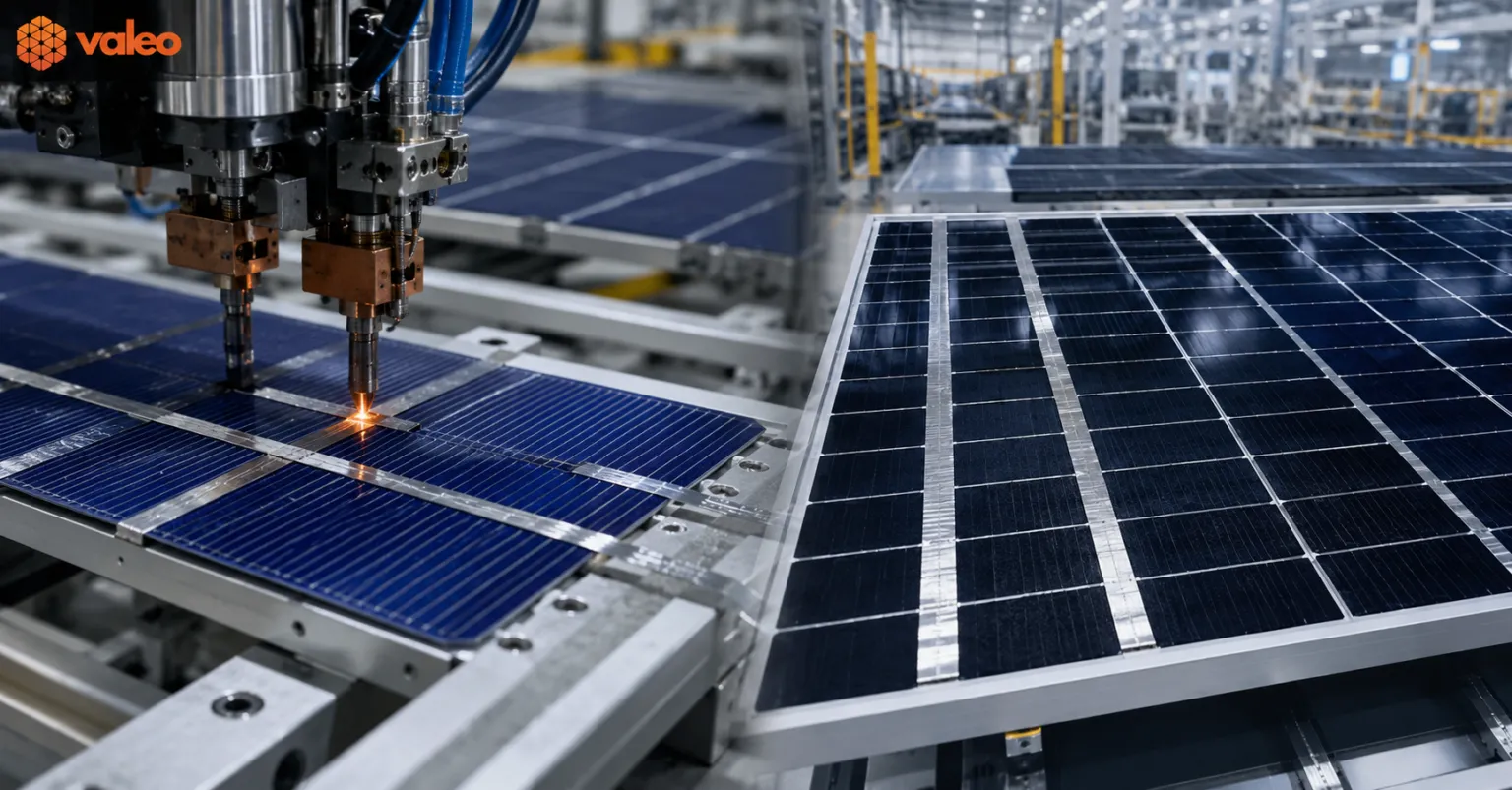

Every solar panel is really just a group of small solar cells wired together to work as one. But what actually joins those cells matters more than most people realize. The wrong material or a poor connection can quietly steal power from a panel for years without anyone noticing. This guide walks through the main materials used to connect solar cells, in plain terms, so you know what's really holding your solar panel together.
Why Interconnection Materials Matter
A single solar cell doesn't produce much power on its own. To get something useful, dozens of cells are wired together into strings, and strings are wired together into a full panel. Every one of those connections has to carry electricity without wasting it, survive years of heat and cold, and stay solid even though nobody can open the panel later to fix it.
So the material choice isn't just about conducting electricity. It's about durability, cost, how well it solders or bonds, and how well it holds up over 20-25 years outdoors. Here are the main materials used to get that job done.
Copper Ribbon (With a Tin Coating) — The Industry Standard
This is still the most common way to connect solar cells, and for good reason. It's a flat strip of copper, coated with a thin layer of tin or a tin-based alloy — usually called tinned copper interconnect, or tabbing/bussing ribbon.
Why copper? It's one of the best conductors available at a reasonable cost. Pure copper on its own would corrode too fast, though, and it doesn't solder well. So manufacturers coat it with tin, which protects it and lets it bond cleanly to the cell during soldering.
This ribbon comes in two basic types:
- Tabbing ribbon — thinner strips that run across each individual cell, picking up the electricity it makes.
- Bussing ribbon — wider strips that gather power from several cell strings and send it to the panel's junction box.
Most solar panels made today, no matter the brand, use some form of tinned copper interconnect somewhere inside them. It's the material that has been proven at scale, across every major cell technology, for years — which is exactly why it remains the default choice even as newer methods enter the market. In India, manufacturers such as Valeo Products Limited produce tinned copper interconnect specifically for solar cell interconnection, supplying it in the alloy types and sizes that module makers need for different cell technologies, including Poly, Mono PERC, and TOPCon.
Silver Paste (On the Cell Itself)
Before any ribbon touches a solar cell, the cell surface is printed with thin lines of silver paste. This is what the ribbon actually solders onto — you can usually see these lines as the shiny grid pattern on the front of a solar cell.
Silver is used because it's an excellent conductor and bonds well with solder. It's also one of the more expensive materials in a solar cell, which is part of why manufacturers keep working on ways to use less of it without losing performance.
Solder Alloys
Solder is the "glue" that actually joins the ribbon to the cell. But not all solder is the same, and the alloy used affects both the manufacturing process and how long the joint lasts.
- Leaded solder (tin-lead) — an older, well-understood option, though its use is shrinking due to environmental rules in many regions.
- Lead-free solder (tin-silver or tin-silver-copper) — now common where regulations or export markets require it.
- Low-temperature solder — used for newer, more delicate cell types that can get damaged by too much heat during soldering.
Getting the solder joint right is one of the biggest factors in how long a panel lasts. A weak joint doesn't usually fail right away — it slowly gets worse, creating extra resistance and heat at that spot until it becomes a real problem years down the line.
Conductive Adhesives
Not every solar panel uses soldering. Some newer manufacturing methods use a conductive adhesive instead — a glue-like material mixed with conductive particles, usually silver, that bonds cells together without heat.
This matters most for very thin or heat-sensitive cells, where traditional soldering could crack or damage them. Conductive adhesives are also used in shingled solar panels, where cells overlap slightly like roof shingles instead of being connected edge to edge with ribbon. This design can reduce wasted space between cells, but it depends entirely on the adhesive forming a strong, lasting bond.
Aluminum (Less Common, But Used)
Aluminum shows up in some solar cell designs too, mostly on the back of the cell rather than the front. It's lighter and cheaper than copper, but it doesn't conduct electricity quite as well and needs different handling during manufacturing. Because of this, aluminum tends to play a supporting role rather than replacing copper ribbon entirely.
Round Wire Interconnection
A newer approach, sometimes called multi-wire or round wire interconnection, uses many thin round wires instead of a few flat ribbons to connect each cell. Instead of 3-5 wide ribbons per cell, this method might use 9-16 (or more) thin wires spread evenly across it.
The idea is simple: more, thinner connection points mean shorter paths for electricity to travel, which can reduce resistance losses. It also spreads mechanical stress across more points instead of concentrating it on a few ribbons, which can help with durability. This approach is more common in newer, high-efficiency panel designs.
What Actually Makes a Difference in the Real World
With all these options, the honest answer is that no single material is "best" for every situation. What matters is how well the whole system — the coating, the solder, the cell technology, and the manufacturing process — works together. A few things tend to separate a good interconnection setup from a problematic one:
- Consistent coating and solder quality. Uneven coatings or sloppy soldering create weak spots that show up as performance loss years later.
- The right material for the cell type. Heat-sensitive cells need lower-temperature solder or adhesive; older, more heat-tolerant cells have more flexibility.
- Enough flexibility to handle years of expansion and contraction. Materials that are too brittle crack under repeated heating and cooling.
- Good corrosion resistance. Since nothing can be fixed once the panel is sealed, materials need to hold up to moisture and humidity for decades, not years.
The Takeaway
Solar cell interconnection isn't the flashiest part of a solar panel, but it's one of the parts doing the most work behind the scenes. Newer methods like conductive adhesives and multi-wire layouts are gaining ground in specific applications, but tinned copper interconnect remains the backbone material for most panels made today — proven, cost-effective, and compatible with the widest range of cell technologies.
None of these materials get much attention in marketing brochures, but they're a big part of why some panels hold their power output for 25 years while others start slipping earlier than expected. Manufacturers like Valeo Products, who specialize in tinned copper interconnect for the solar industry, are the ones actually working through these material choices every day — quietly deciding how well a panel performs long after it's installed.




















Sign in to leave a comment.