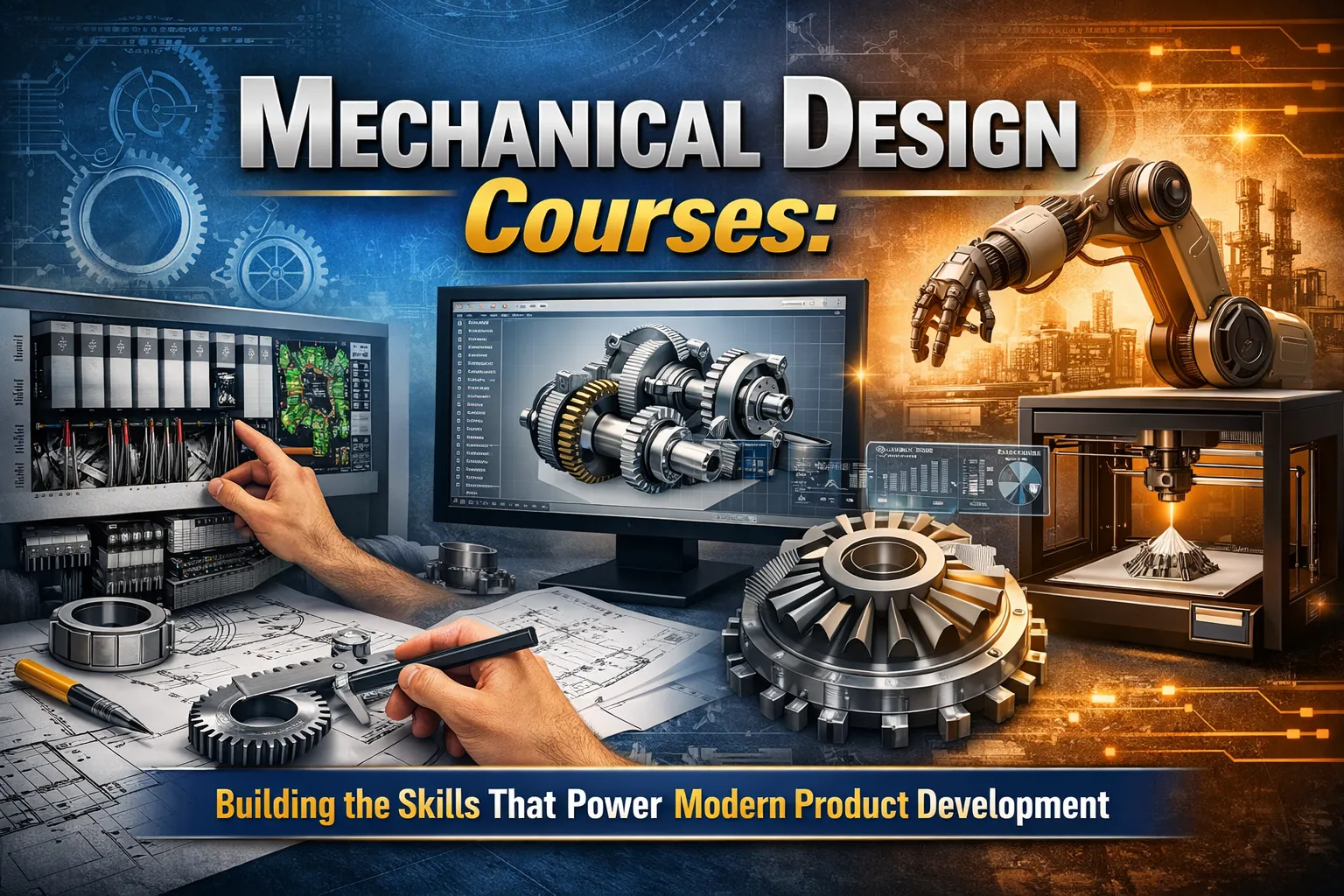

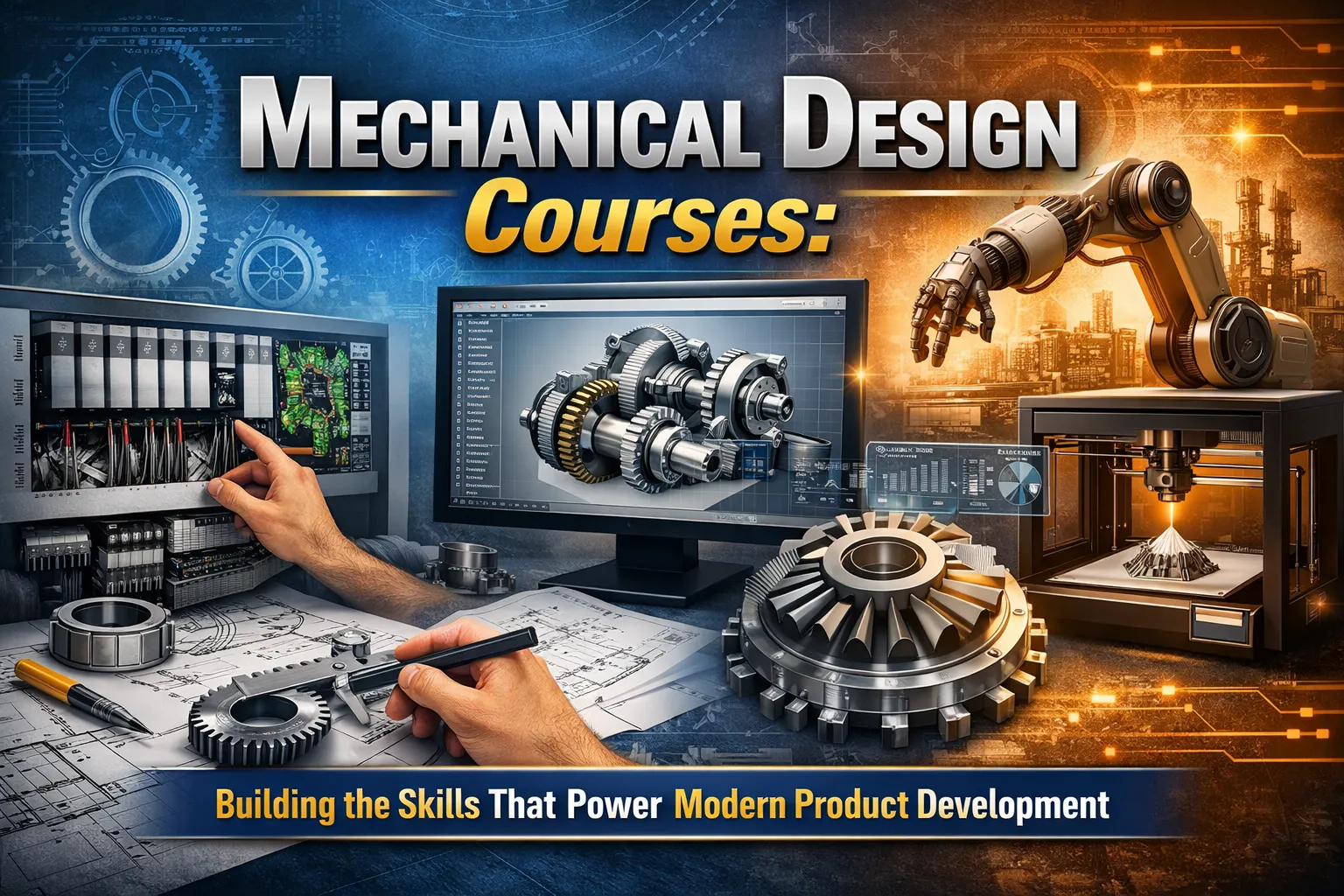
Every machine, vehicle, and engineered product begins as an idea that must be shaped, calculated, and refined into something that can actually be built. The discipline that turns those ideas into manufacturable reality is mechanical design, and it remains one of the most valuable and enduring skill sets in engineering. For students and professionals looking to enter or advance in this field, well-chosen mechanical design courses provide the knowledge and practical capability that employers consistently seek.
This article explores what mechanical design involves, what you learn in quality mechanical design courses, the tools and skills you develop, and the career opportunities that follow. If you are drawn to creating and improving physical products, mechanical design offers a rewarding and stable path.
What Is Mechanical Design?
Mechanical design is the process of conceiving, modelling, analysing, and detailing components and assemblies so they can be manufactured and function reliably. It blends creativity with engineering rigour. A mechanical designer must consider how a part will be made, how it will perform under load, how it fits with other components, and how to optimise it for cost and quality.
This work sits at the heart of product development across industries, from automotive and industrial machinery to consumer goods and beyond. Mechanical designers translate requirements into precise 3D models and engineering drawings that manufacturing teams can build from. It is a discipline where technical skill and practical judgement come together.
What You Learn in Mechanical Design Courses
Quality mechanical design courses build both software proficiency and design understanding. They teach you to use industry-standard CAD tools while developing the judgement needed to create designs that are functional, manufacturable, and efficient.
• Computer-aided design using industry-standard 2D and 3D software
• Part modelling, assembly design, and feature-based modelling
• Engineering drawings, detailing, and dimensioning standards including GD&T
• Design for manufacturing and assembly principles
• Understanding materials, tolerances, and real-world constraints
• Project work that produces a portfolio of completed designs
The Tools of Modern Mechanical Design
Today's mechanical designers work primarily in computer-aided design software, creating intelligent 3D models that can be analysed, modified, and prepared for manufacturing. Familiarity with these tools is essential, but so is understanding how the designs connect to the wider manufacturing process.
The strongest mechanical design courses teach design within a broader CAD-CAM context, showing how 3D models feed into manufacturing, tooling, and even 3D printing. This integrated perspective makes you a more capable and employable designer, because you understand not just how to model a part but how it will actually be produced.
Career Opportunities in Mechanical Design
Mechanical design skills open doors to a range of engineering roles across many industries. Because nearly every manufactured product requires design work, trained designers enjoy broad and stable demand for their abilities.
• Design Engineer creating and refining components and assemblies
• New Product Development Engineer taking concepts to production
• CAD Engineer producing models and detailed drawings
• Product Designer developing and improving products
• Design and Development roles across manufacturing industries
Why Hands-On, Project-Based Learning Matters
Mechanical design is a skill best learned by doing. Theory provides the foundation, but real competence comes from working on actual design projects, making decisions, encountering constraints, and refining solutions. The best mechanical design courses are project-based, giving learners extensive hands-on practice with the software and the design process under the guidance of experienced instructors.
When evaluating mechanical design courses, look for programs that emphasise real project work and produce a portfolio of completed designs. This practical experience is what employers value most, because it demonstrates that you can do the actual work rather than simply describe it.
Training with SkillServe Academy
SkillServe Academy in Gurugram offers mechanical design training within its CAD-CAM and new product development programs, built on a practical, job-ready philosophy. Learners train in industry-simulated environments using industry-standard tools, developing the design skills and judgement that product-development teams genuinely need. The programs treat design as part of an integrated CAD-CAM and 3D printing ecosystem rather than an isolated subject.
The academy's programmes are aligned with the National Credit Framework, so the credits learners earn are recognised and transferable. SkillServe also backs its training with placement partnerships, connecting design learners to companies across Gurugram and Delhi-NCR. This practical, placement-focused approach makes its mechanical design courses a strong foundation for a design-engineering career.
Final Thoughts
Mechanical design is a timeless engineering discipline that continues to power product development across virtually every industry. Quality mechanical design courses equip you with the CAD skills, design understanding, and practical experience needed to turn ideas into manufacturable products and to build a rewarding engineering career.
If you are passionate about creating and improving physical products, investing in proper mechanical design training is a sound decision. Choose a practical, project-based, placement-focused program, commit to mastering both the software and the design thinking behind it, and you will be well prepared for a stable and creative future in mechanical design.
























Sign in to leave a comment.