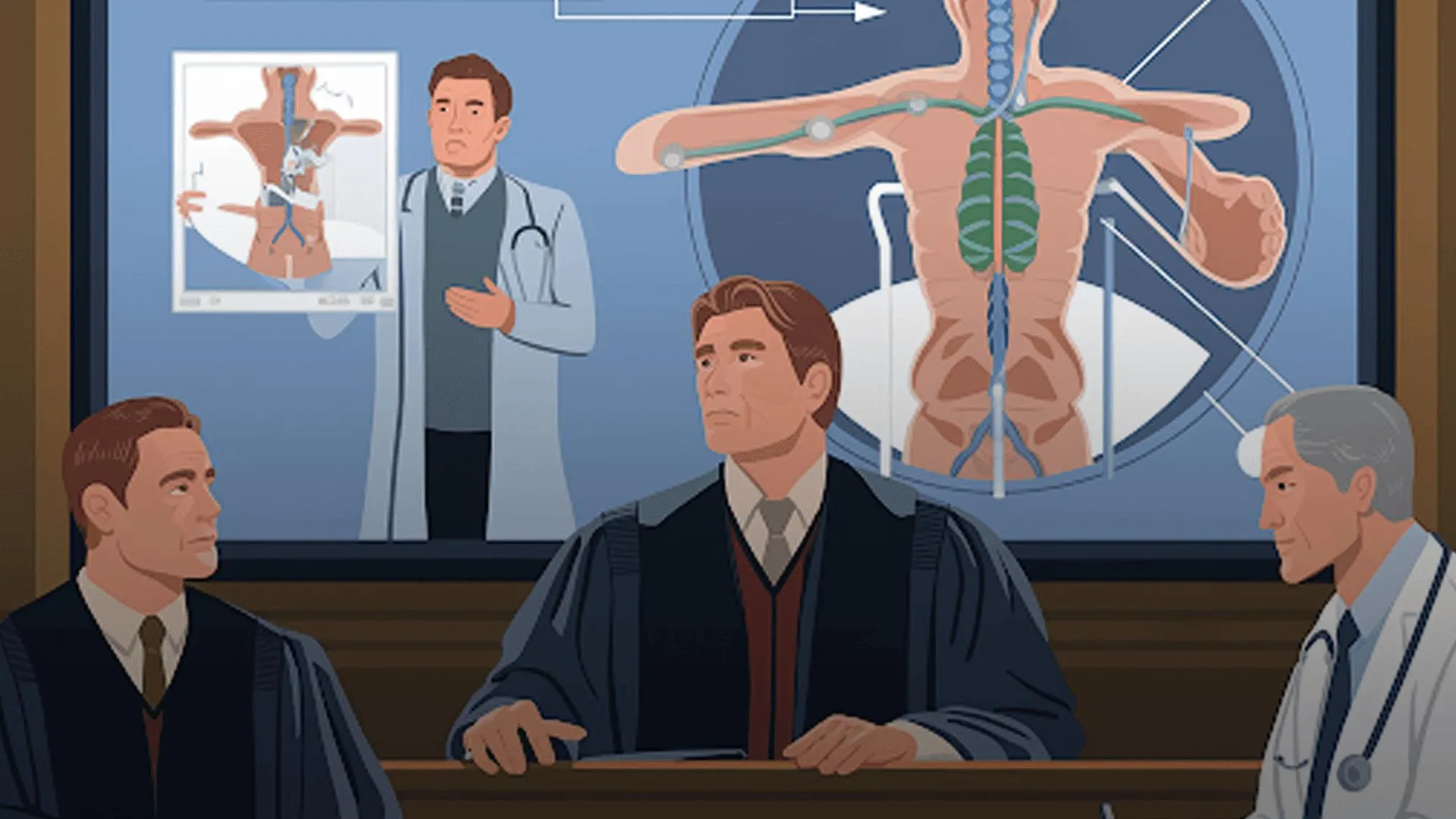

Orthopedic trauma animation helps legal teams explain fractures, spinal injuries, damaged joints, and other musculoskeletal trauma through clear three-dimensional visuals. Instead of relying only on medical records and static X-rays, attorneys can use case-specific animation to show injury patterns, forces, surgical repair, and lasting effects. Trial Graphics 360 develops medical-legal visualizations intended to help judges, juries, and mediators understand complex evidence while keeping the presentation grounded in documented findings and expert opinions.
Why Orthopedic Trauma Animation Matters
Orthopedic injuries can be difficult to understand from written reports alone. A fracture may involve several bone fragments, a joint surface, nearby nerves, or implanted hardware. A spinal injury may include compression or instability that is not immediately obvious in a two-dimensional image. Orthopedic trauma animation can bring these relationships into view, allowing viewers to follow the medical explanation step by step.

These visuals may support cases involving:
- Vehicle collisions and other impact injuries.
- Complex fractures of the pelvis, arms, legs, or joints.
- Spinal trauma, disc damage, and nerve compression.
- Orthopedic implant failure or complications after surgery.
- Long-term limitations, additional procedures, or residual impairment.
An animation should clarify the evidence, not replace it. Every depicted movement, anatomical feature, and causal explanation should be supported by the available records and reviewed by the appropriate experts.
How Orthopedic Trauma Animation Is Developed
A useful animation begins with careful case review, not with dramatic effects. The production team works with counsel and qualified medical experts to understand the questions the visual must answer. Depending on the case, source materials may include CT scans, MRI studies, X-rays, operative reports, medical records, deposition testimony, and expert opinions.
A typical workflow includes:
- Reviewing case materials: Identify the injury, timeline, disputed issues, and relevant medical findings.
- Building the anatomy: Use patient-specific imaging when available to represent bones, joints, nerves, and hardware accurately.
- Reconstructing the mechanism: Show the documented or expert-supported sequence that explains how an injury occurred.
- Checking medical accuracy: Compare the model and animation with the records and expert analysis.
- Refining the presentation: Adjust labels, pacing, camera angles, and narration so viewers can follow the explanation.
This structured process helps keep the final visual clear, consistent, and connected to the evidence.
Connecting Orthopedic Trauma Animation With Causation and Damages
In personal injury litigation, establishing that an injury exists may be only one part of the case. Attorneys may also need to explain how the event caused the injury, what treatment was required, and which limitations remain. Orthopedic trauma animation can help illustrate these issues when the underlying evidence supports them.
For example, a three-dimensional reconstruction may show the location and displacement of fracture fragments, the relationship between a damaged vertebra and a nerve, or the position of an implant after a complication. A sequence comparing pre-treatment and post-treatment anatomy may help explain what surgery changed and what structural problems remain. Any discussion of pain, prognosis, disability, or future treatment should be based on qualified expert testimony rather than inferred from visuals alone.
The Role of Medical Malpractice Animation
Medical malpractice animation can address a different but related question: whether care deviated from the applicable standard and how that deviation may have contributed to harm. In an orthopedic case, a visual might explain surgical positioning, implant placement, an overlooked finding, or a delay in responding to a complication.

Such an animation should not assume negligence or present a disputed allegation as proven fact. Instead, it can compare the documented sequence with an expert-supported explanation of what should have occurred. Clear labels, transparent assumptions, and review by the retained medical expert are essential. The animation’s role is to communicate the expert’s opinion, not to make an independent medical or legal conclusion.
What Attorneys Should Look For in a Provider
When choosing a team to create orthopedic trauma animation, legal professionals should consider more than visual polish. Useful questions include:
- Does the team understand medical records and forensic visualization?
- Can it work from patient-specific CT, MRI, or other available imaging?
- Are medical experts involved in reviewing the content?
- Are assumptions and limitations clearly identified?
- Can the animation be revised as expert opinions or evidence develop?
- Will the provider explain its methods and source materials transparently?
Trial Graphics 360 offers medical-legal animation and orthopedic trauma visualization intended to translate complex anatomy and injury mechanisms into understandable exhibits. Early collaboration gives counsel time to confirm the scope, review drafts, and coordinate the animation with expert testimony.
Visuals need careful pacing. Each scene should answer a specific question, introduce only necessary detail, and use consistent orientation so viewers do not lose track of the anatomy. Neutral narration and readable labels help the audience focus clearly on the medical explanation instead of the animation itself.
Frequently Asked Questions
What is orthopedic trauma animation?
It is a three-dimensional visual explanation of an orthopedic injury, its mechanism, treatment, or consequences, developed from case evidence and expert input.
When may attorneys use orthopedic trauma animation?
It may be considered for depositions, mediation, settlement discussions, expert presentations, or trial, subject to applicable rules and court decisions.
How is medical malpractice animation different?
It focuses on explaining medical care, a claimed deviation from the standard of care, and the alleged connection between that deviation and an injury. The content should reflect expert opinions and documented facts.
Does an animation guarantee court admission?
No. Acceptance depends on jurisdiction, relevance, reliability, supporting evidence, and the judge’s ruling. Attorneys should evaluate admissibility with their legal and expert teams.
Conclusion
Orthopedic trauma animation can make complicated injuries easier to visualize by connecting anatomy, medical findings, and expert explanations in a logical sequence. Its value depends on accuracy, balance, and a transparent link to the record. Medical malpractice animation can similarly clarify disputed treatment events when carefully grounded in expert analysis. Trial Graphics 360 helps legal teams communicate technical medical evidence through tailored visual presentations. With thoughtful planning and expert review, these animations can support understanding without overstating what the evidence proves.


















Sign in to leave a comment.