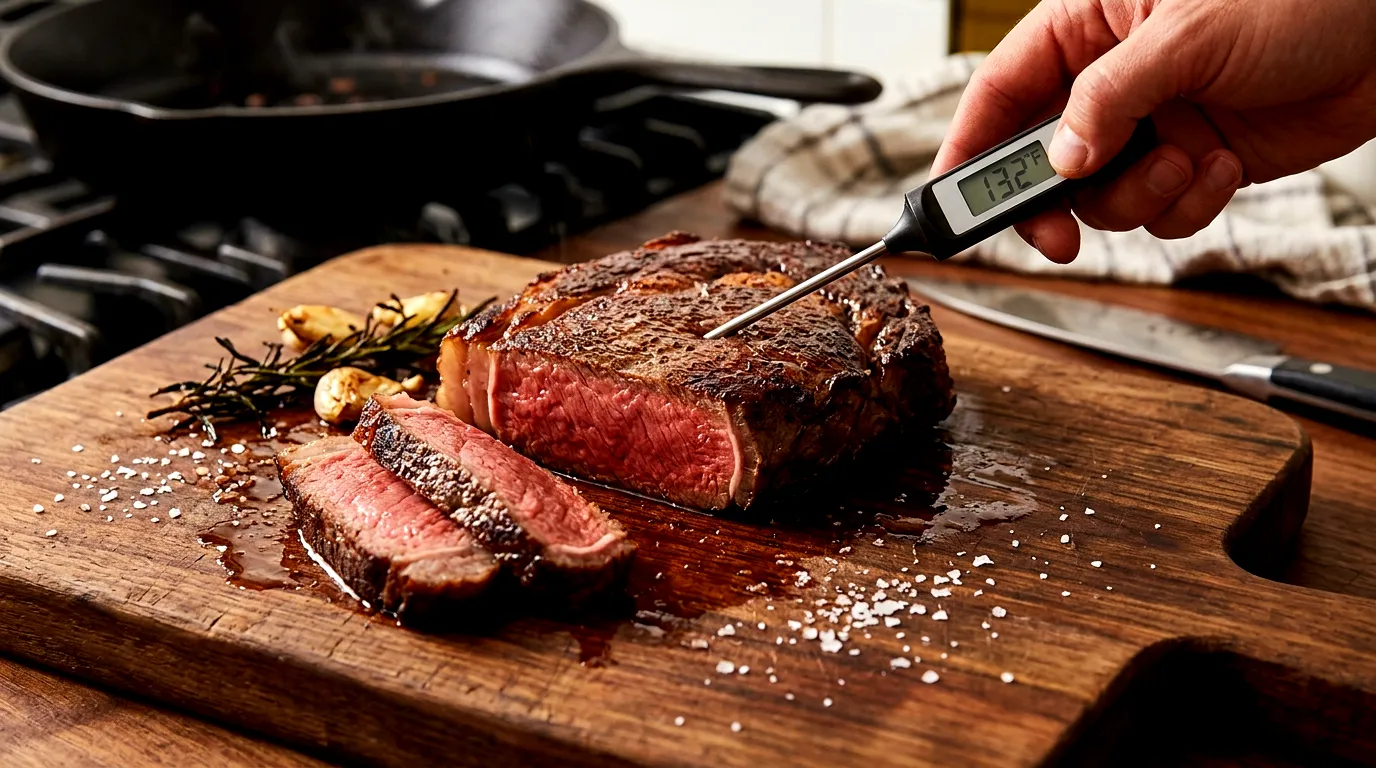

The medium-rare steak temp to aim for is 130°F to 135°F (54°C to 57°C) once the steak has rested. To get there, most experienced cooks take it off the heat at 120°F to 125°F (49°C to 52°C) and let the leftover heat finish the job.
That small gap catches out a lot of home cooks. Below you will find a temperature chart, advice on using a thermometer properly, ways to hit the number with different cooking methods, and a straight answer on whether medium rare is 13safe to eat.
Medium Rare Internal Temperature in Fahrenheit and Celsius
A medium rare steak reaches 130°F to 135°F (54°C to 57°C) at its thickest point, measured after resting. The centre is warm and red with a pink ring around it, and a thin grey band sits just beneath the crust.
Pull Temperature vs Final Temperature
Pull temperature is the reading at which you remove the steak from the pan, grill, or oven. For medium rare, that is 120°F to 125°F (49°C to 52°C). Final temperature is where the steak settles after resting. If you wait until the thermometer shows 135°F while the steak is still on the heat, you will usually end up serving a medium steak.
Why Medium Rare Is the Favourite
At this stage, the muscle fibres have not tightened much, so the steak stays juicy and gives easily under the knife. Intramuscular fat has also begun to soften, which is why a marbled ribeye tastes so rich at medium rare and can turn dry or greasy when pushed further. Tastes differ, of course, but this is the doneness most steakhouses treat as the benchmark.
Steak Temperature Chart: All Doneness Levels
Use this chart as a quick reference. Pull and final temperatures are listed separately because the two are never the same.
| Doneness | Pull Temp | Final Temp | Centre Colour | Texture |
| Rare | 115°F to 120°F (46°C to 49°C) | 120°F to 125°F (49°C to 52°C) | Cool red | Soft, very tender |
| Medium Rare | 120°F to 125°F (49°C to 52°C) | 130°F to 135°F (54°C to 57°C) | Warm red to pink | Tender, juicy |
| Medium | 130°F to 135°F (54°C to 57°C) | 140°F to 145°F (60°C to 63°C) | Pink | Firmer, still moist |
| Medium Well | 140°F to 145°F (60°C to 63°C) | 150°F to 155°F (66°C to 68°C) | Slight pink | Firm |
| Well Done | 150°F to 155°F (66°C to 68°C) | 160°F and above (71°C and above) | Brown throughout | Very firm, drier |
Treat these figures as guidelines. Thickness, starting temperature and cooking method all nudge the numbers slightly.
Why Pull Temperature Matters: Carryover Cooking Explained
What Is Carryover Cooking?
When a steak leaves the heat, its outside is far hotter than its centre. That energy keeps travelling inwards, so the internal temperature carries on climbing for a few minutes after cooking has stopped.
How Much Will a Steak Rise While Resting?
Usually by 5°F to 10°F (3°C to 6°C). A thick ribeye seared hard sits at the top of that range, while a thin sirloin barely moves.
Why Thick Steaks Climb More Than Thin Ones
A thick steak holds more heat, and a fierce sear creates a bigger gap between crust and core. Thin steaks, under about 2 cm, lose heat quickly, so pull those closer to 125°F (52°C) and thicker cuts nearer 120°F (49°C).
How to Check Medium Rare Steak Temp Correctly
Best Thermometer for Steak
An instant-read digital thermometer is the tool I trust most. It gives a reading in two or three seconds, so the steak is not left sitting off the heat while you wait. A leave-in probe is handy for oven cooking and reverse searing.
Where to Insert the Thermometer
Push the tip into the thickest part of the steak, ideally from the side, until it sits in the centre. Keep it away from bone and big pockets of fat, because both give a different reading from the meat itself.
Checking Thin Steaks Accurately
Slide the probe in horizontally from the edge so the tip stays in the middle. Pushing it down through the top often passes straight through and picks up the heat of the pan instead.
The Touch Test and Its Limits
The palm method compares the steak’s springiness with the fleshy base of your thumb. It works as a backup when you have no thermometer, but cut, thickness, and fat all change how a steak feels, so treat it as a rough guide at best.
How to Cook a Steak to Medium Rare Temp
Pan-Seared Medium Rare Steak
Take the steak out of the fridge about 30 minutes before cooking, pat it dry,y and season generously. Heat a heavy pan until it is lightly smoking, then lay the steak in. A 2.5 cm steak usually needs 2 to 3 minutes per side, with a final minute of butter basting if you like. Start checking the temperature early, because pans and hobs vary a great deal.
Grilled Medium Rare Steak
Set up two zones, one hot and one cooler. Sear over direct heat, then slide the steak to the cooler side if it is heading towards the pull temperature too quickly. That second zone also gives you somewhere to retreat when fat causes a flare-up.
Oven-Baked and Reverse Sear Medium Rare Steak
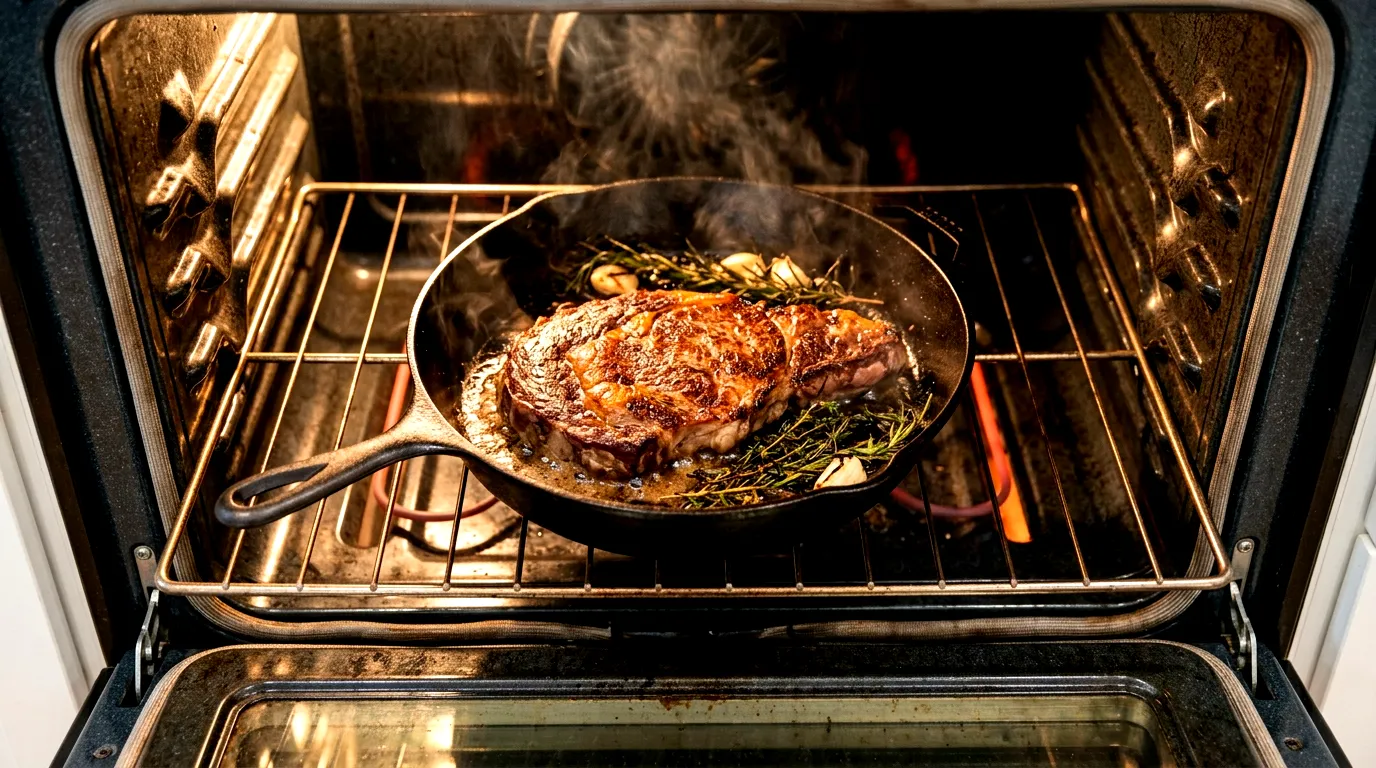
Thick cuts do best with a reverse sear, where the steak cooks gently in a low oven first and gets its crust at the very end. Set the oven to around 120°C (250°F) and cook until the centre reaches 115°F to 120°F (46°C to 49°C). Then sear hard in a hot pan for about a minute per side. The sear adds the last few degrees and builds a deep crust without overcooking the middle.
Sous Vide Medium Rare Steak Temp
Set the water bath to between 129°F and 134°F (54°C and 57°C) and cook for one to three hours, depending on thickness. The steak can never go above the water temperature, so overshooting is close to impossible. Dry it thoroughly and finish with a very hot, very quick sear.
Medium Rare Temp by Steak Cut
The target number stays the same, but each cut behaves a little differently.
Ribeye
Generous marbling makes it forgiving, but the fat needs time to soften. Pull thick ribeyes at 120°F to 125°F (49°C to 52°C) and let them rest well.
Sirloin
Leaner and quicker to dry out once it passes 135°F (57°C). Watch it closely and pull at the lower end of the range.
Fillet Mignon
Very tender, very lean,n and usually thick. It can taste flat if overcooked, so pull at around 120°F (49°C).
New York Strip
The fat cap along the edge benefits from a minute or two on its side in the pan before you cook the faces. Check the temperature in the meatiest part.
T-Bone and Porterhouse
The bone insulates the meat beside it, and the fillet side cooks faster than the strip side. Keep the fillet away from the hottest part of the grill and take your reading from that side.
How to Rest a Medium Rare Steak
How Long Should You Rest It?
Five to ten minutes suits most steaks, with the longer end for thick cuts. During that time, the temperature settles, and the juices redistribute, so far less ends up on the board when you slice.
Should You Cover Steak with Foil?
A loose tent of foil helps in a cool kitchen. Wrapping the steak tightly traps steam and softens the crust you worked to build.
Is Medium Rare Steak Safe to Eat?
USDA Guidance vs Chef Practice
The USDA recommends 145°F (63°C) for whole cuts of beef, followed by a three-minute rest. Medium rare sits below that figure. On a whole steak, bacteria sit mainly on the surface, and searing deals with most of them, which is why many chefs and diners are comfortable with medium rare. It remains a personal decision, best made with the official guidance in mind.
Whole Cuts vs Ground Beef
Mince is a different matter. Grinding spreads surface bacteria through the whole product, so burgers and other ground beef should reach 160°F (71°C).
Who Should Avoid Medium Rare Steak
Pregnant women, young children, older adults, and anyone with a weakened immune system are generally advised to avoid undercooked beef and choose a higher doneness. If you are unsure, ask your doctor.
Common Mistakes When Cooking Medium Rare Steak
Most disappointing steaks come down to a handful of habits:
- Cooking without a thermometer and guessing by feel or timing.
- Ignoring carryover cooking and pulling the steak too late.
- Cooking straight from the fridge, which leaves a cold centre and an overdone outside.
- Starting in a pan that is not hot enough, which gives a grey, slow-cooked result.
- Slicing immediately instead of resting.
- Choosing a steak that is too thin, which makes a medium-rare centre very hard to achieve.
Conclusion
Aim for a final medium-rare steak temp of 130°F to 135°F (54°C to 57°C), and pull the steak at 120°F to 125°F (49°C to 52°C) so carryover cooking can do the rest. Add a good instant-read thermometer, a proper rest, and a little patience, and you will get a juicy, evenly cooked steak far more often than not.
FAQs
What temp is medium rare steak in Celsius?
The final temperature is 54°C to 57°C. Pull the steak at 49°C to 52°C and let it rest.
What temp should I pull a medium rare steak?
Between 120°F and 125°F (49°C and 52°C), depending on thickness and cooking method.
How long does it take to cook a medium rare steak?
For a 2.5 cm steak in a hot pan, expect roughly 4 to 6 minutes of cooking in total. Thicker cuts take longer, so go by temperature and not the clock.
What is the difference between rare and medium rare temp?
Rare finishes at 120°F to 125°F (49°C to 52°C), about 10 degrees cooler than medium rare. The centre is cool and red, compared with warm red to pink.
Is 135°F medium rare or medium?
It sits at the top edge of medium rare. Most cooks call 140°F (60°C) the start of medium.
Can you cook medium rare steak in the oven?
Yes. Low-and-slow oven cooking followed by a hot sear is one of the most reliable ways to hit medium rare on thick steaks.
Does medium rare steak have to be pink inside?
The centre is usually red to pink, but colour varies with the cut and how the beef was aged. Rely on the thermometer and treat colour as a helpful clue only.
























Sign in to leave a comment.