Choosing between membrane and traditional roofing in Medford depends primarily on the slope of your roof and your long-term energy goals. Membrane systems like TPO and EPDM are often the superior choice for flat or low-slope buildings because they provide a continuous water barrier. Traditional roofing, such as asphalt shingles or metal, remains the standard for steep-pitched residential homes where gravity helps shed water effectively.
This guide provides a detailed look at how these materials perform in the specific climate of the Rogue Valley. You will learn about the cost, lifespan, and weather resistance of each option. Industry experts with years of experience in Southern Oregon understand that the intense summer heat and wet winters require a specific approach to material selection.
The Primary Differences Between Membrane and Traditional Systems
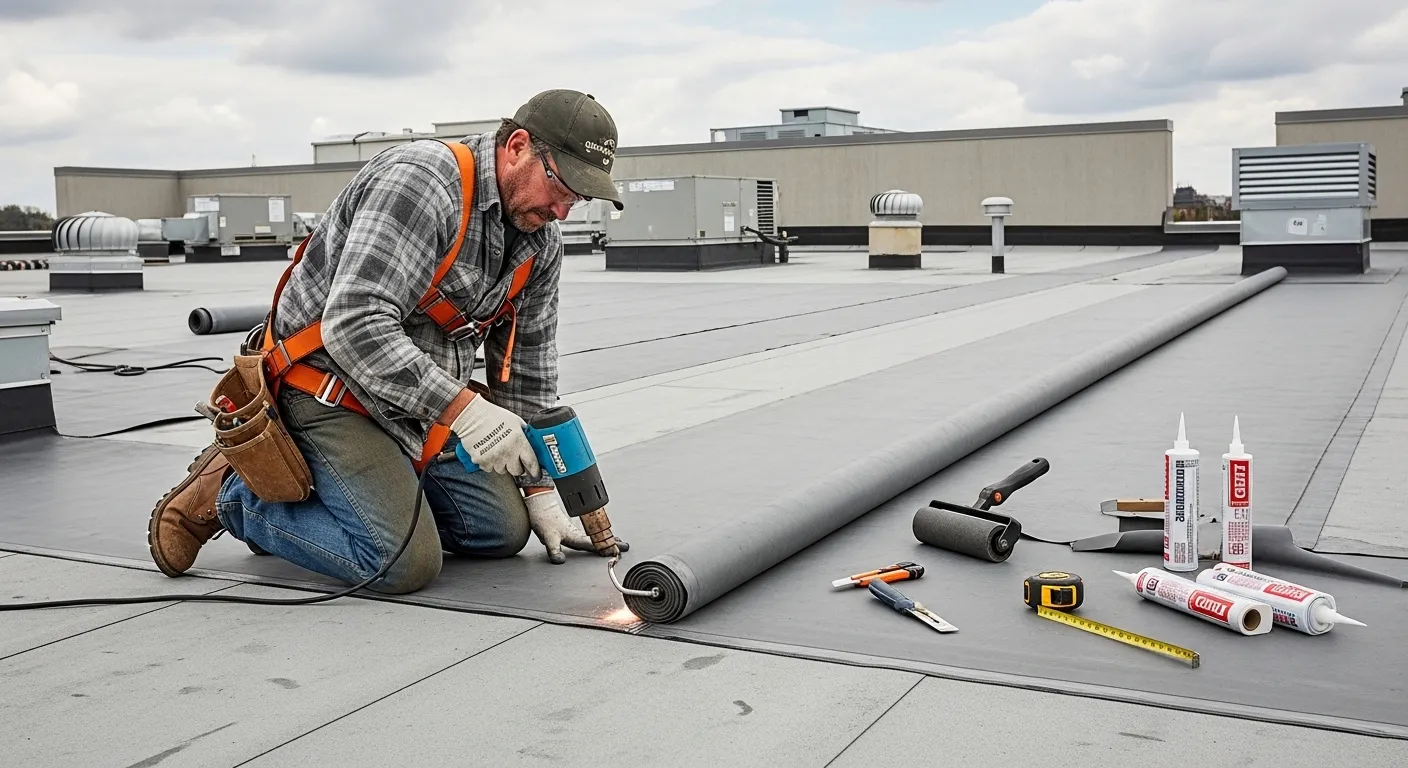
Membrane roofing consists of large sheets of synthetic materials that installers heat-weld or glue together. This process creates a seamless surface that stops leaks on roofs where water does not run off quickly. You typically see these systems on commercial buildings or modern, flat-roofed homes.
Traditional roofing relies on overlapping pieces like shingles, tiles, or metal panels. These systems work by layering materials so that rain flows from one piece to the next until it reaches the gutters. While very effective for steep slopes, these overlaps can become weak points if water sits on them for too long.
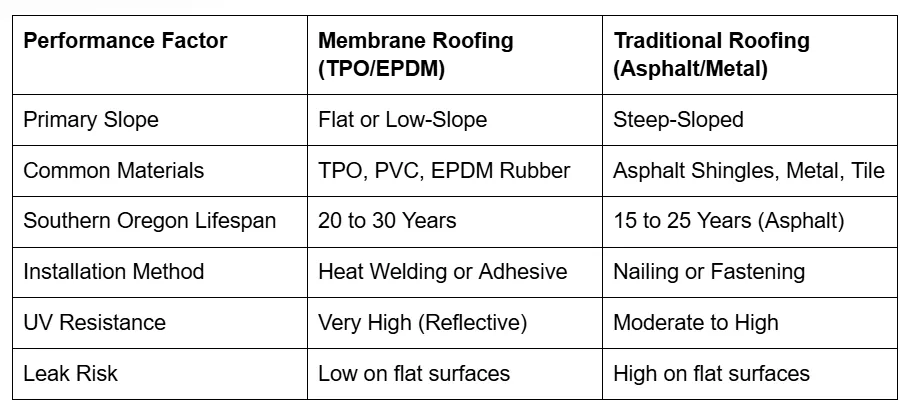
The following table breaks down the technical specifications and expectations for these two categories in the Medford area.
The Performance of Membrane Roofing in Southern Oregon Heat
Medford experiences some of the highest summer temperatures in Oregon, often staying above 90 degrees for weeks. Membrane roofing, specifically white TPO (Thermoplastic Polyolefin), acts as a reflective shield. It bounces sunlight away from the building rather than soaking it up.
This reflective property helps keep the building interior cooler without forcing the air conditioning system to work as hard. Data shows that cool roof membranes can lower the surface temperature of a roof by as much as 50 degrees compared to dark shingles. This reduction directly impacts your monthly utility bills during the peak of July and August.
Bonus Tip: When selecting a membrane, ask for a "Cool Roof" certified product. These specific materials meet strict standards for solar reflectance, which might qualify you for energy efficiency rebates or tax credits in Jackson County.
Is Membrane Roofing Actually Waterproof for Medford Winters?
Rain in the Rogue Valley can be persistent during the winter months. On a flat roof, traditional shingles would fail because water would seep under the edges of the overlaps. Membrane systems solve this by using heat-welded seams that are physically stronger than the material itself.
Because the seams are fused together, the roof becomes a single, liquid-tight sheet. This design handles the heavy rain and occasional wet snow common in Medford without the risk of moisture getting trapped in the wooden structure below. It is the most reliable way to protect a flat-roofed addition or a commercial storefront.
How Traditional Roofing Holds Up on Pitched Residential Homes
For most homes with a standard peak, asphalt shingles remain a popular choice due to their lower initial cost. They are easy to install and come in many colors that match the local neighborhood styles. In Medford, these roofs perform well as long as the attic has proper ventilation.
Metal roofing is another traditional option that is gaining popularity in Southern Oregon. It offers a longer life than shingles and handles the heavy pine needles and debris from local trees better. However, the cost for metal is usually much higher upfront than both shingles and many membrane systems.
Factors You Should Weigh Before Picking a New Roof Style
Before you decide on a material, you need to look at the specific needs of your property. Not every roof is a good candidate for every material.
- The Pitch of the Roof: If your roof has a rise of less than two inches for every twelve inches of width, you should almost always use a membrane.
- Weight Limits: Some traditional materials like clay tile are very heavy and might require extra structural support. Membranes are lightweight and fit almost any building.
- Tree Coverage: If your property has many overhanging oaks or pines, you need a surface that is easy to blow clean. Debris can rot asphalt shingles faster than synthetic membranes.
- Future Use: If you plan to install solar panels, a durable membrane provides a stable and long-lasting base that won't need replacing shortly after the panels go up.
Bonus Tip: Check the wind ratings for your chosen material. While Medford isn't known for hurricanes, the seasonal gusts through the valley can lift loose shingles. A fully adhered membrane or high-rated architectural shingles are better for wind-prone areas.
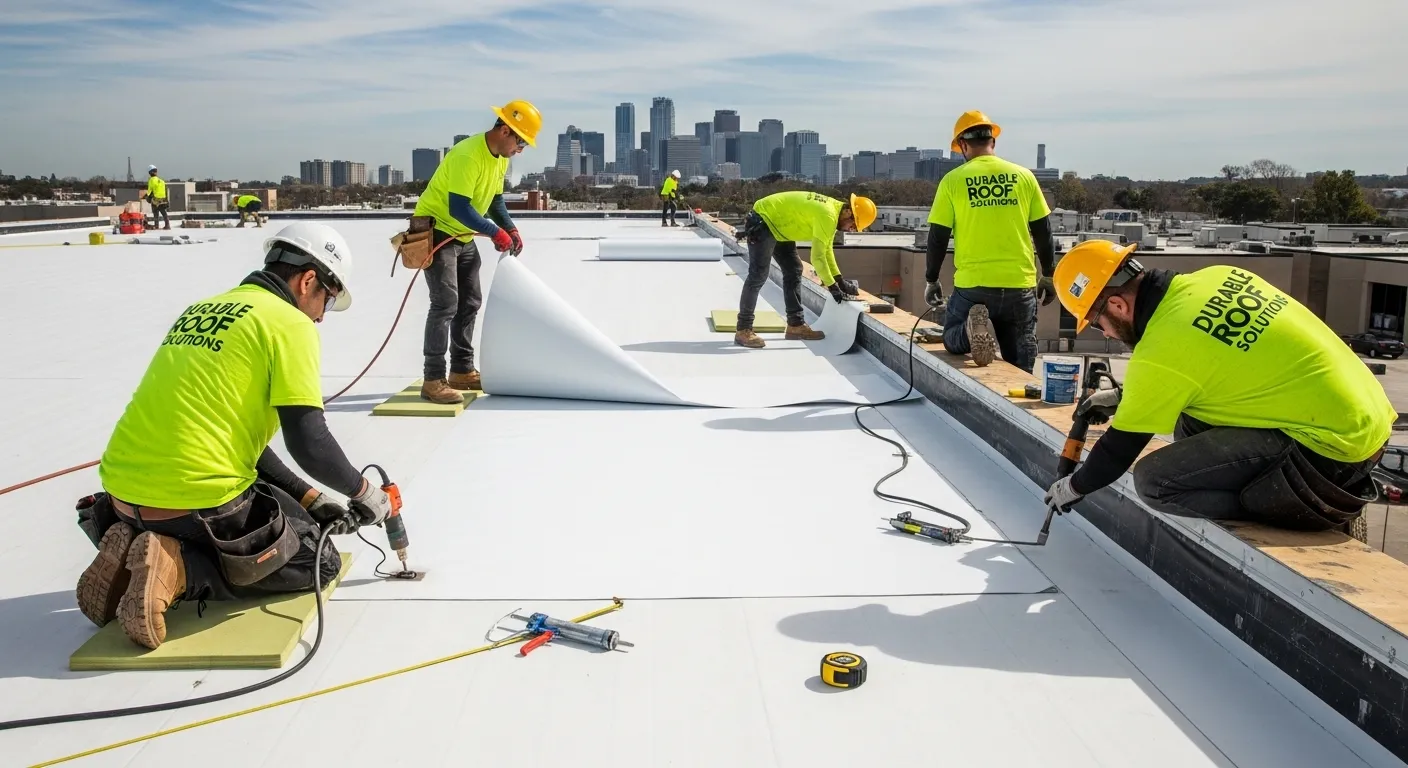
Installation Processes for Different Roof Types
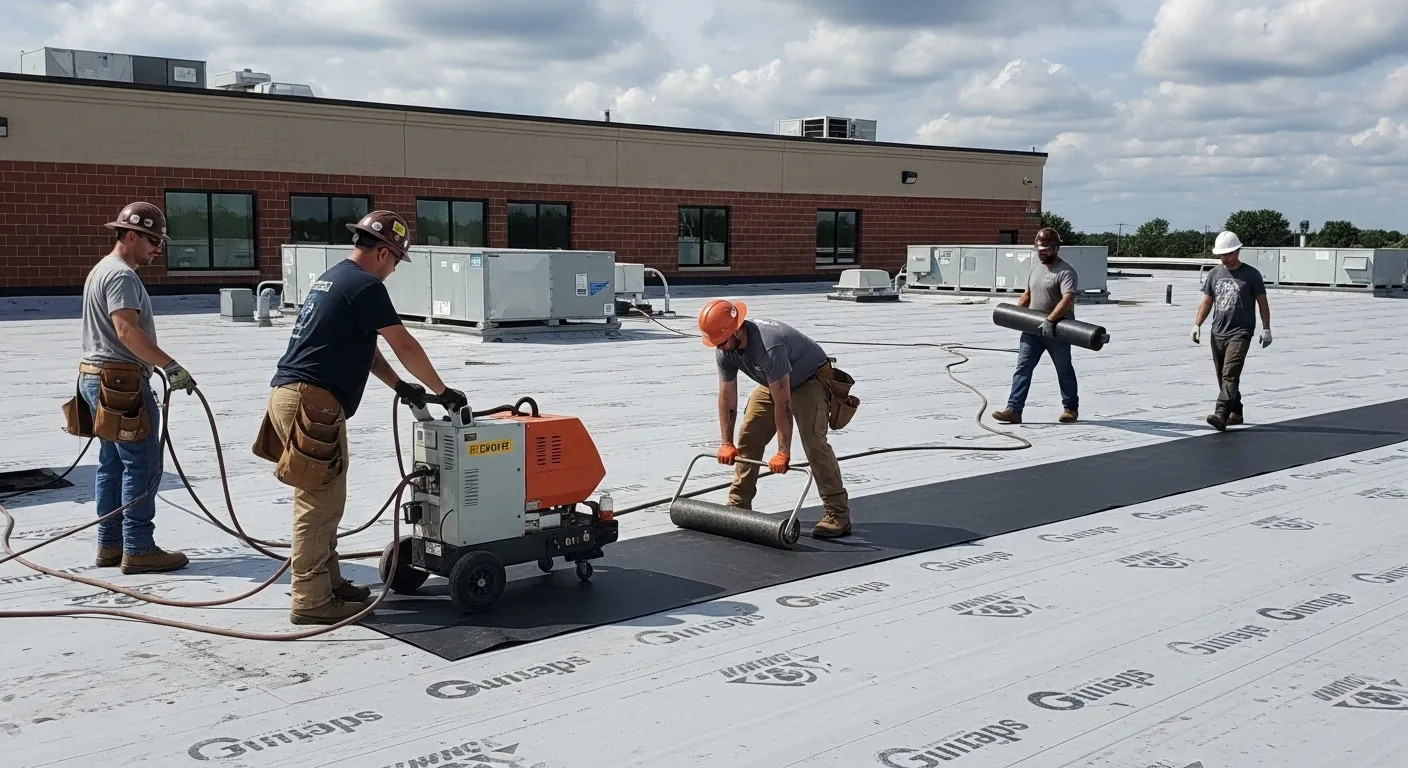
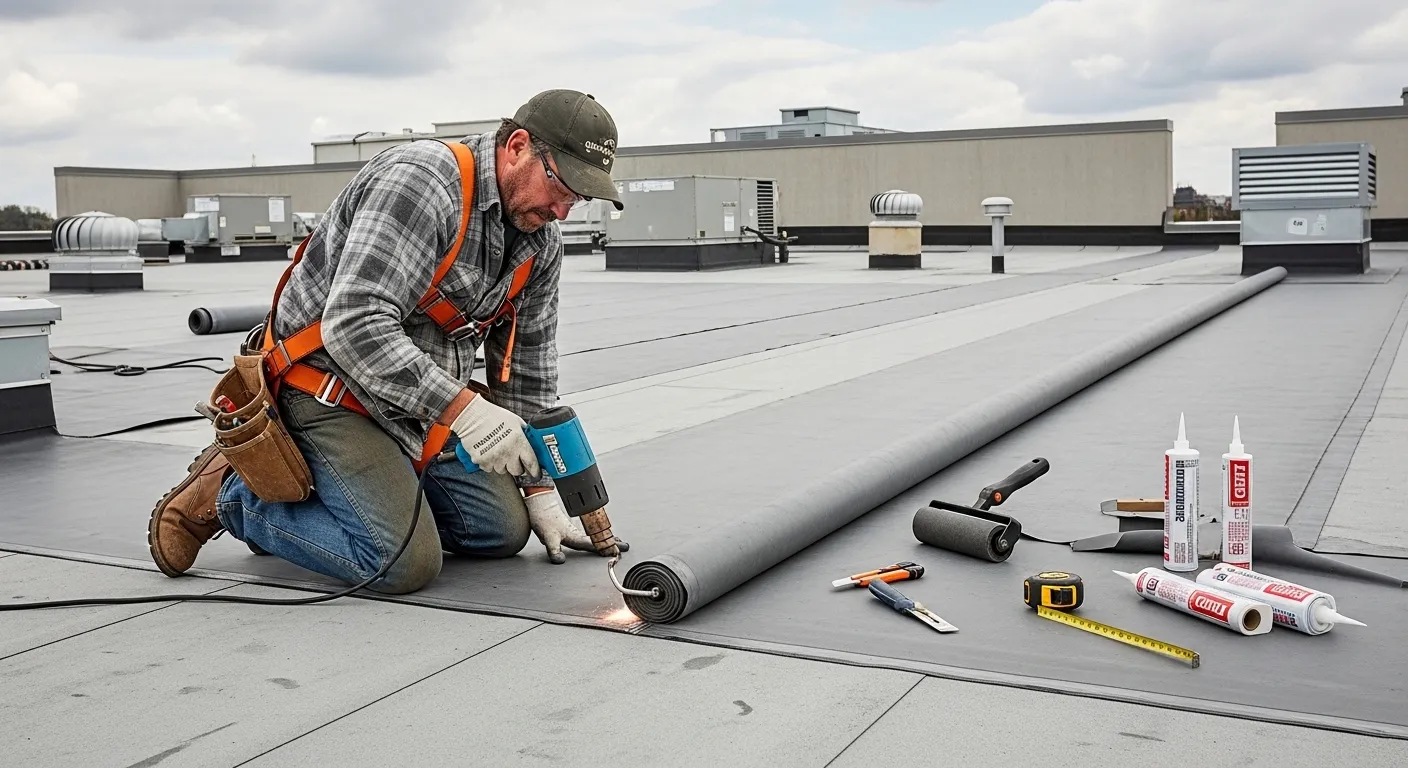
Installing a membrane roof is a technical process that requires specialized equipment. For TPO or PVC, workers use a hot-air welder to join the sheets. This creates a permanent bond. For EPDM, a type of synthetic rubber, they use heavy-duty adhesives or specially formulated tapes.
Traditional shingle installation is more labor-intensive in terms of the number of pieces handled. Thousands of individual shingles are nailed down in a specific pattern. While the process is faster for a large crew, it creates thousands of potential entry points for water if a single nail is misplaced or a shingle blows off.
Environmental Impact and Material Waste
Many modern membrane materials are recyclable at the end of their life. Because they last longer than basic shingles, they also contribute less waste to local landfills over time. Furthermore, the energy savings from the reflective surfaces of light-colored membranes reduce the overall carbon footprint of your home or business.
Traditional asphalt shingles are harder to recycle because they contain fiberglass and petroleum products. However, some local programs in Oregon are starting to grind down old shingles for use in road paving projects. If being eco-friendly is a priority, ask about the recycling options for the specific brand you choose.
Finding Professional Assistance for Your Next Roofing Project
Selecting the right system requires a look at your building's unique structure and your budget. If you are unsure which path to take, getting a professional evaluation is the best step. You can contact All Foam & Insulation, LLC to discuss your options and get a free quote for your project. They offer expert advice on both insulation and roofing needs to ensure your property stays dry and energy efficient. Reach out to them at (541) 826-9600 or send an email to [email protected] to learn how they can help you protect your investment in Medford.
Summary of Choosing the Right Roof
The choice between membrane and traditional roofing comes down to the shape of your building and how much you value energy efficiency. Membranes offer the best protection for flat surfaces and can significantly lower cooling costs in the Medford heat. Traditional roofs are the standard for sloped homes and offer a classic look with a lower entry price. You should evaluate your roof's slope, your long-term budget, and the specific weather patterns of the Rogue Valley before committing to a new installation.
Common Questions About Medford Roofing Choices
Does membrane roofing come in colors other than white?
Yes. While white is the most popular for heat reflection, you can find TPO and EPDM in grey, tan, and black. However, darker colors will absorb more heat during the Medford summers.
How long does it take to install a membrane roof on a standard building?
Most projects take between two to five days depending on the size of the building and the weather. The process is often faster than traditional roofing because the sheets cover large areas at once.
Can you walk on a membrane roof?
Yes, membrane roofs are designed to handle foot traffic for maintenance purposes. If you plan to have heavy traffic, such as for HVAC repairs, you can have thick "walk pads" installed in high-use areas.
Is traditional metal roofing louder than membrane roofing during rain?
Metal roofing can be louder if it is not installed with proper insulation. Membrane roofing is very quiet because the synthetic material and the underlying insulation board dampen the sound of raindrops.
Will a membrane roof work on a steep-pitched house?
While it is possible, it is not common. Membranes are designed for flat surfaces and may not provide the look most people want for a traditional home. Shingles or metal are usually better for steep slopes.

























Sign in to leave a comment.