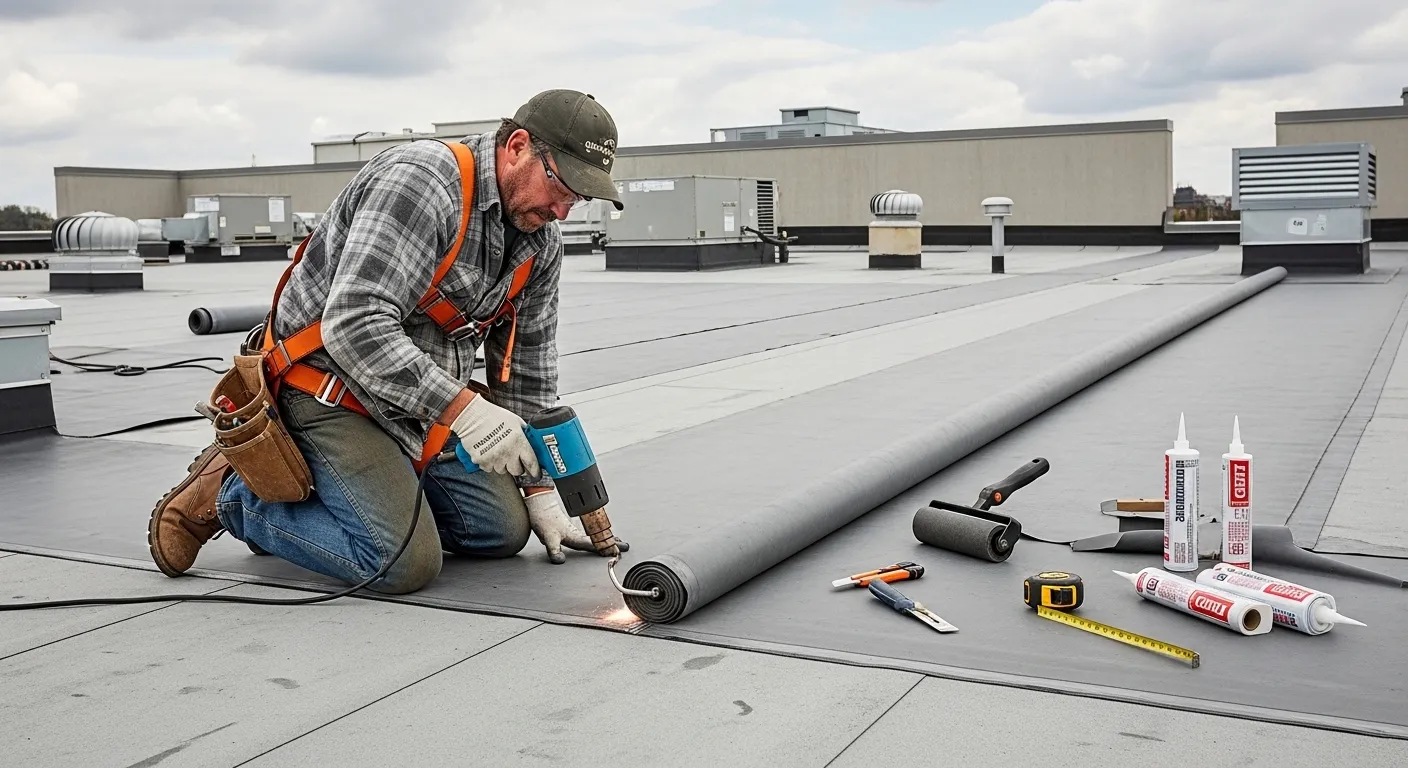

Ponding water occurs when rain or melted snow sits on a flat roof for more than 48 hours without draining or evaporating. This problem typically stems from structural issues, sagging roof decks, clogged drainage systems, or an insufficient slope that fails to direct water toward gutters. If left unaddressed, standing water adds thousands of pounds of extra weight to your building and eventually rots the underlying materials.
Membrane roofing provides a reliable solution by using large, flexible sheets of synthetic material that create a watertight barrier. These systems, such as TPO or PVC, use heat-welded seams that are stronger than the material itself, ensuring that even if water sits a short time, it cannot penetrate the surface. This article explains the mechanics of roof drainage and how modern materials keep your facility dry.
Industry experts recognize that flat roofs are never truly flat but instead have a slight pitch to move water. When this pitch is lost due to building settling or poor design, ponding begins. Understanding these causes helps you choose the right repair or replacement strategy to protect your long-term investment.
Common reasons for standing water on flat roofs
Water pools on a roof for several reasons related to the design and maintenance. One of the most frequent causes is a compressed or saturated insulation layer under the roof surface. When internal leaks or heavy equipment crush the insulation, it creates a low spot that naturally collects water during every rain event.
Structural sagging also contributes to the problem as buildings age. Support beams may settle or shift, causing the roof deck to dip in certain areas. These dips act like bowls that hold water long after the rest of the roof has dried.
- Clogged internal drains or scuppers prevent water from leaving the roof.
- Improperly installed roof equipment that blocks the natural flow of water.
- Poorly designed tapered insulation that fails to create a path to the drains.
- Accumulation of debris, like leaves and silt, creates mini dams on the surface.
The mechanics of membrane roofing systems
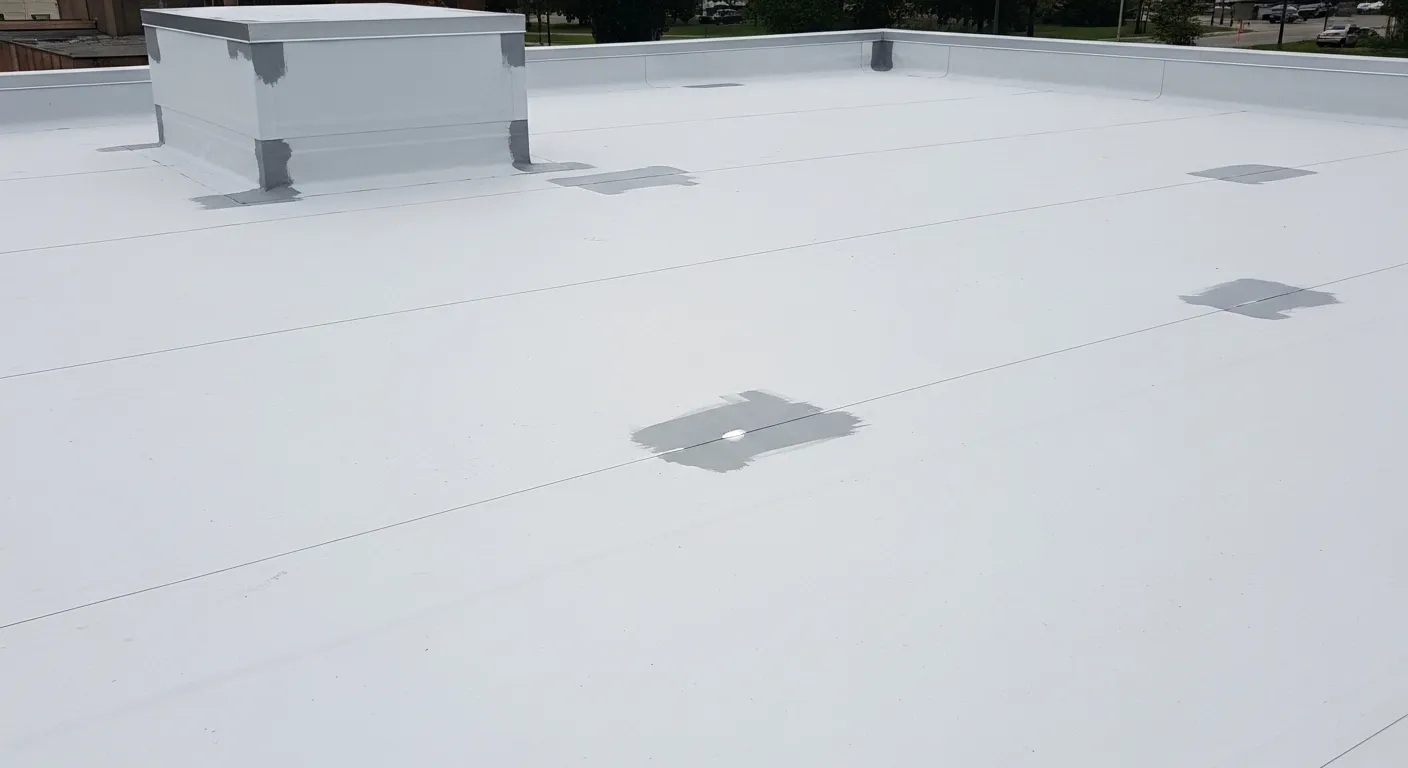
Membrane roofing refers to a category of materials designed for flat or low-slope environments. Unlike traditional built-up roofs that use multiple layers of felt and hot tar, membranes are usually single-ply systems. They are engineered to be lightweight while offering extreme resistance to UV rays and water saturation.
These materials are highly elastic, allowing them to expand and contract as the temperature changes. This flexibility is vital because it prevents the roof from cracking when the building shifts or when the sun heats the surface. They are installed using mechanical fasteners, heavy-duty adhesives, or heat welding to ensure a tight fit across the entire deck.
- Heat welding creates a permanent bond between sheets for superior seam strength.
- Light-colored membranes reflect sunlight, cooling costs for your business.
- The smooth surface of the membrane allows water to move more quickly toward drains.
- Chemical resistance in certain membranes prevents damage from grease or acid rain.
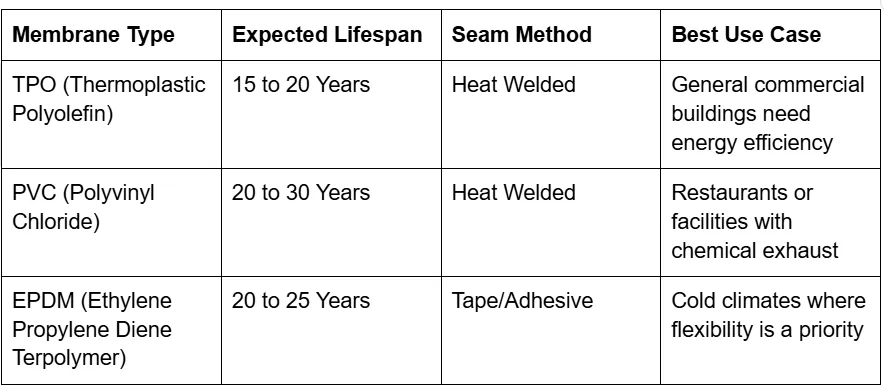
Comparison of popular membrane materials
How TPO and PVC membranes stop leaks
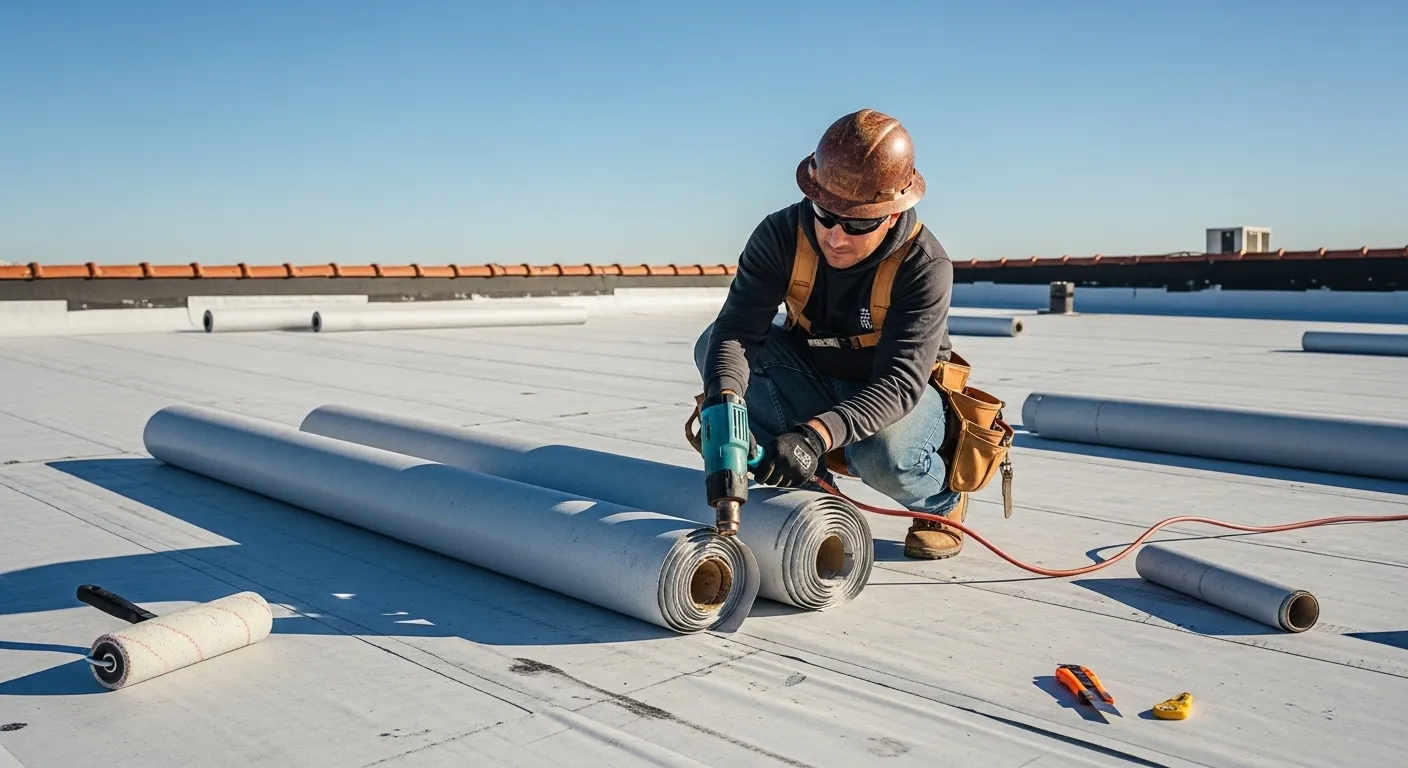
TPO and PVC are thermoplastic materials, meaning they soften when heated and harden when cooled. During installation, technicians use a hot-air welder to fuse the overlapping edges of the sheets. This process turns the individual rolls into waterproof fabric that covers your entire building.
Because these seams are fused at a molecular level, they do not rely on glue or tape that might fail over time. If ponding water on a TPO or PVC roof, the water sits on a seamless surface specifically rated for moisture contact. This gives you time to clear the drains or fix structural issues without worrying about an immediate indoor leak.
Bonus Tip: If you manage a facility with a kitchen, PVC is often the better choice. It resists animal fats and oils that can break down TPO or EPDM membranes over time.
Dealing with ponding in wet or snowy climates
In regions with high rainfall or heavy snow, ponding water is particularly dangerous. When water sits on a roof in a cold environment, it undergoes a freeze-and-thaw cycle. As the water freezes, it expands, which can widen small cracks in your roof or pull at the flashings around vents and chimneys.
Heavy snow loads can also temporarily bow a roof deck, creating new areas where meltwater will pool. Using a membrane system with high tensile strength helps the roof support this weight without tearing. Roofing experts also recommend checking your drainage points after every major storm to ensure that ice hasn't blocked them.
- Install overflow scuppers to provide a backup path for water in case the main drains fail.
- Use walk pads around HVAC units to prevent tools from puncturing the membrane.
- Consider adding extra insulation during a reroof to improve the slope toward the gutters.
What risks come with letting water sit on your roof
Ignoring puddles on your roof can lead to expensive consequences that go beyond a simple leak. The most immediate threat is the sheer weight. One inch of water weighs about five pounds per square foot. If you have a large area of ponding, you are adding several tons of unplanned weight to the structural supports.
Over time, this weight causes the roof deck to sag, and in a self-reinforcing cycle. Constant moisture also encourages the growth of algae, mold, and vegetation. These organisms can eat through certain roofing materials, working inside the building.
- Accelerated degradation of the roofing surface due to intensified UV exposure in the water.
- Reduces the energy efficiency
- Voiding of the manufacturer's warranty if ponding is not corrected within a specific timeframe.
- Rust and corrosion of metal components like fasteners and decking.
Important factors to check before choosing a roofing solution
Before you decide on a specific membrane, you should have a professional evaluate the existing structure. Simply putting a new membrane over it will not solve the underlying issue. You must ensure the deck is sound and the drainage plan is sufficient for your local weather patterns.
You should also be familiar with the material. In many areas, building codes now require "cool roofs" that help lower urban temperatures and reduce energy bills. White or light gray membranes are excellent for this purpose. Finally, consider the foot traffic your roof receives, as some membranes are more puncture-resistant than others.
Bonus Tip: Ask your provider about a tapered insulation system. This involves using insulation boards of varying thicknesses to create a man-made slope that directs all water toward your drains.
The path toward a dry and stable roof
Addressing ponding water requires a combination of structural awareness and high-quality materials. Membrane roofing offers a modern, effective way to seal your building against moisture while providing flexibility and long-term durability. By choosing the right material and ensuring proper installation, you can eliminate the stress of standing water and protect your assets from the top down.
Take the time to inspect your roof after a heavy rain. If you see water remaining after two days, it is a clear sign that action is needed. Evaluating your options now prevents small puddles from turning into major structural failures later. Focus on creating a clear path for water to the roof and choosing a surface that can withstand the elements.
Reach out for a free quote and expert roof assessment
If you are dealing with standing water or recurring leaks, professional assistance can help you determine the best path forward. Contacting an experienced provider ensures that your specific drainage issues are addressed with the right materials. For a comprehensive evaluation of your building, call All Foam & Insulation, LLC at (541) 826-9600. They specialize in helping businesses identify the root causes of roof failure and providing durable membrane solutions. You can also email [email protected] to request a free quote or ask questions about which roofing system fits your budget and local climate.
Common questions about roof ponding and membranes
How deep can ponding water be before it becomes a major problem?
Even half an inch of water can be problematic if it stays for days, but anything over two inches suggests a significant structural dip or a major drainage blockage. The depth increases the weight load on your rafters, which could lead to a localized collapse if the building was not designed for those specific points of pressure.
Can you install a new membrane over an existing leaking roof?
In many cases, contractors can install a new membrane over an old roof if the underlying insulation and deck are dry and structurally sound. If the current roof is saturated with water, the moisture will be trapped between the layers, leading to rot and mold. A professional inspection is necessary to see if a tear-off is required.
How often should I clean my roof drains to prevent ponding?
You should clean your drains at least twice a year, typically in the spring and fall. However, if your building is surrounded by trees or in an area with high wind and dust, you may need to check them monthly. Keeping the pathways clear is the simplest way to prevent water from backing up onto the roof.
Is TPO or PVC better for a roof with known drainage issues?
Both are excellent, but PVC is often cited as being slightly more durable in long-term water immersion. PVC has been used in the industry longer and has a proven track record of handling standing water without losing its physical properties. TPO is a very cost-effective alternative that performs well when installed correctly.
Does ponding water affect my roof warranty?
Many manufacturers include clauses that exclude damage caused by ponding water that stays on the roof for more than 48 hours. If you do not address the drainage issues during the installation of a new membrane, you might find that your warranty is limited. It is always best to fix the slope or drainage at the time of the reroof.


























Sign in to leave a comment.