
Introduction
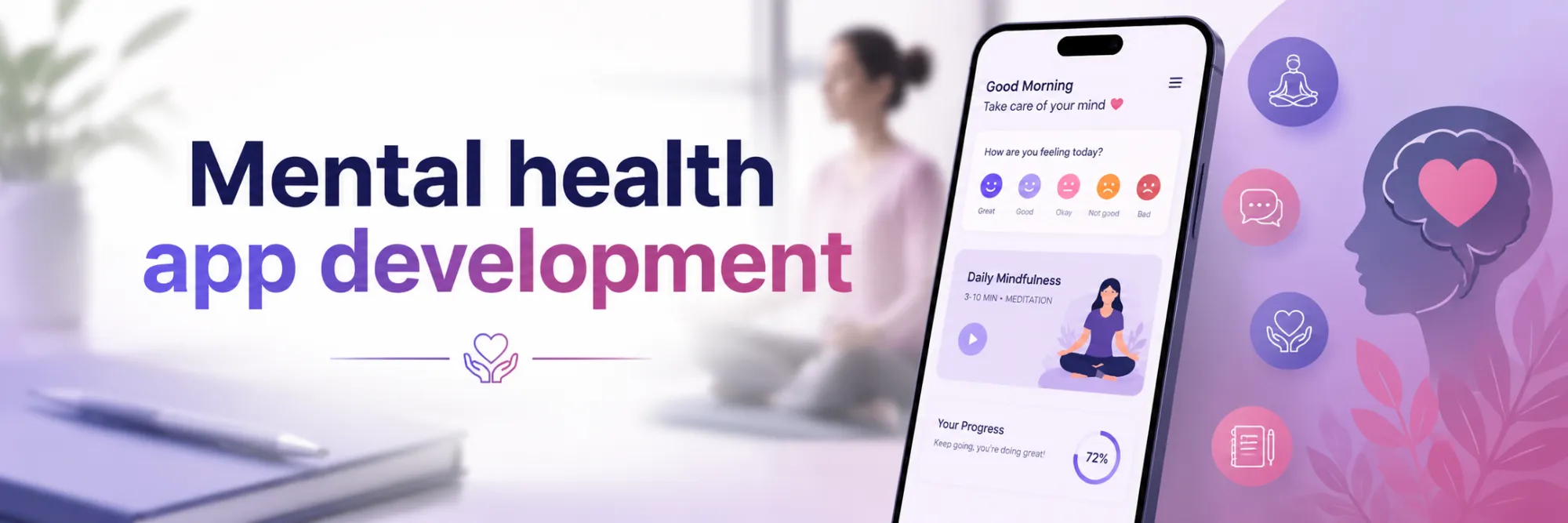
Mental health app development is transforming how people access emotional wellness support by making professional care more convenient, personalized, and accessible. Instead of waiting weeks for an appointment or traveling to a clinic, users can connect with therapists, track their moods, practice mindfulness, and receive guided support directly from their smartphones.
According to the World Health Organization (WHO), nearly 1 in 8 people worldwide—around 970 million individuals—live with a mental health disorder, highlighting the growing need for accessible care. By leveraging technologies such as AI, telemedicine, cloud computing, and wearable integration, mental health apps help bridge the gap between patients and providers while empowering businesses to deliver innovative, scalable, and user-centric digital healthcare solutions.
In this guide, we'll explore the key features, benefits, technologies, and development process of Mental Health App Development.
The Growing Importance of Digital Mental Healthcare
Mental health is no longer viewed as a niche healthcare concern. Stress, anxiety, burnout, and depression have become common challenges affecting people of all ages—from students and working professionals to senior citizens.
The numbers clearly show why digital mental healthcare is gaining momentum.
- Nearly 970 million people globally are living with a mental health condition.
- Depression is one of the leading causes of disability worldwide.
- Many countries have fewer than one mental health professional per 100,000 people, making access to care difficult.
- Smartphone adoption continues to grow, allowing healthcare providers to reach users wherever they are.
Instead of replacing therapists, mental health apps complement traditional treatment. They help users monitor their emotional well-being between appointments, practice mindfulness, maintain therapy routines, and receive immediate support whenever needed.
For healthcare businesses, this creates an opportunity to extend services beyond physical clinics while improving patient engagement and long-term outcomes.
How Does Mental Health App Development Improve Healthcare?
Technology alone doesn't improve healthcare—it matters how it's used. The most successful mental health apps focus on making professional support more accessible, personalized, and engaging for users.
1. Breaking Geographic Barriers
Imagine someone living in a small town where the nearest psychologist is over 100 kilometers away. In the past, regular therapy sessions might have been impossible.
Today, secure teletherapy apps allow users to consult licensed therapists through video calls, messaging, or voice sessions without leaving home.
This is particularly valuable in rural communities, where access to mental healthcare remains limited.
2. Helping People Before Problems Become Serious
Mental health challenges often develop gradually.
Someone experiencing stress today may develop anxiety or depression months later if the warning signs go unnoticed.
Mental health apps encourage users to check in daily through mood tracking, emotional journals, sleep monitoring, and self-assessments. Over time, these insights help identify behavioral patterns that may require professional intervention.
Early support often leads to better treatment outcomes while reducing healthcare costs.
3. Making Therapy More Personalized
Everyone experiences mental health differently.
Some users struggle with workplace stress, while others deal with social anxiety or sleep disorders.
Modern applications use AI and machine learning to understand user behavior and recommend personalized wellness activities instead of offering generic advice.
For example, if someone consistently reports poor sleep and elevated stress, the app may recommend guided breathing exercises or sleep meditation sessions or suggest scheduling a consultation with a therapist.
4. Keeping Users Engaged Between Therapy Sessions
One challenge therapists often face is ensuring patients stay engaged outside scheduled appointments.
Mental health apps solve this by encouraging daily interaction through reminders, journaling, wellness challenges, progress tracking, and personalized goals.
These small daily habits often have a significant impact on long-term mental wellness.
5. Reducing the Stigma Around Seeking Help
Even today, many people hesitate to seek therapy because they fear judgment or discrimination.
Digital platforms provide a more private and comfortable way to begin the mental health journey.
Users can explore educational resources, practice mindfulness exercises, or chat with AI assistants before deciding to consult a licensed therapist.
For many, this first digital step becomes the beginning of long-term professional care.
Real-World Examples of Successful Mental Health Apps
Several digital platforms have already demonstrated how technology can improve mental healthcare at scale.
Headspace
Originally launched as a meditation app, Headspace now offers mindfulness programs, sleep support, stress management tools, and workplace wellness solutions used by millions of people worldwide.
Calm
Calm combines guided meditation, breathing exercises, relaxing music, and sleep stories to help users manage stress and improve sleep quality. It has become one of the most downloaded wellness applications globally.
BetterHelp
BetterHelp connects users with licensed therapists through online messaging, phone calls, and video sessions, making professional counseling more accessible regardless of location.
Wysa
Wysa uses an AI-powered chatbot alongside evidence-based Cognitive Behavioral Therapy (CBT) techniques to provide emotional support, mood tracking, and self-care exercises. Millions of users rely on the platform for day-to-day mental wellness support.
Essential Features of a Mental Health App
Developing a successful mental health application requires thoughtful feature selection that prioritizes user experience, security, and engagement.
Secure User Registration
Simple onboarding with secure authentication ensures users can safely access personalized services.
Mood Tracking
Allow users to record their emotions and identify trends over time through interactive dashboards and reports.
Guided Meditation and Mindfulness
Offer breathing exercises, meditation sessions, and relaxation techniques to help users reduce stress and anxiety.
Online Therapy Booking
Enable users to schedule appointments with licensed mental health professionals directly through the app.
Video and Audio Consultations
Provide encrypted communication channels for confidential therapy sessions.
AI-Powered Chat Support
AI chatbots can offer emotional support, answer common questions, recommend wellness resources, and assist users between therapy sessions.
Digital Journaling
Encourage users to document their thoughts and emotions, helping them better understand their mental health journey.
Push Notifications
Send reminders for therapy appointments, meditation sessions, medication schedules, and daily wellness activities.
Emergency Support
Provide quick access to crisis hotlines, emergency contacts, and immediate assistance when users need urgent help.
Technologies Powering Modern Mental Health Apps
Modern healthcare applications rely on advanced technologies to provide secure, intelligent, and personalized experiences.
Artificial Intelligence
AI analyzes user behavior to deliver personalized wellness recommendations and automate support through virtual assistants.
Machine Learning
Machine learning continuously improves recommendations based on user interactions and progress.
Cloud Computing
Cloud infrastructure enables secure data storage, seamless synchronization, and scalable application performance.
Wearable Device Integration
Connecting with smartwatches and fitness trackers allows apps to monitor sleep quality, heart rate, activity levels, and stress indicators.
Data Encryption
End-to-end encryption safeguards sensitive patient information and ensures compliance with healthcare privacy standards.
Best Practices for MH App Development
Creating a reliable mental health application involves more than adding advanced features. Businesses should follow these best practices:
Design for Simplicity
A clean, calming, and intuitive interface improves user engagement and reduces stress during navigation.
Prioritize Data Privacy
Protect sensitive healthcare information with strong encryption, secure authentication, and role-based access controls.
Ensure Regulatory Compliance
Follow healthcare regulations such as HIPAA, GDPR, or other regional privacy standards to maintain user trust and legal compliance.
Focus on Accessibility
Include multilingual support, voice assistance, screen reader compatibility, and adjustable text sizes to make the app inclusive for diverse users.
Keep Users Engaged
Incorporate progress tracking, wellness goals, personalized reminders, and gamification to encourage consistent usage.
Future Trends in Health App Development
The future of digital mental healthcare is being shaped by emerging technologies and evolving user expectations.
Some key trends include:
- AI-powered virtual mental health assistants
- Predictive analytics for early intervention
- Virtual Reality (VR) therapy sessions
- Augmented Reality (AR) mindfulness experiences
- Wearable-powered emotional health monitoring
- Personalized Cognitive Behavioral Therapy (CBT) programs
- Blockchain-based healthcare data security
- Voice-enabled wellness coaching
These innovations will continue to make mental healthcare more proactive, personalized, and accessible for people worldwide.
Why Choose Moon Technolabs for Mental Health App Development?
At Moon Technolabs, we build secure, scalable, and user-friendly mental health applications that empower healthcare providers, startups, and wellness businesses to deliver exceptional digital care. Our team combines healthcare expertise with advanced technologies like AI, cloud computing, and telemedicine to create solutions that improve patient engagement and support long-term growth.
Why Partner with Moon Technolabs?
- Custom Mental Health App Development tailored to your business needs.
- AI-Powered Features such as chatbots, mood tracking, and personalized recommendations.
- HIPAA & GDPR-Compliant Solutions to ensure data privacy and security.
- Seamless Integrations with telehealth platforms, wearables, and EHR/EMR systems.
- End-to-End Development from strategy and design to deployment and ongoing support.
- Scalable & Future-Ready Apps built for long-term performance and business growth.
Partner with Moon Technolabs to transform your vision into a reliable, feature-rich mental health app that delivers meaningful user experiences and drives better healthcare outcomes.
Conclusion
Healthcare App Development is reshaping the future of healthcare by making professional support more accessible, personalized, and convenient. These digital solutions empower users to take an active role in managing their emotional well-being while enabling healthcare providers to expand their reach and improve patient engagement.
By integrating technologies such as artificial intelligence, cloud computing, wearable devices, and secure telehealth capabilities, businesses can create mental health applications that deliver meaningful value to users and healthcare professionals alike.
As the demand for digital wellness solutions continues to grow, investing in a thoughtfully designed and secure mental health app is more than a technology decision—it's an opportunity to transform care, improve lives, and contribute to a healthier future.


























Sign in to leave a comment.