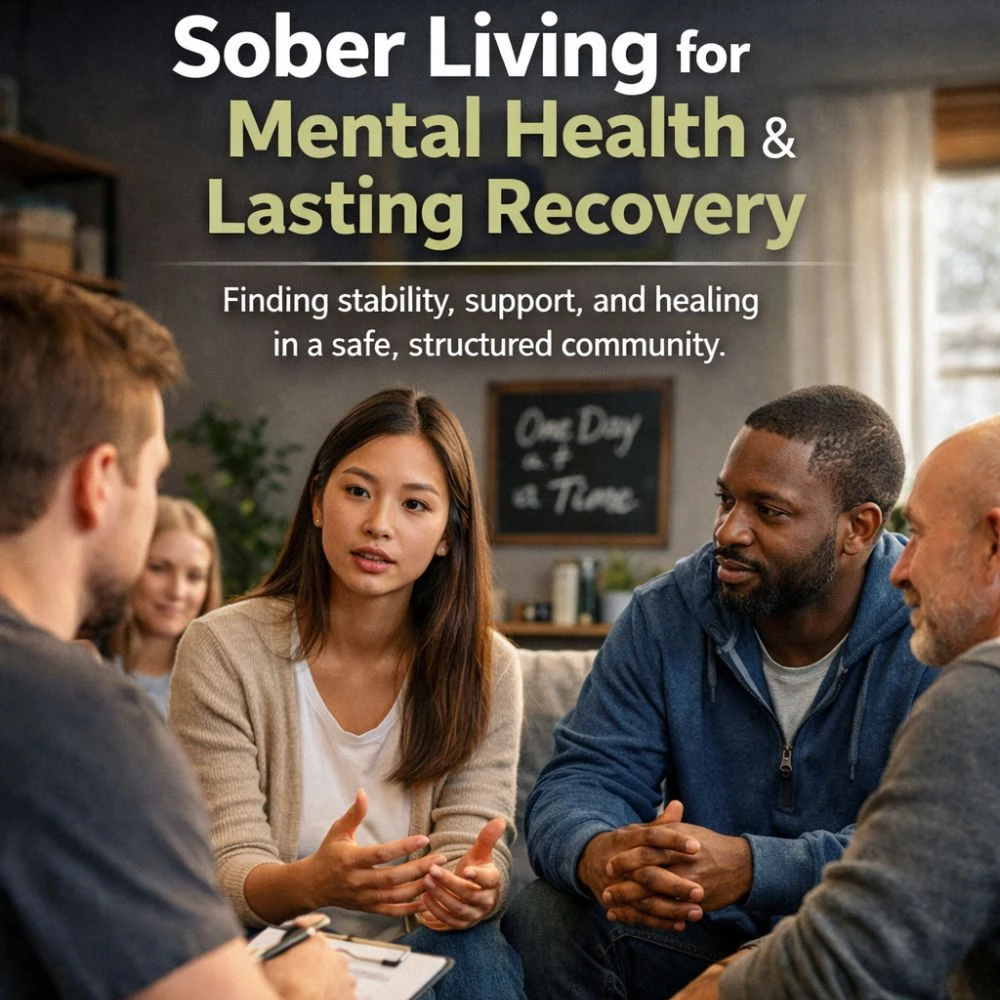

We have the science to prove that addiction is a complex brain disorder, yet many people still treat sobriety like a simple "off" switch. They think that once the chemicals are out of the system, the mental health issues that drove the addiction will just evaporate.
It doesn’t work like that. If you’ve spent years using a substance to quiet your brain, sobriety is going to be loud, very loud. This is why the environment you choose after rehab isn't just a matter of convenience; it’s a matter of psychological survival. Looking for sober living homes near me that can provide you with many mental health benefits of a structured environment are often the difference between a lifetime of recovery and a tragic "day one" reset.
The Mental Health Crisis in Early Recovery
Early recovery is a biological and emotional construction site. Your brain is trying to relearn how to produce dopamine and serotonin on its own, and in the meantime, it’s a bumpy ride.
Anxiety, Depression, and Emotional Instability
Without the numbing agent, all the emotions are felt 10x. Small inconveniences are disasters. It is not merely being dramatic, but it is having a raw nervous system. Depression is common because the brain is literally depleted, and anxiety spikes because you no longer have your old coping mechanism to lean on.
Why Sobriety Alone Doesn’t Fix Mental Health
If you have a broken leg and you stop walking on it, the leg doesn't magically set itself. It just stops hurting as much because you aren't using it. Mental health is the same. Sobriety stops the active damage, but the underlying trauma, chemical imbalances, or personality disorders are still there. You are not recovered without active work; you are merely dry, and it is a very uncomfortable life to lead.
The Risk of Self-Medicating After Rehab
The third stage, the Pink Cloud stage, typically terminates after week three. As the reality of life sinks in, bills, relationships, laundry, the desire to find some shortcut comes back. Most of them replace one addiction with another- overworking, caffeine or extreme exercise in an attempt to fill the gap. Lacking a community to call you to task on these patterns, you are merely going round in circles of relapse.
How Sober Living Supports Mental Well-Being
This is where the environment comes in. Searching for Sober Living Houses near me is often the first step in admitting that your "best thinking" hasn't been working out. A good house provides more than just a roof; it provides a psychological safety net.
Structured Routines That Reduce Anxiety
Anxiety adores empty space. When there is too much dead time in your brain, it fills the dead time by worrying. That vacuum is removed by sober living. Checkins in the morning, rotation and compulsory meetings give the day a rhythm. So when you are able to get the little stuff, such as cleaning the kitchen or being home by 10 PM, your brain has the bandwidth to concentrate on the big stuff, such as therapy and self reflection.
Peer Support and Reduced Isolation
Addiction thrives in the dark. It wants you alone in your room, convinced that nobody understands you. The value of recovery houses near me isn't just the bed; it's the guy in the next room who had a panic attack yesterday and can tell you how he got through it. Peer support is the ultimate antidote to the "I’m the only one" syndrome that fuels depression.
Access to Ongoing Therapy and Counseling
Most people start their journey by searching for drug rehab housing near me, but they don't realize that the house is just the container—the community inside is what facilitates the connection to outside help. Good sober living homes have deep roots in the local clinical community, making it easier to find a therapist or a psychiatrist who actually knows what they’re doing.
Long-Term Recovery Outcomes Linked to Sober Living
The data is pretty clear: the longer you stay in a supportive, drug-free environment, the higher your chances of staying sober for good. But it goes beyond just "not using." Long-term residents of sober living report higher levels of life satisfaction, better employment stability, and significantly improved mental health scores. Why? Because they’ve had the time to practice being a functional human being in a "low-stakes" environment before they head back out into the "high-stakes" world.
Signs That Sober Living Could Benefit Mental Health
If you are asking yourself if you need this, you probably do. But specifically, look for these signs:
- You feel "paralyzed" by the thought of going back to your old apartment.
- You find yourself "zoning out" or dissociating when things get stressful.
- You have a history of "relapsing at the three-month mark."
- You feel lonely even when you’re around people.
This is why transitional housing near me is a game changer. It’s for the person who knows they aren't ready to fly solo yet.
Choosing a Sober Living Home with Mental Health Support
Don't just pick the place with the nicest TV. Look for a house that takes mental health seriously.
- Staff Training: Does the house manager understand the basics of mental health and de-escalation?
- Culture: Is it a "party house" where people are just waiting out their time, or is it a "growth house" where people are actively working on themselves?
- Medication Policy: A house that is "anti-medication" is a red flag in 2026. You want a place that supports evidence-based medicine.
Conclusion
Recovery is not a solo sport, and it’s definitely not a sprint. It’s a total renovation of your internal world. If you try to do that renovation while living in a "construction zone" of old triggers and isolation, the building is going to collapse.
Selecting a sober living place is a matter of self-respect. It is saying, "My mental health is greater than what my ego wants to be independent at the moment. Give yourself the gift of time. Give yourself to the community. It is the 2.0 version of yourself that is on the other side of those 90 days.



























Sign in to leave a comment.