

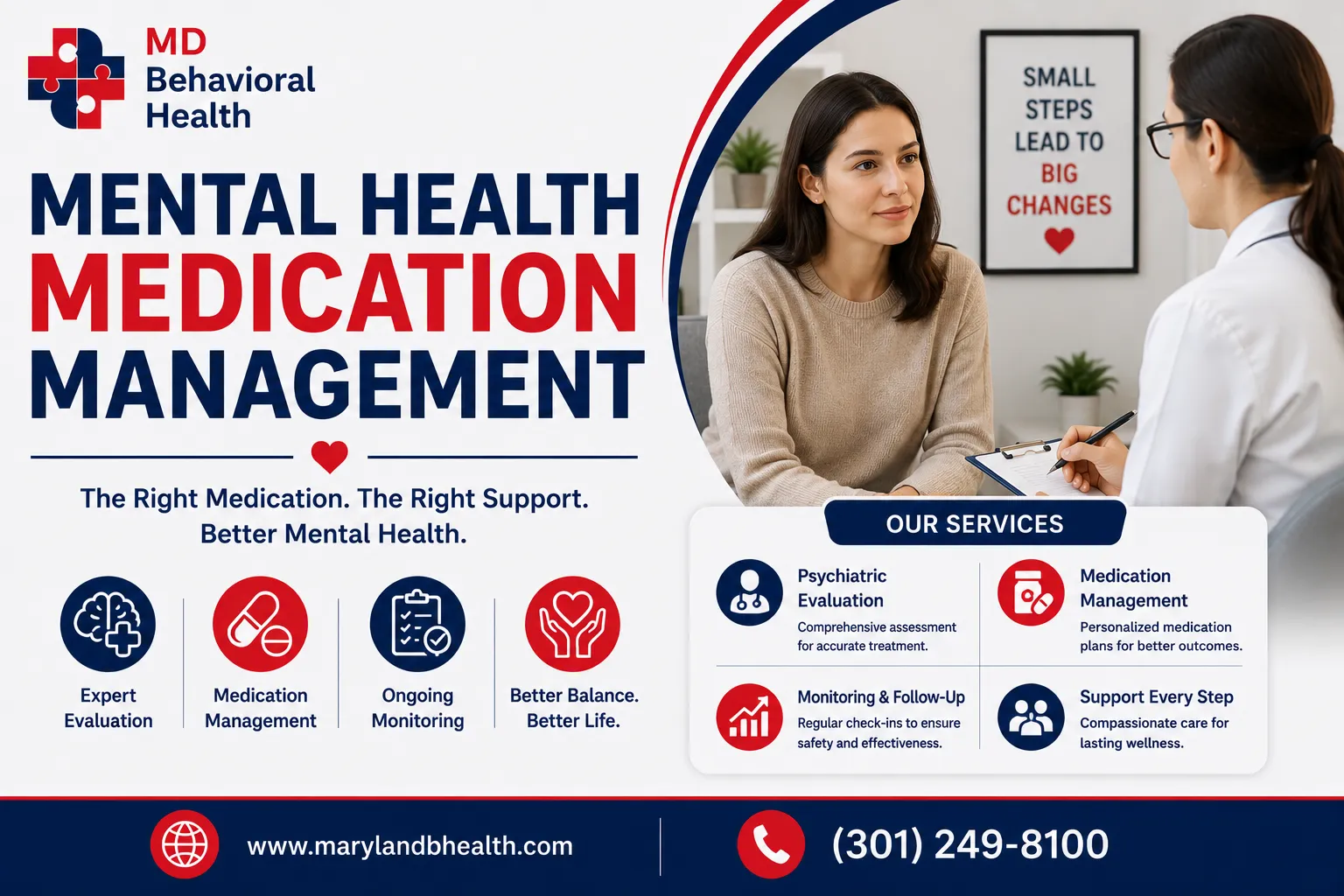
Mental health conditions often require a personalized treatment plan that combines therapy, healthy lifestyle habits, and appropriate medications. Because every individual responds differently to treatment, regular follow up and careful monitoring are essential for achieving the best possible outcomes. Through Mental Health Medication Management, healthcare providers evaluate medication effectiveness, monitor side effects, adjust treatment when needed, and support patients in maintaining long-term emotional wellness while improving their overall quality of life.
What Is Mental Health Medication Management?
Mental Health Medication Management is a structured healthcare service that focuses on prescribing, reviewing, monitoring, and adjusting psychiatric medications based on a patient's symptoms, medical history, treatment response, and overall health. The goal is to ensure that medications remain safe, effective, and aligned with each patient's unique needs.
Behavioral health professionals work closely with patients to monitor progress, answer questions, and make evidence-based decisions that support recovery and emotional stability.
Why Medication Management Is Important
Psychiatric medications can play a valuable role in treating conditions such as depression, anxiety disorders, bipolar disorder, schizophrenia, and other behavioral health concerns. However, medications require regular evaluation to ensure they continue providing the desired benefits.
Key benefits include:
- Improved symptom management
- Better medication adherence
- Early identification of side effects
- Personalized dosage adjustments
- Reduced risk of medication interactions
- Enhanced treatment effectiveness
- Ongoing clinical monitoring
Regular medication reviews help improve patient safety while supporting long-term recovery.
Who Can Benefit?
Mental Health Medication Management may benefit individuals who:
- Take psychiatric medications
- Have recently started treatment
- Experience medication side effects
- Require dosage adjustments
- Live with chronic mental health conditions
- Receive therapy alongside medication
- Need ongoing psychiatric monitoring
Treatment plans are individualized according to each patient's healthcare needs.
What Happens During a Medication Management Visit?
Healthcare providers conduct detailed evaluations to ensure medications continue supporting recovery.
Comprehensive Assessment
Providers review symptoms, emotional well-being, medical history, current medications, allergies, and treatment goals.
Medication Review
Prescription medications are evaluated for effectiveness, potential interactions, and possible side effects.
Treatment Adjustments
If necessary, providers may modify medication dosages or recommend changes based on clinical findings.
Patient Education
Patients receive guidance on medication use, expected benefits, possible side effects, and the importance of following treatment recommendations.
Ongoing Monitoring
Regular follow-up appointments help providers evaluate progress and make timely adjustments when healthcare needs change.
Conditions Commonly Managed
Medication management is commonly used as part of treatment for:
- Major depressive disorder
- Generalized anxiety disorder
- Bipolar disorder
- Schizophrenia
- Post-traumatic stress disorder (PTSD)
- Obsessive-compulsive disorder (OCD)
- Other behavioral health conditions
Every treatment plan is developed using evidence-based clinical guidelines and individualized patient assessments.
Supporting Whole-Person Mental Healthcare
Successful behavioral healthcare extends beyond medication alone. Counseling, healthy sleep, balanced nutrition, physical activity, stress reduction, and strong support systems all contribute to emotional well-being.
Healthcare providers often coordinate care with therapists, primary care physicians, and other specialists to provide comprehensive treatment.
The Role of Comprehensive Health Testing
Overall physical health can influence mental health symptoms and medication effectiveness. Laboratory testing and preventive health evaluations help healthcare providers identify underlying medical conditions that may contribute to emotional or behavioral concerns.
Blood work, metabolic panels, thyroid testing, vitamin assessments, and other diagnostic evaluations provide important clinical information that supports personalized treatment planning.
The Benefits of Integrated Healthcare
Combining behavioral healthcare with preventive medical evaluations creates a more complete picture of a patient's health. This coordinated approach allows providers to monitor physical and emotional wellness together while making informed treatment decisions.
For individuals receiving behavioral healthcare, comprehensive health testing provides laboratory evaluations, preventive screenings, metabolic assessments, routine health monitoring, and diagnostic services that complement medication management by identifying underlying health conditions, supporting medication safety, and improving long-term treatment outcomes.
Supporting Long-Term Wellness
Maintaining emotional wellness requires ongoing communication with healthcare providers, regular medication reviews, healthy lifestyle habits, and preventive healthcare. Patients who actively participate in treatment are more likely to experience improved symptom management and better overall quality of life.
Healthy nutrition, regular exercise, quality sleep, stress management, counseling, and routine medical evaluations all contribute to lasting emotional well-being.
Choosing the Right Behavioral Health Provider
Selecting an experienced behavioral health provider is an important step toward successful treatment. Look for professionals who prioritize evidence-based medicine, individualized care, medication safety, patient education, and collaborative healthcare.
A trusted provider can monitor progress, adjust medications when necessary, and coordinate care with other healthcare professionals to support comprehensive mental wellness.
Conclusion
Mental Health Medication Management plays a vital role in helping individuals safely and effectively manage psychiatric medications while supporting long-term emotional stability. Through regular medication reviews, personalized treatment adjustments, ongoing monitoring, and patient education, healthcare providers help improve treatment outcomes and overall well-being.
When combined with comprehensive health testing, patients benefit from a coordinated healthcare approach that addresses both mental and physical health. By integrating preventive medical evaluations with behavioral healthcare, providers can deliver personalized care that promotes recovery, enhances medication safety, and supports lifelong wellness.


























Sign in to leave a comment.