
Practical Training Is Not a Feature — It Is the Only Thing That Works
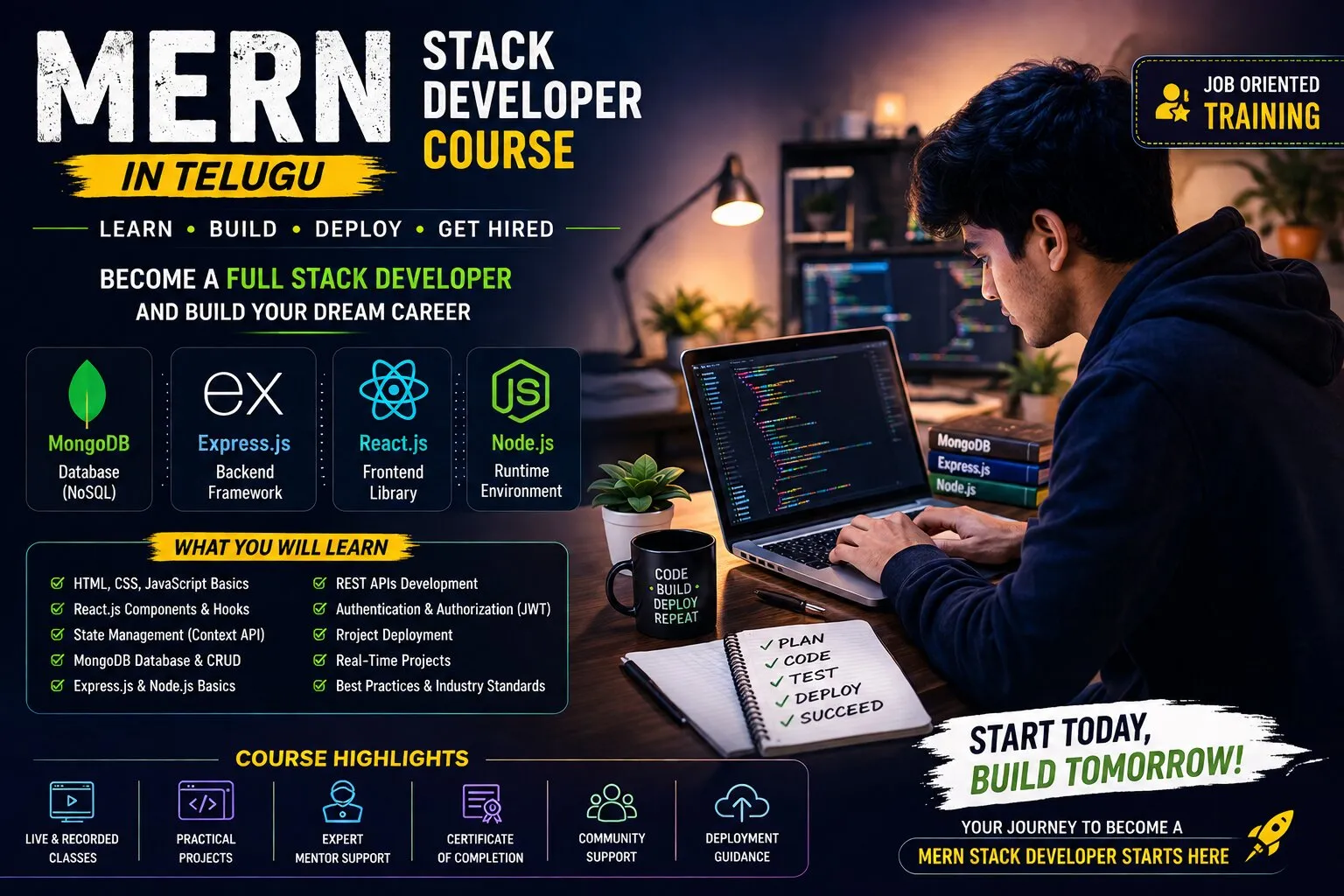
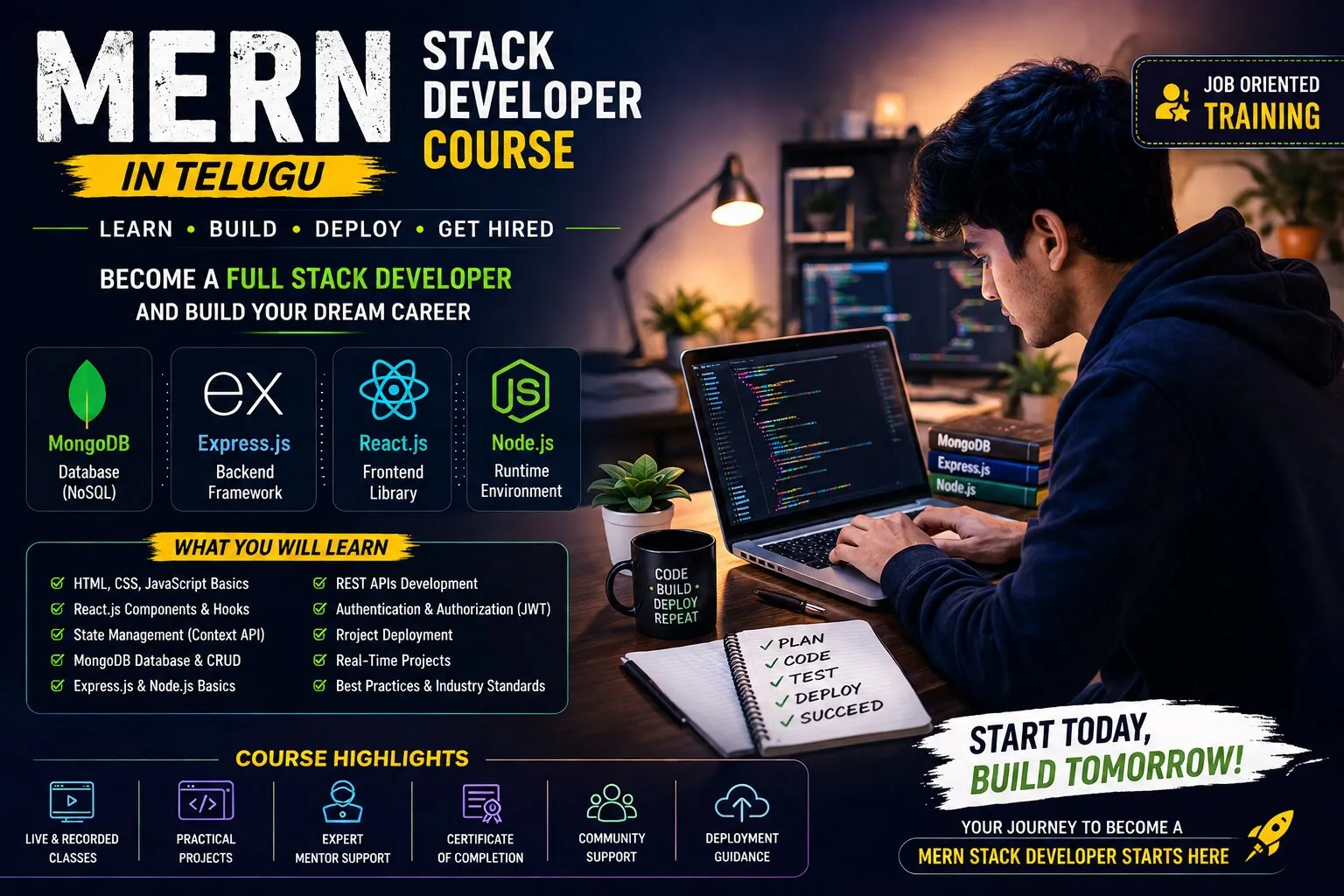
There is a version of tech education that feels productive without producing results. Watch a lecture. Take notes. Complete a quiz. Repeat. By the end, the student has spent hundreds of hours and can explain what React is — but cannot build a working component from scratch. A MERN Stack Developer Course in Telugu built on practical training works differently. The output is not knowledge about web development. It is the ability to actually do it.
This distinction matters more than any other factor when choosing how to learn.
Why Practical Beats Theoretical for MERN Specifically
MERN is a hands-on skill set. There is no meaningful equivalent of reading about it versus doing it — unlike, say, understanding history or economics, where deep reading produces genuine expertise.
Consider the difference:
| Theoretical Learning | Practical Learning |
|---|---|
| Reads about MongoDB schemas | Designs a schema, breaks it, redesigns it |
| Watches a React tutorial | Builds a component, sees the error, fixes it |
| Understands REST in concept | Builds a REST API, tests it with Postman |
| Knows what JWT is | Implements authentication end-to-end |
The right column is what employers hire. Practical training is the only path there.
What Practical MERN Training Looks Like Session by Session
A practical Telugu MERN course does not save the hands-on work for the end. It starts from the first week and never stops.
Week 1: Your First Working Web Page
Not a lecture on HTML theory. An actual page — built, styled, and viewed in a browser. Students leave session one with something they made.
Week 3: Your First JavaScript Function That Does Something Real
Not an academic exercise. A function that takes user input from a form and does something with it. The connection between code and result becomes real.
Week 6: Your First React Component
A component that holds state, responds to a click, and updates the UI. The moment React stops being abstract and starts being a tool.
Week 10: Your First API Endpoint
An Express route that accepts a request and returns a response. The student tests it with Postman and sees real data come back. Backend development stops being intimidating.
Week 14: Your First Full Stack Feature
A complete user registration — React form sends data, Express validates it, MongoDB stores it, response returns to the frontend, UI updates. All four technologies. One working feature.
Each session builds on the last. Nothing is left abstract for long.
Common Practical Mistakes and What They Teach
Beginners in practical courses make predictable mistakes. These mistakes are not problems — they are the curriculum.
Mistake: Forgetting to start the Node server before testing the frontend Lesson: Understanding the separation between frontend and backend environments
Mistake: Returning data from MongoDB without handling the async nature of the query Lesson: Async/await becomes permanently understood through the error, not the lecture
Mistake: Setting state directly instead of using the setState function in React Lesson: React's one-way data flow becomes clear the moment it breaks
Mistake: Storing sensitive data in the frontend instead of the backend Lesson: Security thinking begins to develop naturally
In Telugu-medium practical sessions, these mistakes are discussed openly. The instructor explains the error in Telugu, the student understands in Telugu, and the fix is remembered permanently.
The Tools Practical Training Familiarizes You With
Beyond the MERN technologies themselves, practical training introduces the tools real developers use daily:
- VS Code — the industry-standard code editor with extensions that matter
- Postman — for testing APIs before the frontend is connected
- Git and GitHub — version control and portfolio visibility
- Chrome DevTools — debugging frontend issues in real time
- MongoDB Compass — visualizing database contents during development
- npm — managing packages and dependencies
Students who graduate from practical training are not just MERN developers. They are developers who work the way real development teams work.
The Gap Between Course Completion and Job Readiness
Practical training closes this gap significantly. When your course involves:
- Building five real projects
- Debugging real errors under instructor guidance
- Deploying live applications
- Presenting your work and explaining your decisions
...the interview is not a test of what you know. It is a conversation about what you built. That is a fundamentally different and far more comfortable position to be in.
Telugu-speaking freshers who complete practical MERN training are not hoping to pass interviews. They are showing up to them with evidence.


























Sign in to leave a comment.