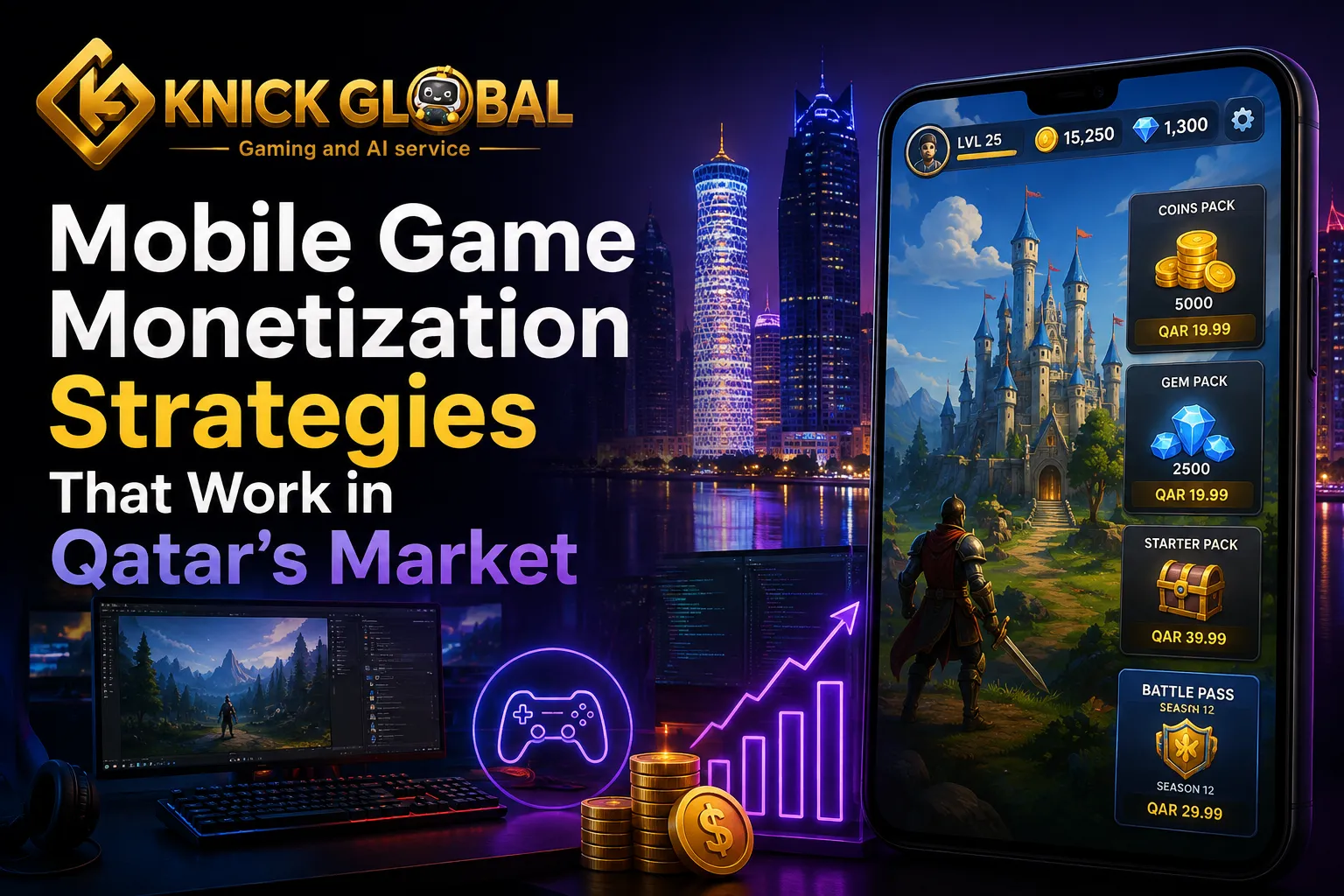

Qatar’s gaming market is becoming more interesting for developers, startups, and businesses looking beyond traditional mobile applications. A young digital audience, strong smartphone usage, growing interest in esports, and continued investment in digital entertainment are creating room for new mobile gaming ideas.
But building a good game is only part of the job.
A mobile game also needs a monetization model that fits the way people actually play. Push monetization too aggressively and players may leave. Make everything free without a clear revenue plan and the game can struggle to support ongoing development.
For businesses working with a game development company in Qatar, monetization should therefore be discussed while the game is still being planned, not after it reaches the app stores.
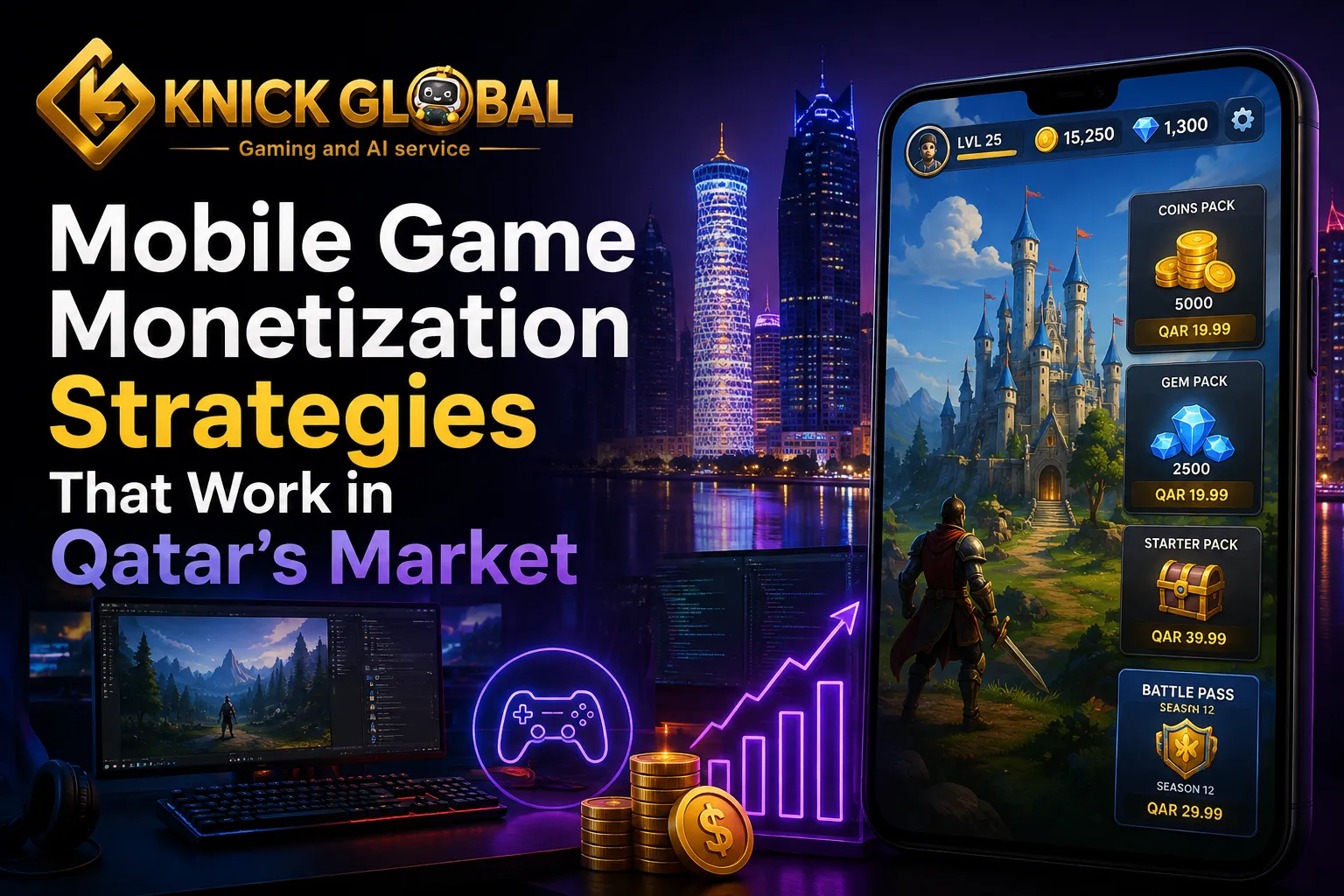
Why Mobile Game Monetization Matters in Qatar
Mobile gaming gives businesses access to a broad audience without requiring players to own dedicated gaming hardware. A smartphone is enough to discover, download, and start playing.
Qatar also has an audience familiar with digital services, online purchases, subscriptions, social platforms, and mobile-first experiences. That makes several monetization models possible, but there is no single model that works for every game.
A casual puzzle game might rely heavily on advertising. A competitive multiplayer title may generate more revenue from cosmetic purchases, while a strategy game could combine subscriptions, in-app purchases, and seasonal content.
A skilled mobile game development company in Qatar can build these systems into the gameplay rather than adding them as disconnected payment features.
1. In-App Purchases Without Disrupting Gameplay
In-app purchases remain one of the most practical ways to monetize mobile games.
Players can download the game for free and later choose to purchase optional items such as:
- Character skins and costumes
- Virtual currency
- Special avatars
- Extra lives or energy
- Weapon or vehicle customizations
- Additional levels
- Cosmetic effects
- Limited-edition items
The key word here is optional.
Players should still enjoy the core experience without feeling forced to spend money. When purchases offer customization, convenience, or additional content instead of creating unfair advantages, they tend to fit more naturally into the game.
For Qatar-focused games, developers can also explore culturally relevant themes, Arabic-language content, regional events, and locally inspired cosmetic items where appropriate.
2. Rewarded Video Ads
Nobody enjoys an advertisement that suddenly interrupts an important moment in a game.
Rewarded ads work differently.
The player chooses to watch an advertisement and receives something useful in return. It might be another attempt at a level, bonus currency, temporary power, extra energy, or a daily reward.
This creates a simple exchange between the game and the player.
For example, after losing a racing challenge, a player could watch a short video to continue from the same checkpoint rather than restarting the race.
Rewarded ads can be particularly useful for free-to-play games because they allow non-paying players to contribute to revenue without making a direct purchase.
3. Battle Passes and Seasonal Content
Competitive and multiplayer games have made battle passes increasingly familiar to mobile players.
A battle pass usually gives players access to rewards that can be earned during a specific season. These may include skins, badges, virtual currency, emotes, character items, and exclusive challenges.
The advantage is that monetization becomes connected with progression.
Instead of simply buying an item and leaving, players have a reason to return and complete objectives.
Seasonal content can also be adapted around relevant events. Games targeting Qatar and the wider GCC can introduce special challenges, tournaments, themed environments, or rewards around major sporting events and regional occasions.
The content should still feel like part of the game rather than an advertisement dressed up as an event.
4. Subscription-Based Game Memberships
Subscriptions are another option, particularly for games with regular updates and a loyal player community.
A monthly membership might provide:
- Daily bonus currency
- Exclusive customization options
- Ad-free gameplay
- Priority rewards
- Additional missions
- Member-only tournaments
- Early access to new content
This approach creates recurring revenue, which can help developers plan updates and ongoing support more predictably.
Subscription infrastructure can also connect with broader SAAS based development in Qatar, especially when gaming platforms include user accounts, cloud-based services, dashboards, memberships, analytics, or content management systems.
Still, a subscription needs to provide ongoing value. Players will quickly cancel a membership if its benefits stop feeling useful.
5. Cosmetic Items and Personalization
Not every purchase needs to make a player stronger.
In fact, cosmetic monetization can be one of the fairest approaches for competitive games.
Players may pay to personalize characters, vehicles, weapons, profiles, avatars, animations, or virtual environments without gaining a gameplay advantage.
This matters in multiplayer games where fairness has a direct impact on retention.
Personalization can also help players build an identity inside a game. Someone who has spent weeks developing a character, collecting items, and customizing a profile has more reason to remain connected to the experience.
A mobile app development company in Qatar with experience in gaming ecosystems can also integrate profiles, digital wallets, notifications, account systems, and social features that support this type of personalized experience.
6. Premium Games and Paid Downloads
Free-to-play is popular, but it is not the only option.
Some games can still succeed with a one-time purchase, especially when they offer a complete experience without ads or constant microtransactions.
This model may suit:
- Story-driven games
- Educational games
- Premium puzzle titles
- Simulation games
- Games created for specific communities
- Branded entertainment experiences
A hybrid approach is also possible. Developers might offer a free demo or limited version and allow users to pay once to unlock the complete game.
This gives players an opportunity to experience the gameplay before making a decision.
7. AI-Powered Personalization and Monetization
Artificial intelligence is beginning to influence how developers understand player behavior.
Through AI application development in Qatar, gaming businesses can explore systems that analyze how players interact with a game, where they struggle, which modes they prefer, and when they are likely to stop playing.
That information can support smarter personalization.
For example, one player may enjoy competitive challenges while another prefers character customization. Showing both players exactly the same offers may not produce good results.
AI-assisted systems can help games present more relevant content, recommendations, difficulty adjustments, and promotions.
However, personalization should remain transparent and responsible. The goal should be to improve the player experience, not pressure people into unnecessary spending.
8. Blockchain-Based Digital Assets
Blockchain remains another possible monetization route, although it needs a clear purpose.
Through Blockchain Game development in Qatar, developers can explore digital ownership, collectible assets, tokenized items, and blockchain-supported marketplaces.
The important question is whether blockchain actually improves the game.
Adding NFTs or tokens simply because the technology exists rarely creates a better player experience. Players generally care first about whether the game is enjoyable.
When blockchain is genuinely useful, it could support features such as verifiable ownership of limited digital collectibles or player-to-player trading.
Any blockchain-based monetization model should also consider platform policies, security, local regulations, and the complexity it introduces for ordinary players.
9. Sponsorships and Brand Partnerships
Qatar has strong activity across sports, hospitality, retail, technology, tourism, and entertainment. That creates interesting possibilities for brand partnerships inside games.
Instead of placing generic banner advertisements everywhere, developers can build sponsorships into the environment.
A racing game might feature a branded tournament. A sports game could offer sponsored seasonal challenges. A virtual city could include carefully selected branded locations.
These partnerships work best when they match the game naturally.
Players should feel that the collaboration adds something to the experience rather than turning the game into an advertising screen.
Choosing the Right Monetization Mix
The strongest strategy may involve more than one revenue source.
A free-to-play mobile game, for example, could combine rewarded advertising, cosmetic purchases, a seasonal battle pass, and optional subscriptions.
That does not mean every monetization feature should be added at launch.
Start with the game itself.
Who is going to play it? How long is a normal session? Why will players return tomorrow? Which features do they value? At what point would paying for something genuinely improve their experience?
These questions should shape the monetization model.
Testing matters too. Developers can examine player retention, purchase behavior, ad engagement, subscription cancellations, and progression patterns to understand what works and what needs adjustment.
Build Monetization Into the Game From Day One
Monetization works better when it is part of the product strategy from the beginning.
Knick Global works with businesses and entrepreneurs looking for a game development company in Qatar to turn gaming concepts into functional mobile experiences. From gameplay planning and mobile development to AI-powered features, blockchain integrations, backend systems, and monetization mechanics, the focus is on building games that are enjoyable for players and commercially practical for businesses.
The right monetization strategy does not ask, “How much can we charge the player?”
A better question is, “What value can we offer that players are genuinely willing to pay for?”
That difference can shape the long-term future of a mobile game.
About the Author
Knick Global provides game, mobile app, AI, blockchain, web, and digital product development services for businesses and startups. The team works with companies looking to build interactive products designed around real user needs and practical business goals.
Planning a mobile game for Qatar? Talk to Knick Global about your concept, target audience, gameplay features, and monetization goals to build a clear development roadmap.

























Sign in to leave a comment.