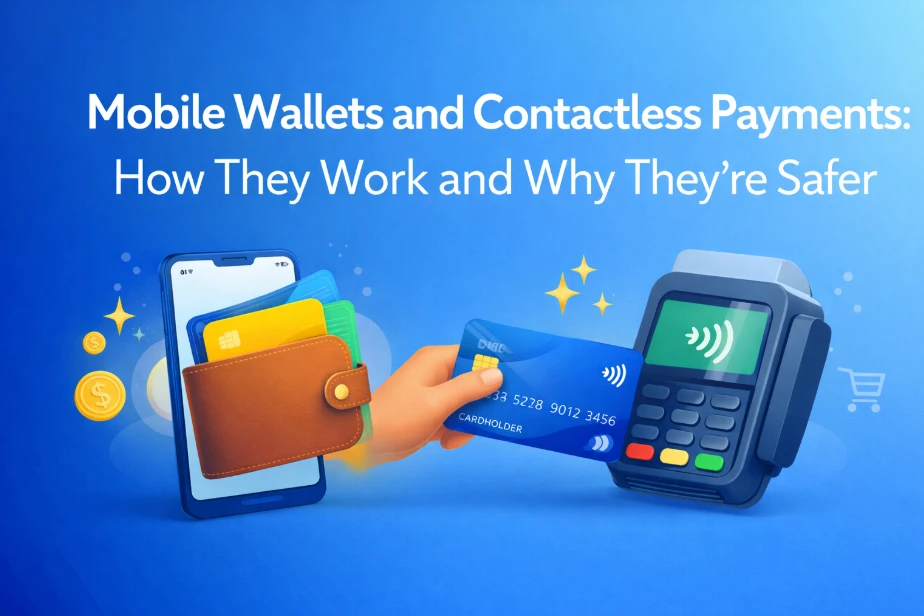

Mobile wallets and contactless payments now shape daily payment habits in Oman. Customers use phones, smartwatches, and contactless cards to pay quickly without handling cash. Banks, merchants, and regulators support these methods due to stronger security controls and faster processing. This article explains how mobile wallets and contactless payments work and why customers in Oman often consider them safer for everyday transactions.
What Are Mobile Wallets and Contactless Payments?
Mobile wallets explained
Mobile wallets store card or account details in a secure digital format on a smartphone or wearable device. Customers link debit or credit cards issued by banks in Oman to approved wallet applications. Payments occur when the customer authorises the transaction using biometric verification or a device passcode.
Contactless payments explained
Contactless payments allow customers to tap a card or device on a payment terminal using Near Field Communication (NFC). The terminal reads encrypted payment data within a short range. Most merchants in Oman now accept contactless card payments at supermarkets, fuel stations, pharmacies, and restaurants.
How Mobile Wallets and Contactless Payments Work
Tokenisation protects card details
Mobile wallets replace actual card numbers with a digital token during transactions. The merchant never receives the real card number. This process reduces exposure if a merchant system faces a data breach.
NFC enables secure communication
Contactless payments rely on NFC technology, which works only at very close distances. The payment terminal and device exchange encrypted data within seconds. This limited range reduces the risk of unauthorised interception.
Bank authorisation completes the transaction
Banks authorise each payment in real time through established payment networks. The bank checks transaction limits, card status, and security rules before approval. Failed checks result in immediate decline notifications.
Why Mobile Wallets and Contactless Payments Are Safer
Reduced physical handling lowers risk
Mobile wallets and contactless cards limit the need to hand over cards or cash. Customers retain control of their payment device throughout the transaction. This approach reduces card skimming and cash theft risks.
Biometric authentication adds protection
Most mobile wallets require fingerprint or facial recognition before payment. Biometric data stays stored on the device rather than on bank servers. This extra step makes unauthorised use more difficult if a phone goes missing.
Transaction limits manage exposure
Banks in Oman often apply contactless transaction limits for cards. Customers may complete higher-value payments through mobile wallets using biometric checks. These limits help manage potential losses from misuse.
Real-time alerts improve monitoring
Digital banking platforms usually send instant notifications for wallet and contactless transactions. Customers can review payments immediately and report suspicious activity without delay.
Where Customers in Oman Commonly Use These Payments
Everyday retail purchases
Customers frequently use mobile wallets and contactless cards for groceries, dining, and fuel purchases. Faster checkout times reduce queues, especially during peak hours.
Public services and transport
Some parking systems, toll services, and government payment portals support contactless and digital payments. These options simplify routine payments without cash handling.
Online and in-app payments
Mobile wallets also support online transactions within apps and websites. Tokenisation protects card details during digital purchases.
Banking Services That Support Mobile Wallet Usage
Cards linked to digital wallets
Debit and credit cards issued in Oman often support approved mobile wallets. Eligibility may depend on card type and account status.
Digital banking controls
Digital banking platforms allow customers to enable or disable contactless features, set transaction limits, and view payment history. These controls support safer usage.
Payments and transaction management
Banks process wallet and contactless payments through secure payment networks. Customers may review statements through digital banking channels.
Eligibility and Practical Considerations in Oman
Customers usually need an active bank account and an eligible card to use mobile wallets. Smartphones must support NFC and approved wallet applications. Merchants must use contactless-enabled terminals. Some older terminals may not support wallet payments, though acceptance continues to expand across Oman.
FAQs
Are mobile wallets accepted everywhere in Oman?
Acceptance continues to grow. Most large retailers and many small merchants support contactless payments, though some locations still rely on cash or card insertion.
Do mobile wallet payments cost extra?
Banks generally process mobile wallet transactions like standard card payments. Fees depend on the underlying card terms and merchant policies.
What happens if a phone gets lost?
Customers can block the wallet remotely using device security features or contact their bank to suspend the linked card.
Are contactless cards safe for frequent use?
Banks apply transaction limits and monitoring systems. Customers can disable contactless features through digital banking if preferred.
Can expatriates use mobile wallets in Oman?
Expatriates with eligible bank accounts and supported devices may use mobile wallets, subject to bank policies.
Pay Smarter with Confidence Using Digital Payments
Mobile wallets and contactless payments now support safer, faster transactions across Oman. Strong encryption, biometric checks, and bank controls reduce everyday payment risks. Customers who use supported cards and digital banking tools from trusted institutions can manage payments with confidence while maintaining control over security settings.

























Sign in to leave a comment.