
Table of Contents
- Introduction
- Why Homeowners Choose Cable Deck Railing Systems
- Cost Factors of Cable Deck Railing Installation
- Materials and Quality Differences in Stainless Steel Cable Railing
- Common Installation Mistakes to Avoid
- Design Strategies for Residential and Commercial Decks
- Seasonal Performance and Climate Planning
- Safety Standards and Building Requirements
- Maintenance Checklist for Long Term Durability
- Conclusion
- Book a Deck Construction Service Today!
- Frequently Asked Questions
Key Takeaways
- Cable deck railing improves visibility while maintaining fall protection.
- Stainless steel cable railing provides better weather resistance and structural strength.
- Proper spacing, post reinforcement, and tension adjustment directly affect safety.
- Installation cost depends on material grade, deck height, and labor complexity.
- Climate exposure and maintenance routines influence lifespan and appearance.
Introduction
Planning a new deck? Learn more about professional construction options for cable deck railing and how proper installation improves safety and longevity. Cable deck railing has become a preferred option for property owners who want safety without blocking outdoor views. Unlike traditional railing systems that use solid balusters or decorative panels, cable deck railing focuses on minimal visual obstruction while still meeting structural and safety expectations.
This approach works well for modern homes, vacation properties, and commercial outdoor spaces that prioritize open space design. Whether you are building a new deck or upgrading an existing structure, understanding how cable deck railing systems function helps you make better long-term decisions about cost, durability, and usability.
The popularity of cable deck railing continues to grow because it blends functionality with contemporary aesthetics. Property owners often compare it with traditional railing systems before choosing the best solution for their specific property layout and budget.
Why Homeowners Choose Cable Deck Railing Systems
Cable deck railing systems are chosen not only for appearance but also for practical advantages in daily use.
Open Space Visual Design
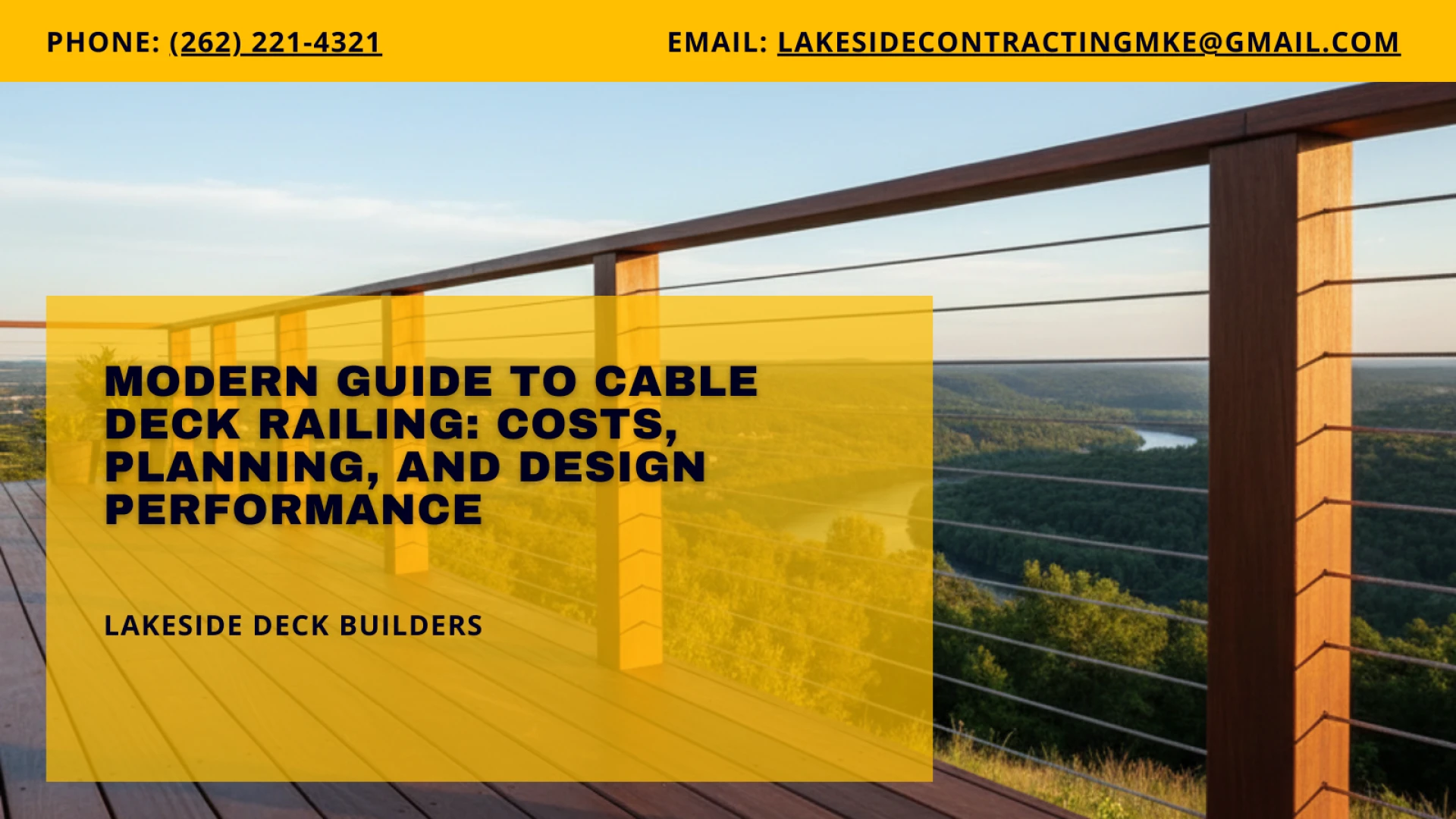
Many property owners want outdoor areas to feel larger and more connected to surrounding landscapes. Cable systems use thin horizontal or vertical lines that do not block natural lighting or scenery. This is especially useful for homes overlooking gardens, hills, or waterfront areas.
Compatibility With Modern Architecture
Contemporary property design favors clean lines and simple geometry. Cable deck railing naturally complements this architectural style because it does not add heavy visual weight to the deck structure.
Versatile Property Applications
Cable deck railing is commonly used in:
- Elevated residential decks
- Commercial patios
- Rooftop outdoor spaces
- Poolside platforms
Each application requires careful structural planning to maintain safety and durability.
Cost Factors of Cable Deck Railing Installation
Understanding pricing helps property owners plan projects realistically. Cable deck railing systems typically cost more upfront than wood baluster railings, but long-term performance can balance the investment.
Material Costs
The main cost drivers include:
- Stainless steel cable quality
- Post material selection
- Hardware tensioning components
Marine-grade stainless steel cable railing systems usually cost more but offer better corrosion resistance and structural performance.
Labor and Installation Complexity
Installation cost increases when:
- Deck height is greater
- Post reinforcement is required
- Custom angles or stair sections are involved
Professional installation is often recommended because cable systems require precise measurements.
Long Term Value Considerations
While cable deck railing may cost more initially, reduced maintenance and longer service life can reduce long-term ownership expenses.
Materials and Quality Differences in Stainless Steel Cable Railing
Material selection plays a major role in performance and appearance.
Cable Composition
Most cable deck railing systems use stainless steel wire because it provides:
- High tensile strength
- Resistance to rust and moisture damage
- Flexibility during tension adjustments
Higher grade stainless steel usually performs better in coastal or high-humidity environments.
Post Material Options
Property owners can choose from:
- Aluminum posts for lightweight installation
- Steel posts for maximum strength
- Wood posts for traditional appearance
Material combinations allow customized aesthetic design while maintaining structural integrity.
Common Installation Mistakes to Avoid
Cable deck railing systems require precision installation. Small mistakes can affect safety and performance.
Improper Post Spacing
Posts that are too far apart can cause cable deflection. This creates visual sagging and may violate safety spacing regulations.
Incorrect Cable Tensioning
Over-tightened cables can damage hardware and posts. Under-tightened cables can fail to maintain proper spacing. Professionals typically use tension measurement tools to balance these forces.
Ignoring Structural Reinforcement
Corner and end posts must be reinforced because cable systems create horizontal pulling pressure. Failure to reinforce can lead to structural instability over time.
Design Strategies for Residential and Commercial Decks
Cable deck railing works best when integrated into overall outdoor design planning.
Pairing With Composite Decking
Composite decking materials are often paired with cable railing because they offer low maintenance surfaces combined with modern aesthetics.
Multi-Level Deck Applications
Multi-level outdoor spaces benefit from cable railing because it maintains consistent visual flow between levels while keeping safety barriers functional.
Landscape Integration
Using cable deck railing allows landscaping elements such as trees and gardens to remain visually connected to the outdoor living area.
Seasonal Performance and Climate Planning
Weather exposure influences cable deck railing durability.
Cold Weather Regions
Areas that experience snow and freeze-thaw cycles require hardware that can handle temperature expansion and contraction.
Moisture and Humidity Exposure
Regular cleaning helps prevent mineral buildup and surface discoloration on metal components.
UV Exposure
Although stainless steel is resistant to rust, UV exposure can affect surrounding materials such as wooden posts or protective coatings.
Safety Standards and Building Requirements
Cable deck railing systems must follow local construction codes.
Height and Load Requirements
Most residential building codes require:
- Minimum railing height standards
- Load resistance requirements
- Cable spacing limitations
Property owners should always verify local regulations before installation.
Child Safety Planning
Some families prefer vertical cable systems because horizontal cables can be climbable for young children. Design choices often depend on household needs.
Maintenance Checklist for Long Term Durability
Cable deck railing systems are relatively low maintenance but still require regular care.
Monthly Tasks
- Inspect cable tension
- Check hardware connections
- Remove dirt or debris
Seasonal Tasks
- Clean metal surfaces with mild cleaning solutions
- Inspect posts for structural movement
- Check protective coatings
Regular maintenance prevents minor problems from becoming structural issues.
Conclusion
Cable deck railing continues to grow in popularity because it balances safety, durability, and modern design appeal. Property owners who want open views without sacrificing structural protection often choose cable deck railing as a long-term solution.
Successful installation depends on proper planning, high-quality materials, and professional execution. Understanding cost factors, climate exposure, and safety standards ensures better project outcomes. When integrated properly into deck construction projects, cable railing can enhance property value and outdoor usability.
Book a Deck Construction Service Today!
Ready to upgrade your outdoor space with professional deck solutions? Our team can help you design and install durable, stylish cable deck railing systems tailored to your property.
Contact us today to discuss your project, material options, and design goals. Start planning your deck transformation with expert guidance.
Frequently Asked Questions
What is cable deck railing mainly used for?
Cable deck railing is used to provide safety protection while maintaining open outdoor views and modern design aesthetics.
Is stainless steel cable railing expensive to maintain?
Stainless steel cable railing is generally low maintenance, requiring only cleaning and periodic tension checks.
How long does cable deck railing usually last?
With proper installation and maintenance, cable deck railing systems can last many years depending on environmental exposure.
Can cable deck railing be installed on wooden decks?
Yes, cable railing can be installed on wooden decks as long as posts are properly reinforced.
What is the best cable deck railing system for harsh weather?
Marine-grade stainless steel cable railing is typically recommended for areas with heavy moisture, snow, or humidity exposure.





















Sign in to leave a comment.