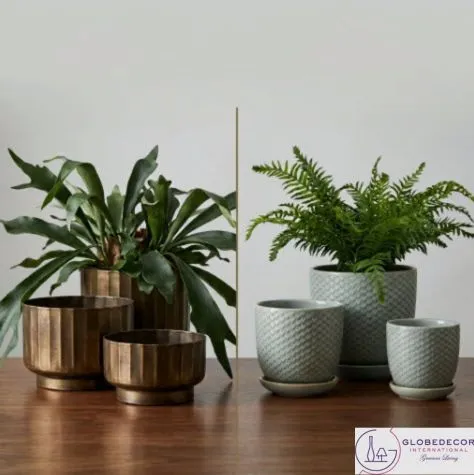

If you're updating your outdoor space, planters are one of the fastest ways to change its entire feel. But before you buy, it helps to understand the two materials that dominate the market — metal and ceramic — and how each shapes both the function and look of your garden planters.

Metal Planters: Built for Durability and Clean Design
Metal planters are a go-to for anyone prioritizing longevity. Made from steel, iron, or aluminum, they stand up to rain, wind, and fluctuating temperatures far better than softer materials. This durability makes them especially practical for outdoor planters exposed to the elements year-round.
Design-wise, metal planters are almost synonymous with modern planters style. Their smooth surfaces, geometric forms, and neutral tones — often matte black, bronze, or brushed silver — complement contemporary architecture, rooftop gardens, and minimalist landscaping. They're also notably lighter than ceramic, which makes seasonal rearranging or scaling your garden up and down much simpler.
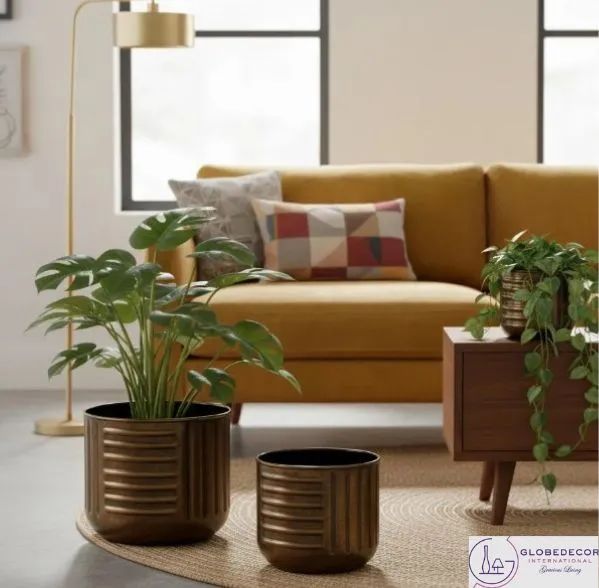
One consideration: metal, especially in darker shades, can heat up under strong sun. Choosing a lighter finish or lining the interior can help protect root systems in hot weather.
Ceramic Planters: Timeless Texture and Craft
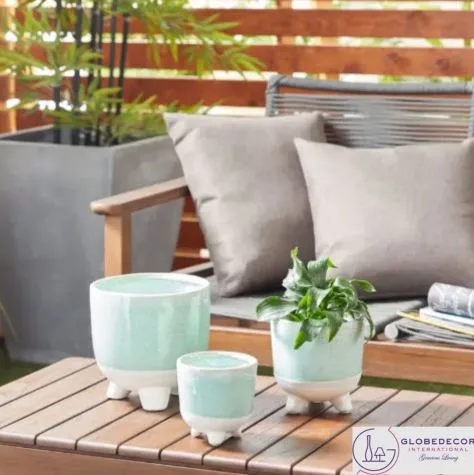
Ceramic planters take a different approach, favoring artistry over minimalism. Hand-glazed finishes, painted motifs, and rich color variation give ceramic planters a distinctive, handmade quality that pairs beautifully with traditional, Mediterranean, or cottage-style gardens.
Their substantial weight is an asset in windy conditions, keeping taller plants upright and stable. Ceramic's natural porosity, when properly sealed, also helps maintain balanced soil moisture — a benefit for plants that don't tolerate extremes well.
The catch is winter vulnerability. Because ceramic can crack when trapped moisture freezes, it's best to move these planters indoors or to a covered area during colder months if you live somewhere with hard frosts.
Metal vs. Ceramic Planters: A Quick Comparison
- Weather durability: Metal handles freeze-thaw cycles more reliably.
- Ease of movement: Metal is lighter and simpler to reposition.
- Style direction: Metal leans modern; ceramic leans classic and artisanal.
- Stability in wind: Ceramic's weight provides better grounding.
- Upkeep: Metal needs occasional rust checks; ceramic needs seasonal protection from freezing.
Which Fits Your Outdoor Style?
If your space leans modern — think clean lines, neutral palettes, minimal clutter — metal planters will likely feel like the natural choice. If you're drawn to texture, color, and a more traditional or eclectic garden aesthetic, ceramic planters bring a warmth that's hard to replicate in metal. Plenty of homeowners use both, letting metal handle practical, everyday plantings while ceramic takes center stage near entrances or seating nooks.
Practical Tips for Either Material
Regardless of which you choose, drainage matters. Look for planters with proper drainage holes to prevent root rot, and consider a saucer or tray to protect patios and decks. For metal, occasional inspection for rust spots will extend its life; for ceramic, careful placement away from high-traffic areas reduces the risk of chips and cracks.
It's also worth thinking about finish and color coordination with your existing outdoor furniture and hardscaping. Metal planters in matte black or bronze tend to blend seamlessly with modern fencing, railings, and furniture frames, reinforcing a cohesive look across the whole space. Ceramic planters, on the other hand, offer more room to introduce color and pattern, letting you tie in accent tones from cushions, outdoor rugs, or trim work. Taking a step back to look at your space as a whole, rather than choosing a planter in isolation, usually leads to a more polished result.
Choosing the Right Size and Depth
Once you've settled on a material, size becomes the next big decision. Metal planters, thanks to their lower weight, make larger capacities more manageable — useful for small trees, tall ornamental grasses, or multi-plant arrangements. Ceramic planters work particularly well at mid-range sizes, where their thermal mass helps buffer roots against sudden temperature swings. In both cases, aim for a container with enough room for root growth over at least two to three seasons, so you're not repotting more often than necessary.
Seasonal Maintenance Checklist
A little routine care keeps either material performing at its best. For metal planters, check drainage holes periodically for rust buildup and touch up any exposed metal with a protective coating. For ceramic planters, inspect the glaze each spring for cracks that may have formed over winter, and avoid placing them directly on cold concrete for extended periods, which can accelerate wear. These small habits are often the real difference between planters that last a few seasons and ones that last a decade or more.
Final Thoughts
Choosing between metal and ceramic garden planters really comes down to matching material strengths to your climate and design goals. Both can elevate an outdoor space significantly when chosen with care.
GLOBEDECOR offers a broad range of metal and ceramic planters designed to complement modern, traditional, and everything-in-between garden styles.





















Sign in to leave a comment.