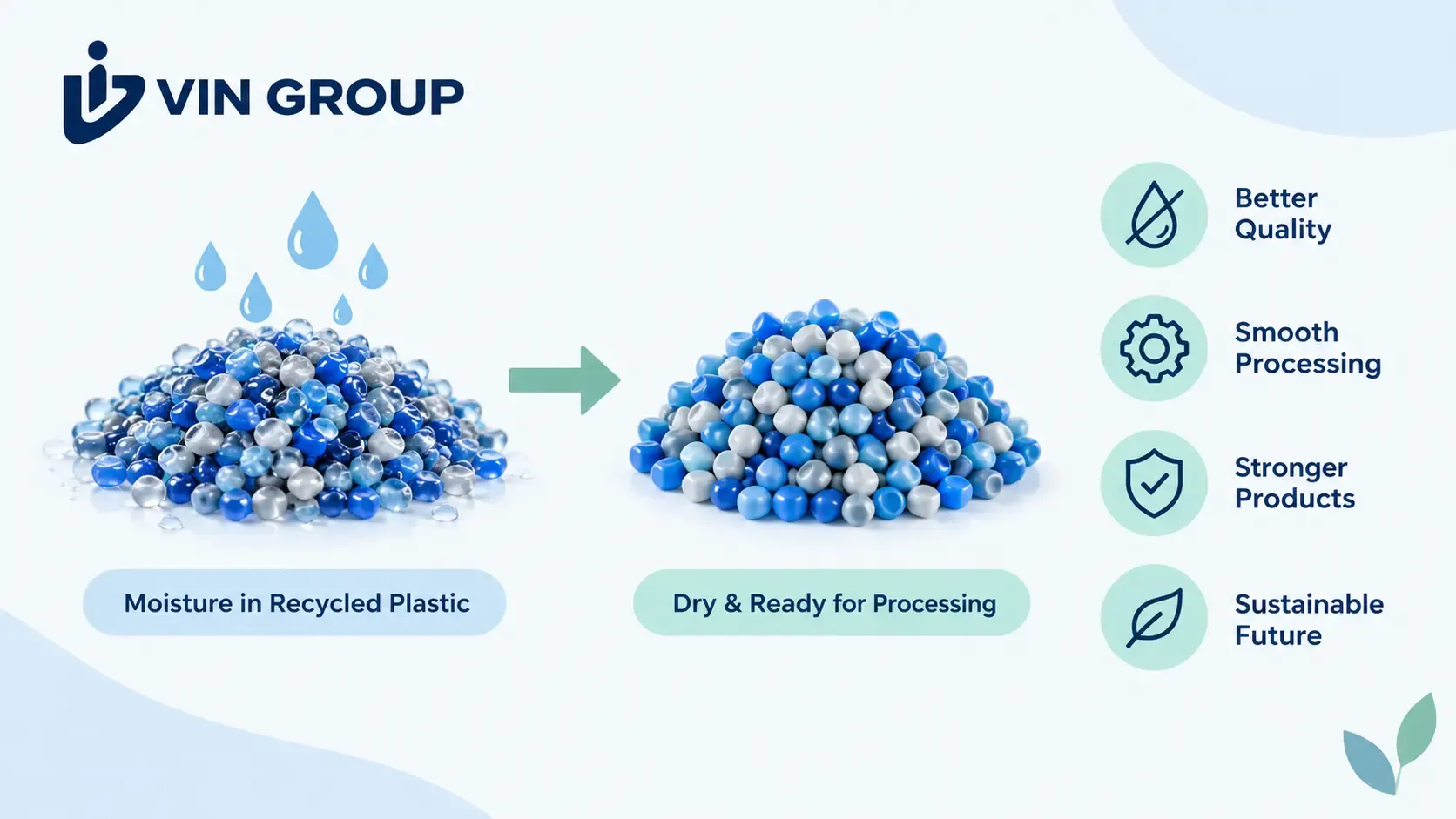

Moisture control is an important part of recycled plastic processing. Recycled materials may be exposed to water and humidity throughout collection, washing, shredding, storage, and transportation. If the moisture is not removed or controlled before processing, it can negatively affect both production efficiency and finished product quality.
A systematic approach to moisture management can help manufacturers achieve more reliable results when working with recycled polymers.
How Moisture Enters Recycled Plastic
Moisture can enter recycled plastic at several points in the recycling process. Washing is one of the most obvious sources, but environmental humidity can also contribute to moisture absorption.
The amount of moisture retained depends on the polymer type. Non-hygroscopic plastics generally retain surface moisture, while hygroscopic polymers can absorb moisture into their molecular structure.
This difference makes it important to select a drying and storage method according to the specific material being processed.
Effects of Moisture During Processing
When wet recycled plastic enters a high-temperature processing operation, water can turn into steam. This can create pressure and other processing problems.
Depending on the polymer and processing conditions, manufacturers may experience:
- Surface defects
- Bubbles and internal voids
- Splay or silver streaks
- Poor melt consistency
- Reduced mechanical properties
- Discoloration
- Material degradation
- Unstable processing
- For moisture-sensitive polymers, excessive moisture can also contribute to polymer degradation during processing.
Drying Is a Key Step
Proper drying helps remove unwanted moisture before the material reaches the processing machine.
The drying process should be selected based on the polymer and its moisture sensitivity. Important factors include drying temperature, residence time, airflow, initial moisture content, and dryer performance.
Using the wrong drying conditions can result in insufficient moisture removal or unnecessary energy consumption.
Store Dried Material Correctly
Drying alone is not enough. Recycled plastic can absorb moisture again if it is stored incorrectly after drying.
Use sealed containers, moisture-resistant bags, or controlled storage areas where appropriate. Minimize the time between drying and processing, especially for moisture-sensitive polymers.
Good material handling practices can prevent moisture from returning after the drying stage.
Monitor Moisture Levels
Moisture monitoring provides manufacturers with better control over recycled material quality. Testing incoming material and dried material can help determine whether the drying process is working effectively.
Consistent monitoring can also identify changes in recycled feedstock that may affect production.
Consider Additives and Processing Aids
Depending on the application, suitable additives may help improve the processing of recycled polymers. Moisture-control solutions can be considered alongside drying and proper storage to address specific processing challenges.
However, additives should be selected according to the polymer, recycling method, processing conditions, and required final properties.
Build a Complete Moisture-Control Process
An effective moisture-management strategy should cover the entire material-handling process:
Collection → Washing → Separation → Drying → Storage → Processing → Quality Control
Controlling moisture at each stage can reduce the risk of moisture-related problems and improve consistency.
Conclusion
how to reduce moisture in recycled plastic Moisture control is essential for manufacturers using recycled plastic. Proper drying, protected storage, moisture monitoring, and appropriate processing solutions can help reduce defects and improve production stability.
A well-managed moisture-control process not only supports better recycled plastic quality but can also help manufacturers achieve more consistent performance from recycled materials.

























Sign in to leave a comment.