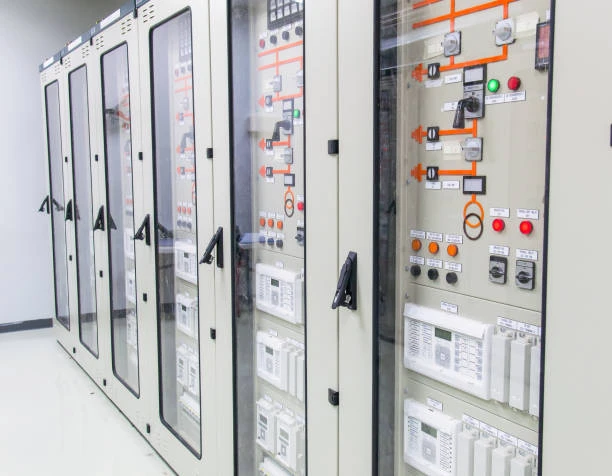

Safety Tips for Motor Control Panels: Recommended Procedures
Here are some guidelines and recommended practices for protecting a motor control panel's security:
Proper grounding: For the purpose of avoiding electrical shock and fires, the motor control panel needs to be properly grounded.Labeling: To avoid faulty connections, every component needs to be correctly labeled, and all wiring needs to be properly identified.Overload protection: To safeguard all motors from harm from excessive currents, overload relays or circuit breakers should be installed.Short circuit protection: To prevent short circuits, the motor control panel ought to have fuses or circuit breakers.Proper ventilation: In order to prevent electrical components from overheating, adequate ventilation should be offered.Maintenance: Regular maintenance should be performed to ensure the motor control panel is in good working order and to detect and repair any potential safety hazards.Safety switches: Safety switches should be used to disconnect power to the motor control panel in the event of an emergency.Lockout/tagout procedures: A lockout/tagout procedure should be in place to ensure that electrical energy is not accidentally released during maintenance or repair work.Training: All personnel who work with the motor control panel should receive proper training on safety procedures, electrical safety, and the proper use of electrical tools and equipment.For the safe installation and use of a motor control panel, it is crucial to constantly adhere to local rules and standards as well as manufacturer instructions.
A Comprehensive Guide to Motor Control Panel Wiring
It might be difficult to wire a motor control panel. Thus, only a licensed electrician should do it. However, the general procedure for wiring a motor control panel is as follows:
Plan the wiring: Draw a diagram of the motor control panel and plan the wiring route to ensure it is neat and organized.Gather the components: Obtain all necessary components, including circuit breakers, contactors, overload relays, fuses, and control transformers.Install the power components: Mount the circuit breakers, contactors, and overload relays in the motor control panel and connect the power cables to the appropriate terminals.Wire the control circuits: Connect the control transformers, control switches, and pilot devices to the control circuit.Install the starters: Install the starters for each motor and connect the power and control circuits to the appropriate terminals.Test the connections: Test all connections to ensure they are secure and free of defects.Label the components: Label all components and connections in the motor control panel to make it easier to troubleshoot in the future.Perform a final check: Perform a final check of the wiring and components to ensure that everything is connected correctly and functioning properly.When wiring a motor control panel, it's crucial to constantly adhere to local regulations and standards as well as to each component's manufacturer's instructions. Make the necessary preparations to guarantee that the wiring is done correctly because appropriate installation and operation are essential for the electrical system's safety.
Use a custom-built motor control panel for its benefits.
Using a specially-made motor control panel has the following benefits:
Improved reliability: Custom-built motor control panels can be designed to meet specific needs and requirements, improving reliability and reducing the risk of system failure.Increased efficiency: A custom-built motor control panel can be designed to optimize performance and increase energy efficiency, resulting in cost savings.Flexibility: Custom-built motor control panels can be designed to be flexible, allowing for future changes or upgrades to be made easily.Improved safety: Custom-built motor control panels can include features such as overload protection, short circuit protection, and emergency stop functions to improve safety.Better control: Custom-built motor control panels can provide better control over the motor and its associated systems, improving process control and product quality.Space savings: Custom-built motor control panels can be designed to maximize space and minimize the need for additional components, reducing the overall size and cost of the system.Integration: Custom-built motor control panels can be integrated with other control systems, such as PLCs or SCADA systems, to provide a complete solution for the process or application.Expertise: Working with a custom panel builder provides access to a team of experts who can help design, build, and maintain the motor control panel, ensuring its long-term success.In summary, custom-built motor control panels offer a range of benefits that can improve reliability, efficiency, safety, and control and provide a cost-effective solution for specific applications.
How to Improve Your Motor Control Panel's Performance
The following actions can be taken to enhance the functionality of your motor control panel:
Regular maintenance: Regular maintenance of the motor control panel can help to keep it running smoothly and prevent problems from developing.Proper sizing: Ensure that the components in the motor control panel are properly sized for the motor and application to optimize performance and prevent overloading.Load balancing: Consider load balancing the motor control panel to ensure that each component is operating within its specified limits, which can increase efficiency and prolong the life of the components.Cable management: Proper cable management can reduce electrical resistance and improve the performance of the motor control panel.Proper grounding: Ensure that the motor control panel is properly grounded to prevent electrical shock and fires.Up-to-date components: Use up-to-date components and technology, such as programmable controllers, to improve performance and reduce downtime.Energy-efficient components: Use energy-efficient components, such as variable frequency drives, to optimize energy usage and reduce operating costs.Proper ventilation: Adequate ventilation should be provided to prevent overheating of electrical components, which can reduce performance and cause damage.Temperature monitoring: Consider installing temperature sensors to monitor the temperature of the motor control panel and ensure that it is operating within safe limits.These procedures can help your motor control panel run more efficiently, experience less downtime, and have its parts last longer. Your motor control panel's long-term performance and dependability depend on routine monitoring and maintenance. Keep reading.
0






Sign in to leave a comment.