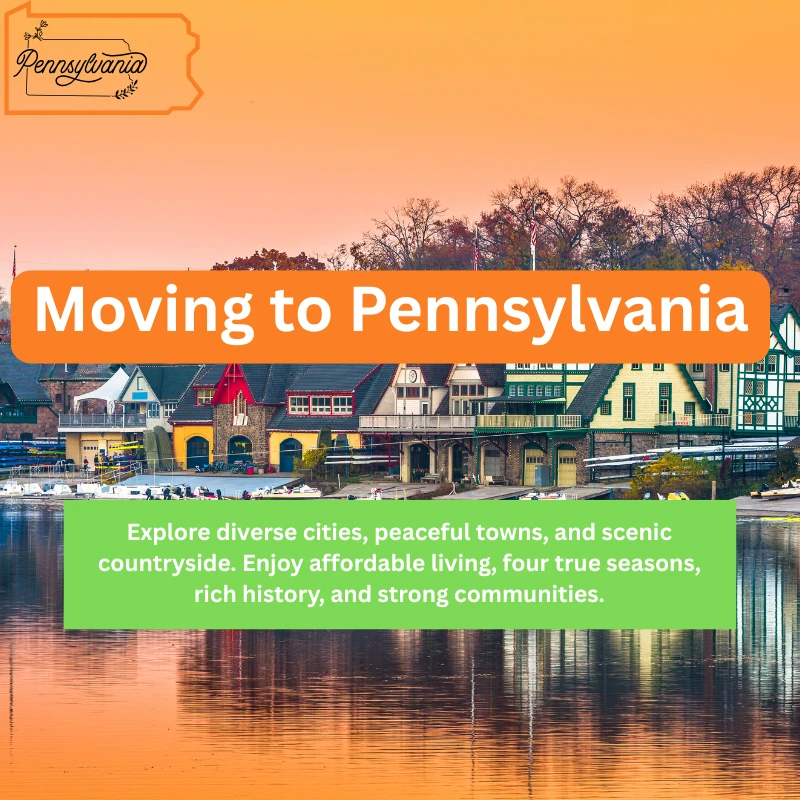

Moving to Pennsylvania: What You Should Know Before You Pack
Pennsylvania isn’t usually the first state that comes to mind when people talk about relocating, but it has a lot going for it. It is one of those places that doesn’t scream for attention, but if you give it a closer look, it offers a balance that can be hard to find elsewhere.
From small towns to big cities, farms to forests, Pennsylvania has a mix of everything. If you are thinking about making a move, here is what life there actually looks like no fluff, just straight talk.
What It is Like Living in Pennsylvania
Pennsylvania is big and varied. On one side, you have got Philadelphia, a busy city with deep history and lots of neighborhoods. On the other hand, there’s Pittsburgh, once known for steel, now more about tech and medicine. In between, there are hundreds of small towns, farms, and mountain areas that give the state its quieter charm.
The pace of life depends on where you settle. Philly and Pittsburgh move faster, with more traffic and noise. Smaller towns like Lancaster, Bethlehem, or Erie feel slower and more relaxed. You will find communities where people know their neighbors, and others where folks mostly keep to themselves. It is a mix, and that’s part of the appeal.
Cost of Living
One of the first things people ask about is money. Pennsylvania isn’t cheap everywhere, but compared to states like New York, California, or even New Jersey, it is more affordable.
Here is a rough breakdown:
- Rent: In Philadelphia, a one-bedroom apartment runs around $1,500 in the city center and closer to $1,000 outside it. Pittsburgh is even cheaper, often under $1,200 in many areas.
- Home prices: The statewide median is about $250,000. In smaller towns, you can still find houses under $200K.
- Groceries and services: Close to the national average.
- Utilities: Heating can be a bit pricey in winter, but overall, utility costs are not extreme.
- Taxes: PA has a flat state income tax (about 3.07%). Some local areas, like Philly, tack on extra city income taxes.
Bottom line: you will spend less on housing and daily living than in bigger metro areas, but how much you save depends on where you live.
Getting Around
Transportation in Pennsylvania is a bit of a mixed bag.
- Cities: Philadelphia has SEPTA (subway, buses, trolleys) and Pittsburgh has the Port Authority. Both systems work well enough for daily commuting, but they are not on the same level as NYC or D.C.
- Driving: In most of the state, you’ll need a car. Smaller towns and rural areas do not have much public transportation.
- Highways: The Pennsylvania Turnpike is a major route but comes with tolls. Roads are well-maintained, but some areas still deal with potholes in winter.
- Airports: Philly and Pittsburgh have major airports. Harrisburg and Allentown have smaller regional ones.
If you’re in a city, you can get by without a car. Anywhere else, it’ll be part of your daily life.
The Climate
Pennsylvania has all four seasons, and you will feel each one.
- Winters: Cold, with snow in most parts of the state. The northern and central areas get more snow, while Philly sees more slush and ice.
- Springs: Start off chilly, then slowly warm up. Flowers, green trees, and lots of rain.
- Summers: Warm, sometimes humid. Philly can feel sticky in July and August. Rural areas tend to be cooler.
- Falls: Crisp and colorful. This is peak season for scenery, with the leaves turning red, yellow, and orange. It is hard to beat.
Weather can vary a lot by region. Erie gets heavy lake-effect snow. The Poconos are colder and good for skiing. Central PA has milder conditions overall.
Pros of Living in Pennsylvania
Here is what makes the state appealing to a lot of people:
1. Affordable Living
You can still find reasonably priced homes, and your money goes further in smaller towns.
2. Variety of Places to Live
You can choose between urban life, small towns, or rural settings — all within the same state.
3. Natural Beauty
Mountains, rivers, state parks, and forests are all around. Great if you enjoy hiking, camping, or just quiet weekends outdoors.
4. History and Culture
From the Liberty Bell to Gettysburg, PA has plenty of historical sites. It has also got art museums, music scenes, and food that reflects many cultures.
5. Central Location
Close to major cities like New York, Washington, D.C., and Baltimore. Easy to do weekend trips or commute if needed.
Cons to Consider
No place is perfect, and Pennsylvania has a few drawbacks too.
1. Property Taxes Can Be High
Some counties, especially those near good schools, have steep property tax rates. Do your homework before buying a home.
2. Winters Can Drag
Snow and ice stick around in many parts. If you hate shoveling or driving in snow, this might wear on you.
3. Public Transit is Limited
Outside Philly or Pittsburgh, most areas lack decent bus or rail systems. You will need to drive in rural and suburban parts.
4. Some Areas Feel Left Behind
Former industrial towns are still recovering. Jobs can be harder to find in those places.
5. Infrastructure Can Be Uneven
Some roads and bridges are old and take time to fix. This is not unusual in older states, but it is noticeable in PA.
Our complete relocation guide at https://www.movers.com/moving-companies/pennsylvania/ covers everything you need to know

























Sign in to leave a comment.