
After successfully clearing MRCP Part 1, the next milestone on your journey toward Membership of the Royal Colleges of Physicians is MRCP Part 2. This stage builds on your core medical knowledge and evaluates how well you apply clinical understanding to real-life patient scenarios. For many doctors, MRCP Part 2 feels more clinical, more challenging, and more reflective of day-to-day hospital practice.
In this article, we break down everything you need to know about MRCP Part 2—its format, syllabus, difficulty level, and preparation tips.
What is MRCP Part 2?
MRCP Part 2 is a written examination designed to assess your ability to use medical knowledge to make clinical decisions. Unlike Part 1, which focuses heavily on basic sciences, Part 2 examines your problem-solving skills, diagnostic reasoning, and ability to interpret clinical data.
It is commonly taken by physicians who already have a few years of clinical experience and want to move ahead in training programs such as Internal Medicine, specialties, or UK-based residency pathways.
Exam Format
MRCP Part 2 consists of:
- Two written papers
- Approximately 100 Single Best Answer (SBA) questions per paper
- Each paper lasts 3 hours
The questions are more detailed than in Part 1 and may include:
- Longer clinical scenarios
- Investigations and lab results
- Imaging interpretation (X-ray, CT, MRI)
- ECGs and clinical charts
- Management-based questions
This level of detail makes the exam feel closer to actual clinical practice.
What Does MRCP Part 2 Test?
The exam checks your ability to:
- Diagnose correctly using symptoms, history, and investigations
- Choose the most appropriate treatment plan
- Prioritize patient safety
- Interpret complex clinical data
- Apply guidelines in real-time decision-making
Because of this, Part 2 is often seen as the bridge between theory and hands-on clinical judgment.
Topics Covered
MRCP Part 2 covers a wide range of specialties, including:
- Cardiology
- Respiratory Medicine
- Gastroenterology
- Endocrinology
- Neurology
- Nephrology
- Hematology
- Oncology
- Infectious Diseases
- Rheumatology
- Dermatology
- Psychiatry
- Ophthalmology
- Clinical Pharmacology
Clinical Sciences
Who is Eligible?
To appear for MRCP Part 2, you must:
- Have passed MRCP Part 1
- Hold a valid medical degree
- Have some level of clinical experience (typically 1–2 years after graduation)
Most candidates take Part 2 during their residency or while preparing for higher specialty training.
Why is MRCP Part 2 Important?
Clearing MRCP Part 2 is essential because:
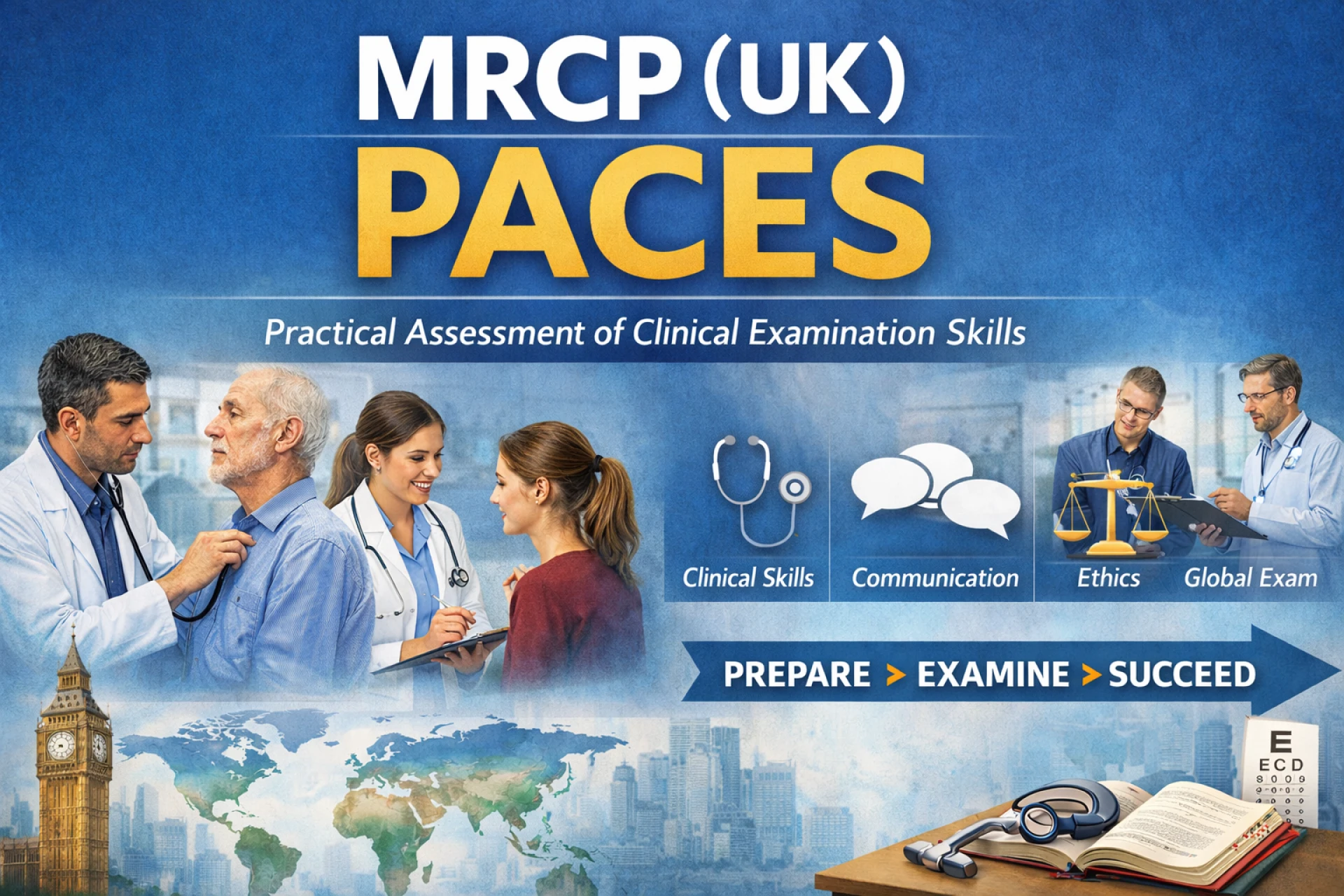
- It allows you to progress to MRCP PACES (the clinical exam)
- It certifies your advanced clinical decision-making skills
- It strengthens your resume for international medical opportunities
- It helps you prepare for senior clinical responsibilities
For doctors planning to work in the UK, the MRCP diploma is a major step toward specialist training.
Preparation Tips for MRCP Part 2
1. Focus on Clinical Reasoning
Since questions are longer and more detailed, practice interpreting investigations and building differential diagnoses.
2. Use Good Question Banks
Qbanks with real exam-style clinical scenarios help you understand how to think through long-format questions.
3. Practice Image Interpretation
Part 2 includes X-rays, ECGs, CT/MRI scans, and clinical photographs. Regular practice improves accuracy and speed.
4. Revise Guidelines
Pay attention to:
- NICE guidelines
- BTS, ESC, ADA recommendations
- UK clinical pathways
These often form the basis of management questions.
5. Join a Structured Course
Many candidates benefit from expert-guided courses that simplify complex clinical topics and offer targeted mock tests.
Conclusion
MRCP Part 2 is a crucial step in becoming a well-rounded physician. It tests not just your knowledge, but your ability to think and act like a clinician. With disciplined preparation, consistent practice, and the right study strategy, you can clear this exam with confidence.
If you’re preparing for MRCP Part 2, stay focused, practice thoroughly, and keep refining your clinical judgment—your success in PACES and future clinical roles will depend on it.


























Sign in to leave a comment.