
Introduction
Working at sea isn’t easy. The hours are long, the conditions are unpredictable, and the responsibilities are real. But for marine professionals looking to grow their skills and careers, there’s real value in expanding your understanding of weather. That’s where the MSc in Advanced Meteorology for Professionals comes in. It’s an online program tailored for those who already work in the marine industry—people who don’t have time to sit in classrooms but still want to study something meaningful that actually applies to their job.
If you’ve ever had to make quick decisions based on shifting weather, or wished you understood the forecasts better before setting sail, this course could be exactly what you need.
Why Meteorology Matters at Sea
Every marine officer knows the weather can turn quickly. What looked like a smooth passage on Monday might become stormy by Wednesday. Knowing how to interpret and act on weather data isn’t just helpful—it can protect cargo, vessels, and lives.
That’s why an MSc in Meteorology isn’t just about science. It’s about safety, awareness, and smarter planning. It helps you go beyond what an app or a report tells you. You learn to spot trends, understand global patterns, and think critically about the weather systems you face every day.
Who This Program Is For
This program is built for professionals who are already in the field. Whether you’re working on a ship, in offshore operations, or supporting marine logistics, this course is for you. You don’t need to be a scientist. You just need a willingness to learn and a professional interest in applying meteorology to your everyday decisions.
Many students are deck officers, captains, or work in support roles for offshore energy companies. Others come from naval or coast guard backgrounds. If you're working full time and looking for a flexible way to upgrade your skills, you're exactly who this course is built for.
A Course That Understands Your Schedule
One of the best parts of this program is that it's fully online. You don’t have to take time off work or travel to attend classes. Instead, you can study from wherever you are—onshore or offshore—at a pace that fits into your schedule.
The course is designed with flexibility in mind. Lectures are recorded, materials are downloadable, and deadlines are designed to accommodate professional responsibilities. So whether you're at port for two weeks or on a three-month deployment, you can still keep progressing without falling behind.
What You’ll Learn
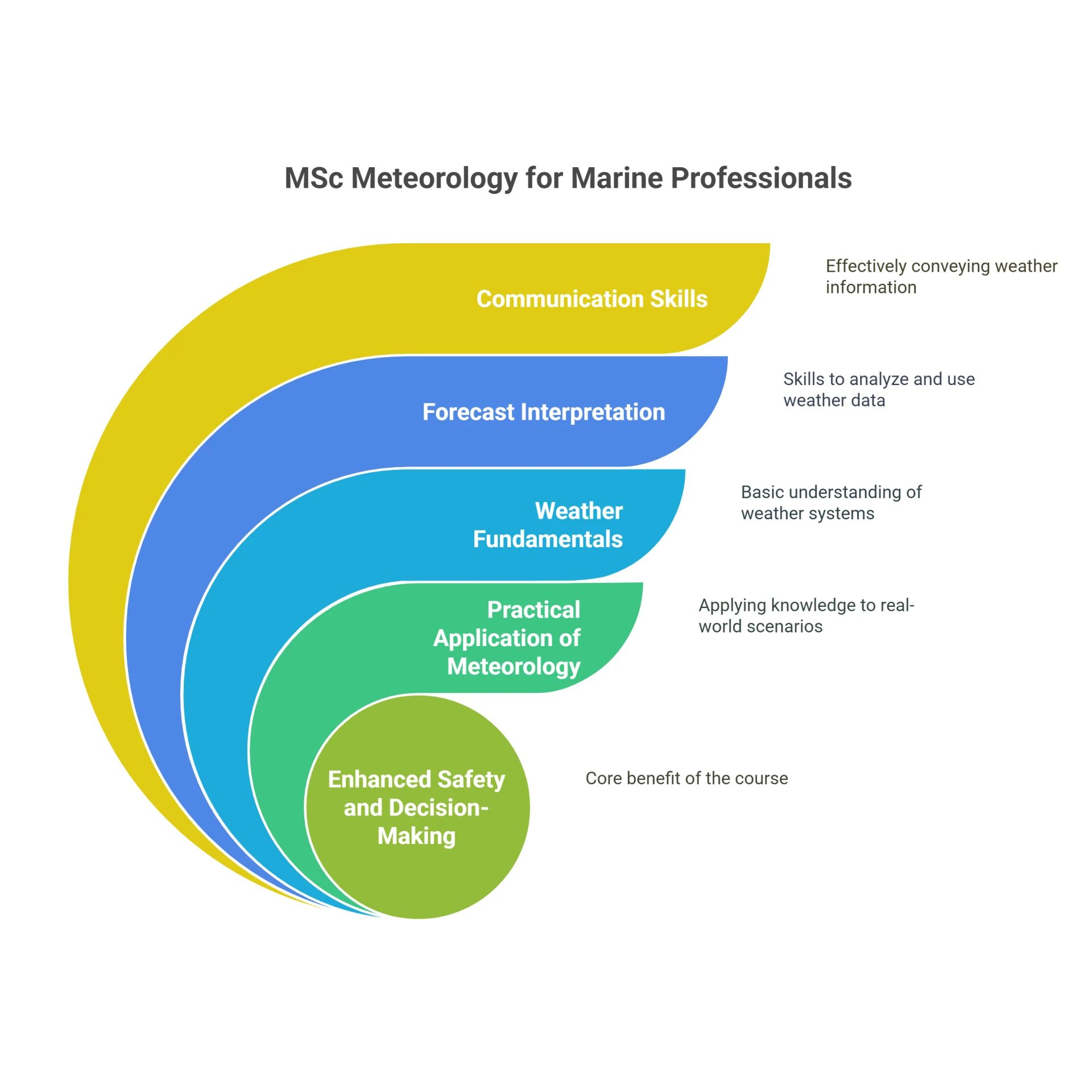
Weather Fundamentals with a Marine Focus
You’ll begin with the basics: how the atmosphere works, how ocean and weather systems interact, and how forecasts are made. But these aren’t just academic lessons—they're focused on how weather affects vessels, operations, and marine safety.
Reading and Interpreting Forecasts
You’ll learn how to analyze satellite images, synoptic charts, and numerical forecast models. More importantly, you’ll develop the skills to make sense of them in real time. This can be crucial when weather conditions are changing fast and you need to make informed decisions quickly.
Long-Range and Seasonal Prediction
Beyond daily forecasts, the course dives into long-range weather patterns—like the North Atlantic Oscillation or El Niño—that affect shipping routes and offshore work. Understanding these patterns helps with long-term planning and strategic decision-making.
Communicating Weather Information
Knowing the weather is one thing. Explaining it clearly to a team or superior is another. The program teaches you how to communicate complex meteorological information in simple, useful ways. That’s an underrated skill—but one that’s highly valued in leadership roles.
Real-World Application
This isn't a theoretical degree. It’s built around real-world marine operations. Every module is structured to apply directly to challenges you face in the field. For example, one section explores how to plan ship routes based on forecasts to avoid delays or danger. Another looks at how wind, swell, and pressure systems affect offshore maintenance windows.
Everything you learn can be used almost immediately in your work, whether you’re planning a voyage, coordinating logistics, or responding to unexpected weather changes.
Balancing Work, Life, and Study
Studying while working full time is hard—but this course is designed to make it manageable. The content is delivered in small, flexible modules, so you can take on just what you can handle at any given time. Some students study during port stops. Others use weekends or evenings. There’s no one right way to do it. The key is consistency and planning.
What also helps is that you’re not doing it alone. You’ll have access to instructors who understand the industry and fellow students who are in similar situations. The community is supportive, not competitive. Everyone is there to learn and grow.
Career Benefits
An MSc in Meteorology opens doors. It’s not just about understanding weather—it’s about showing employers that you’ve committed to deepening your skills in a meaningful, practical area.
Promotion Opportunities
Many graduates go on to higher-level roles, including safety managers, route planners, or marine operations leads. The degree adds credibility to your experience and shows that you’re serious about your profession.
New Career Paths
Others shift toward consultancy, forecasting, or support roles onshore. The skills are transferable. Whether you want to stay at sea or move into a land-based role, meteorological knowledge is in demand.
International Recognition
The MSc is recognized internationally, which means your qualification holds value across different countries and maritime sectors. If you’re thinking of moving into a global role, this credential travels with you.
Admission and Application
To join the course, you’ll usually need a relevant undergraduate degree or sufficient professional experience. That could be years at sea, a naval background, or related technical qualifications. The application process is online, straightforward, and designed to be completed without too much paperwork.
If you're unsure about eligibility, you can always reach out to the admissions team—they’re used to working with professionals who may have non-traditional academic backgrounds.
Final Thoughts
Choosing to study meteorology at the postgraduate level isn’t just about getting a qualification. It’s about building a skill set that matters—one that can make your work safer, more effective, and more respected. The MSc Advanced Meteorology for Professionals gives marine workers a chance to grow without stepping away from the job they love. It’s practical, flexible, and focused on real-life application.
Whether you’re looking for career growth, a deeper understanding of your environment, or a stepping stone into new roles, this program gives you tools that you’ll use. And that’s what makes it worth your time.

























Sign in to leave a comment.