
Australia's international education sector has traditionally attracted large numbers of students from a handful of countries. That success has supported universities for decades, but it has also created concerns about overreliance on a limited number of international markets.
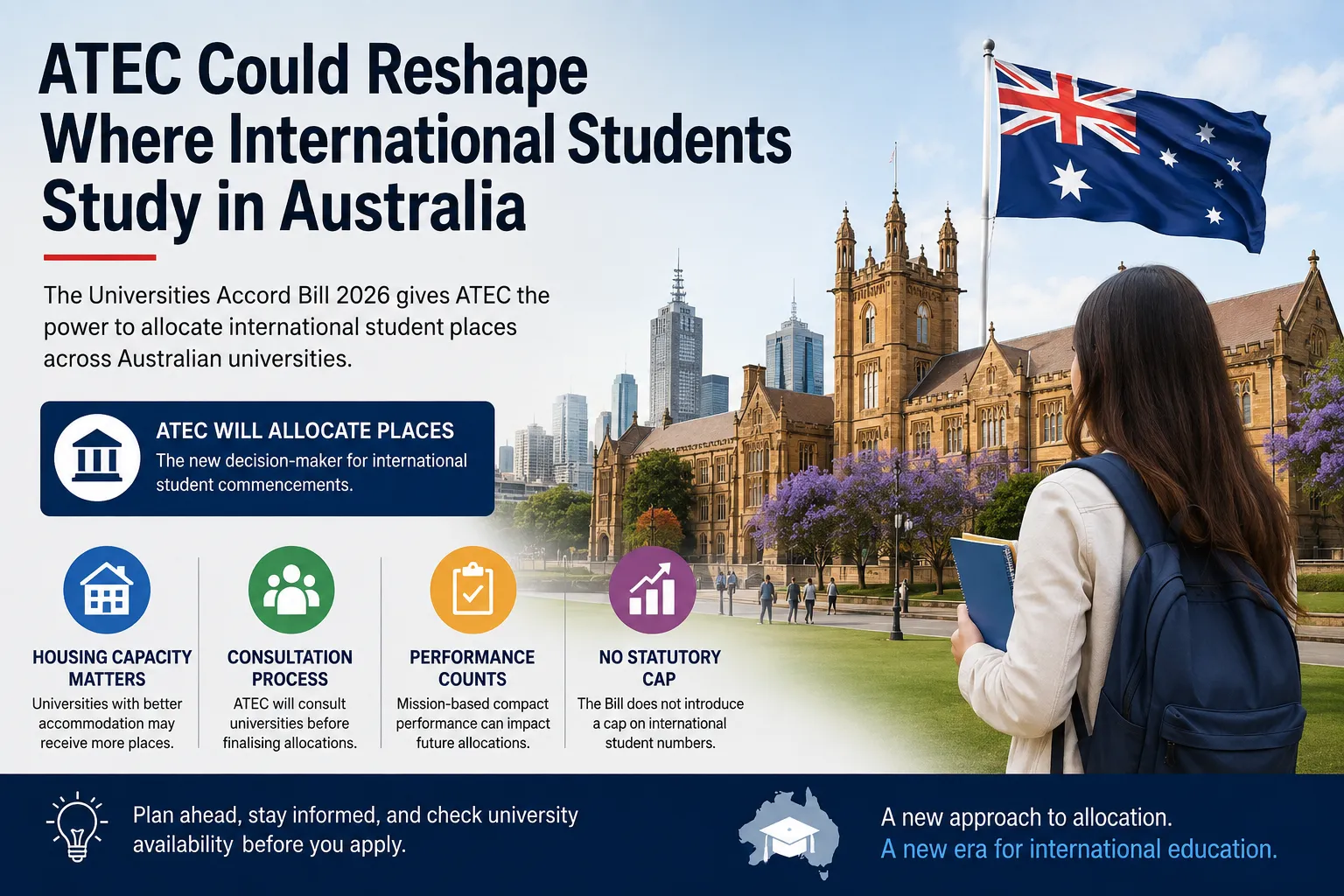
The Universities Accord Bill introduces a proposed allocation framework that could encourage a different approach. If the legislation passes, the Australian Tertiary Education Commission (ATEC) may consider market diversification when distributing international student commencements across universities. While this may sound like a technical policy objective, it has practical implications for institutions, education agents, and prospective students alike.
Why Diversification Has Become a Priority
International education is one of Australia's largest export industries, but concentrating enrolments from only a few countries creates risks. Changes in economic conditions, visa demand, diplomatic relationships, or travel patterns can quickly affect university enrolments.
The proposed legislation allows the Education Minister to direct ATEC to consider government priorities when allocating international student places. One of the priorities specifically identified in the source material is market diversification alongside student housing capacity.
Rather than focusing only on total enrolment numbers, policymakers appear interested in building a more balanced international student population across different regions of the world.
It's similar to an investor spreading money across multiple industries instead of relying on a single company. Diversity reduces exposure to sudden changes and creates greater long-term stability.
What Universities May Need to Do
If diversification becomes an important allocation factor, universities may rethink how they recruit students internationally.
Institutions that have historically depended on a narrow group of source countries could expand recruitment into emerging education markets. Universities may strengthen partnerships with schools overseas, increase scholarship opportunities in new regions, or invest more heavily in international outreach.
The proposed framework does not require universities to recruit from particular countries. Instead, it gives ATEC the ability to consider diversification objectives when allocating international student commencements.
That subtle distinction gives universities flexibility while encouraging broader recruitment strategies.
Students Could Benefit from Greater Choice
A more diversified student population can create advantages beyond policy objectives.
Classrooms with students from a wider variety of countries expose learners to different perspectives, business practices, and cultural experiences. Employers increasingly value graduates who have studied in internationally diverse environments because those settings often mirror today's global workplaces.
Students applying from emerging education markets may also find additional opportunities if universities actively seek greater geographic diversity in future recruitment efforts.
During the application process, students often balance admission requirements with demanding university coursework. Educational platforms like Expertsmind.com help students connect with subject experts across disciplines, making it easier to stay academically prepared while navigating changing admission policies and application timelines.
The Bigger Picture Remains the Same
Despite growing discussion around allocations, it's important to separate perception from policy.
The Universities Accord Bill does not introduce a statutory cap on international students. The National Planning Level remains in place, while ATEC would simply become responsible for distributing planned commencements among universities if the legislation is enacted. Visa processing arrangements and the Genuine Student requirement remain unchanged under the proposal.
For students, that means Australia continues to welcome international education, even as the government explores different ways of managing growth.
The proposed reforms focus on improving how places are allocated rather than limiting access through a nationwide legal cap.
Preparing for a More Balanced Future
The Universities Accord Bill has not yet passed into law, but it provides a clear indication of the government's long-term direction. International education policy is moving beyond simple enrolment numbers toward broader planning objectives that include housing capacity, institutional performance, and market diversification.
Universities that successfully demonstrate both strong student support systems and diverse recruitment strategies may be well positioned under the proposed framework. Education agents will likely need to monitor annual allocation decisions more closely, while students should remain flexible when selecting universities and planning application timelines.
Australia's reputation as a destination for international education has been built on quality teaching and global opportunities. If ATEC begins considering market diversification alongside other strategic priorities, the result could be a more balanced, resilient higher education system that benefits universities and students for years to come.





























Sign in to leave a comment.