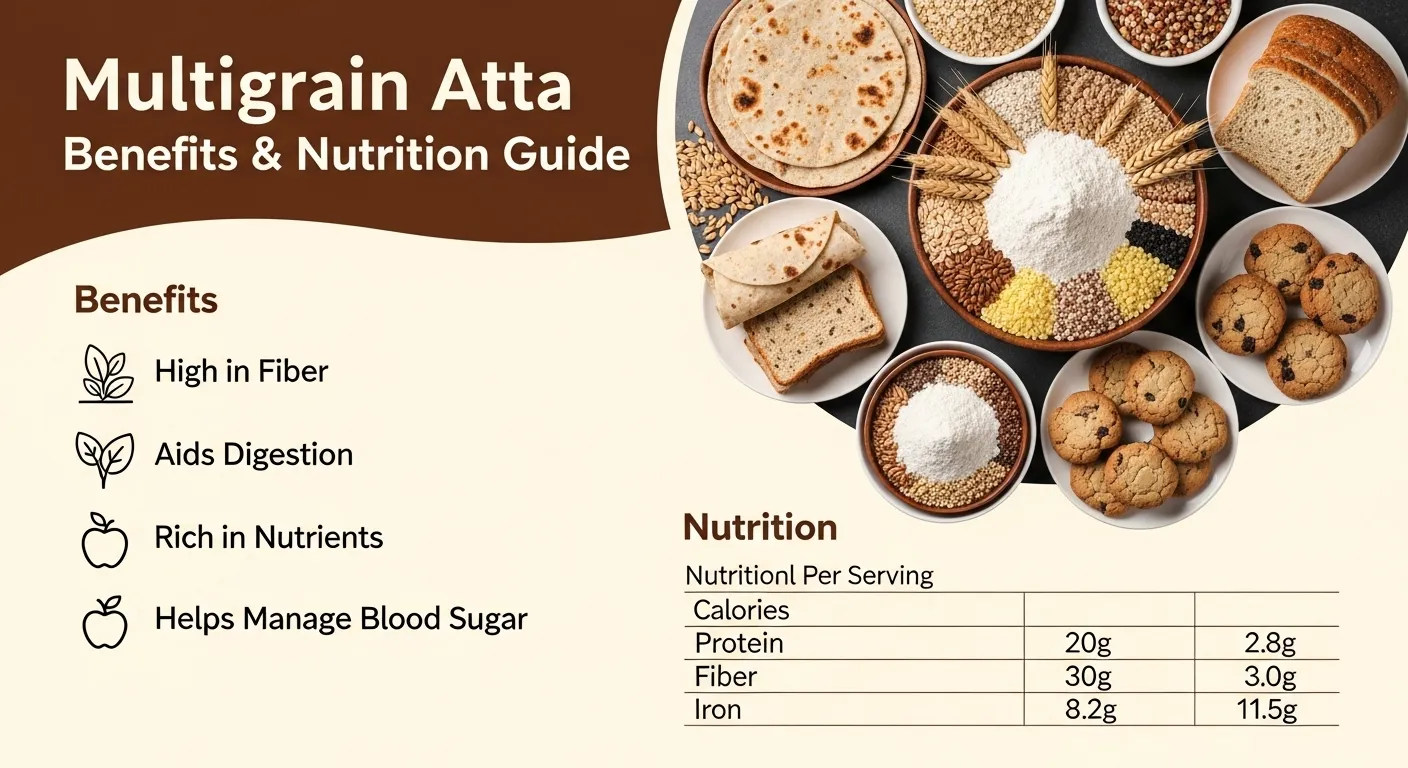

Every few years, a "health food" trend sweeps Indian kitchens — only to fade once people realise the taste doesn't hold up or the benefits were overstated. Multigrain atta is not that trend.
It has been quietly gaining ground for one simple reason: it works. The protein numbers are real. The fibre is meaningful. And when you're making rotis every day, the grain blend you choose adds up — meal after meal, month after month.
This guide cuts through the noise and tells you exactly what multigrain atta is, what goes into a good one, and why the milling method matters more than most brands will tell you.
* * *
What is multigrain atta?
Multigrain atta is a flour made by stone grinding multiple whole grains together into a single blend. Unlike regular wheat atta — which uses only one grain — multigrain atta pulls in the nutritional strengths of several grains at once.
The most common base is still wheat, which gives the dough its structure and keeps rotis pliable. Everything else — barley, oats, soya, channa, maize — contributes specific nutrients that plain wheat simply can't offer on its own.
The result is a flour that is denser in protein, richer in fibre, and broader in its mineral profile. And because the grains work together, no single one dominates the flavour — you get a warm, nutty, slightly earthy taste that most people find genuinely more satisfying than plain wheat roti.
What's actually inside a quality multigrain atta?
Not all multigrain attas are equal. The quality of the blend depends on which grains are included and in what proportion. A blend that is 90% wheat with a token sprinkle of oats is technically "multigrain" — but it isn't meaningfully better than plain atta.
A well-formulated multigrain atta should include grains that each contribute something distinct. Here's what an eight-grain blend like 10on10's looks like — and why each ingredient earns its place:
Wheat
The structural base. Provides gluten for dough elasticity and keeps rotis soft. Without wheat, multigrain blends tend to fall apart during rolling.
Soya
The protein booster. Soya is one of the few plant-based complete protein sources — it contains all nine essential amino acids. Its inclusion is the primary reason multigrain atta can reach 14g+ of protein per 100g.
Channa (Bengal gram)
The glycemic regulator. Channa is low-GI, which means it slows the release of glucose into the bloodstream. This is why multigrain atta is frequently recommended for people managing blood sugar.
Barley
The beta-glucan source. Barley contains beta-glucan, a soluble fibre proven to lower LDL cholesterol and improve gut health. It's one of the most researched grains for metabolic health.
Oats
The satiety grain. Rich in soluble fibre that forms a gel-like substance in your gut, slowing digestion and extending the feeling of fullness. If you find yourself hungry an hour after lunch, oats in your atta genuinely helps.
Maize
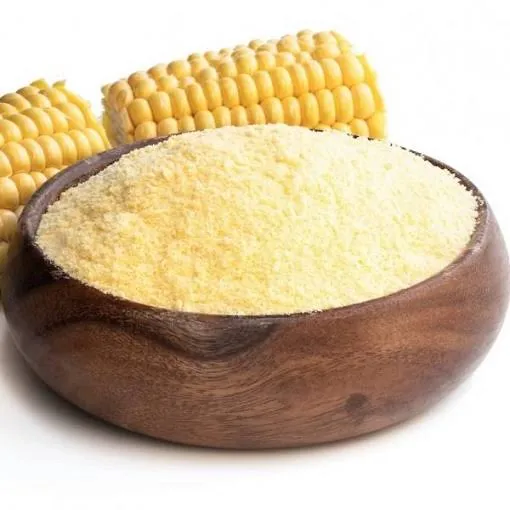
Adds natural sweetness, carotenoids, and a light texture to the blend. Balances the denser grains so rotis don't feel heavy.
Rice flour
Contributes to a softer, smoother dough. Also makes the blend slightly easier to digest, which matters for households with children or elderly members.
Psyllium husk
The gut health ingredient. Psyllium is a prebiotic fibre that feeds beneficial gut bacteria and promotes regularity. Even in small quantities, it makes a noticeable difference in digestive comfort.
A good multigrain atta doesn't just add grains for the sake of it. Each ingredient should have a clear nutritional purpose — and you should be able to find out exactly what's in it.
The nutrition numbers — what 100g actually delivers
Nutrition labels are easy to skim past, so let's make these numbers concrete.
Per 100g, 10on10's 8-grain multigrain atta provides 14.24g of protein and 13.05g of dietary fibre. Compare that to standard whole wheat atta, which typically delivers 10–11g of protein and 2–4g of fibre per 100g.
That's not a marginal difference. Over three rotis a day, across a year, the cumulative impact on protein intake, blood sugar stability, and gut health is significant — especially for vegetarian households where atta is a primary daily staple.
The mineral profile is equally meaningful. Iron supports haemoglobin and prevents fatigue. Zinc is critical for immune function. Manganese supports bone density and antioxidant defence. All three are naturally present in a well-formulated multigrain blend — no artificial fortification needed.
* * *
Why stone grinding changes everything
Most commercially available flour — even the ones labelled "whole wheat" — is processed using industrial roller mills. This method is fast and efficient, but it generates significant heat and pressure during grinding. That heat degrades heat-sensitive nutrients: B vitamins, vitamin E, and natural oils found in the grain's bran and germ.
Stone grinding is fundamentally different. The grinding stones rotate slowly, keeping the process cool. The entire grain — bran, germ, and endosperm — passes through together and stays intact. None of the natural oils are stripped away. The fibre stays where it's supposed to be.
The practical result? Stone ground flour retains more of its natural nutrition, has a richer aroma, and produces rotis with a more complex flavour. It's also why freshly stone ground flour smells so noticeably different from flour that's been sitting in a factory warehouse for three months.
The freshness problem most brands ignore
Flour goes stale. This is a fact that the packaged food industry would rather you not think too hard about.
Once grains are ground, the natural oils in the bran and germ begin to oxidise. Over weeks and months, this degrades both the nutritional quality and the flavour. Pre-ground flour that's been packaged, warehoused, shipped, and sitting on a supermarket shelf for two months is not delivering peak nutrition — regardless of what the label says.
The honest solution is grinding to order. 10on10 Foods mills your multigrain atta only after you place your order. There is no pre-ground stock sitting in storage. What you receive was ground specifically for your order — which is why the aroma when you open the pack is noticeably different from anything you'll find on a supermarket shelf.
Multigrain atta vs regular atta — the honest comparison
Regular whole wheat atta is not a bad product. It's been feeding Indian families for generations. But if you're already making rotis every day, the switch to multigrain atta is one of the simplest nutritional upgrades available — with no change in cooking method, no new recipes to learn, and no compromise on taste.
Protein goes up. Fibre goes up substantially. Glycemic load comes down. And the flavour — once you've eaten multigrain rotis for a week — makes plain wheat atta taste a little flat in comparison.
Who benefits most from switching?
Multigrain atta is genuinely useful for most households. But certain groups see the most impact:
- People managing Type 2 diabetes or pre-diabetes, where blood sugar control matters at every meal
- Those actively managing weight, where satiety per meal reduces snacking
- Vegetarians and vegans who rely on staples for a significant portion of their daily protein
- Active individuals with elevated protein requirements
- Families with growing children who need nutrient-dense everyday foods
- Anyone experiencing digestive sluggishness who hasn't tried a high-fibre flour
How to use multigrain atta in your kitchen
There's no dramatic technique change required. A few small adjustments make a real difference:
Multigrain atta absorbs slightly more water than plain wheat atta because of the higher fibre content. Add water gradually when kneading and let the dough rest for 10–15 minutes — this hydrates the fibre fully and results in softer, more pliable rotis.
If your household is new to multigrain atta, start with a 50:50 blend of multigrain and your regular atta for the first week. Gradually increase the multigrain proportion. Most families make the full switch within two to three weeks without anyone noticing the difference.
For grinding preference: fine grind works better for soft rotis and parathas. Coarse grind suits bread, thalipeeth, and recipes where a heartier texture is desirable.

























Sign in to leave a comment.