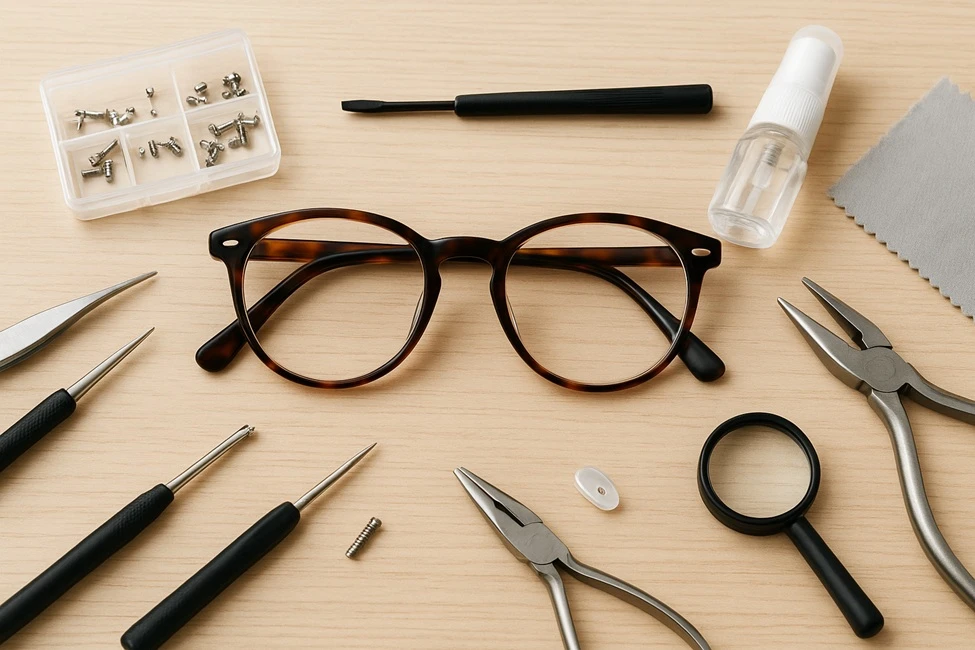

Eyewear plays a significant role in daily life, helping people see clearly and express their personal style. However, glasses can easily become loose, scratched, or damaged due to regular wear and tear. While many people rush to replace them, learning how to restore glasses at home can save both time and money. To do this properly, it is essential to have the right set of tools and supplies. When performing any kind of repair or maintenance, using genuine eyeglass repair parts ensures durability and a proper fit for your frames.
Understanding the Importance of Proper Eyewear Restoration
Restoring glasses is not just about fixing a loose screw or replacing a missing pad. It involves understanding the structure of the frame, the balance of the lenses, and the alignment that affects comfort and vision. A poorly performed repair can result in discomfort, misalignment, or even damage to lenses. Using the right tools can make the process smoother and more effective, allowing you to extend the lifespan of your eyewear.
DIY eyewear restoration also offers the satisfaction of handling minor issues independently. From tightening loose hinges to smoothing rough edges, small efforts can keep your glasses in excellent shape without frequent visits to an optician.
The Basic Toolkit for Eyewear Restoration
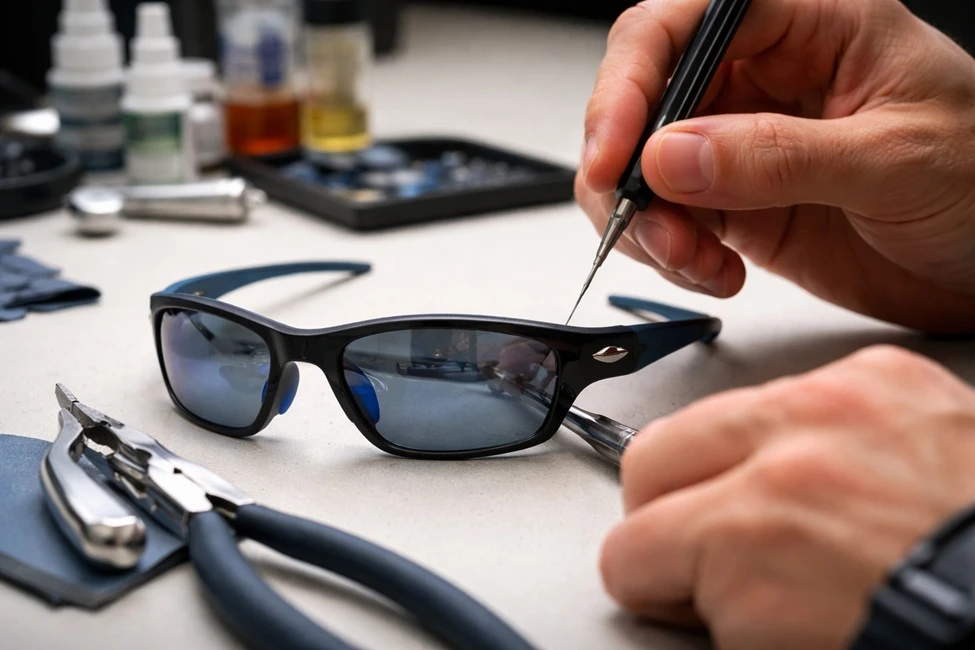
Before starting any repair, it is essential to assemble the basic toolkit designed for eyeglass maintenance. Each tool serves a unique purpose and contributes to restoring glasses efficiently and safely.
1. Precision Screwdriver Set
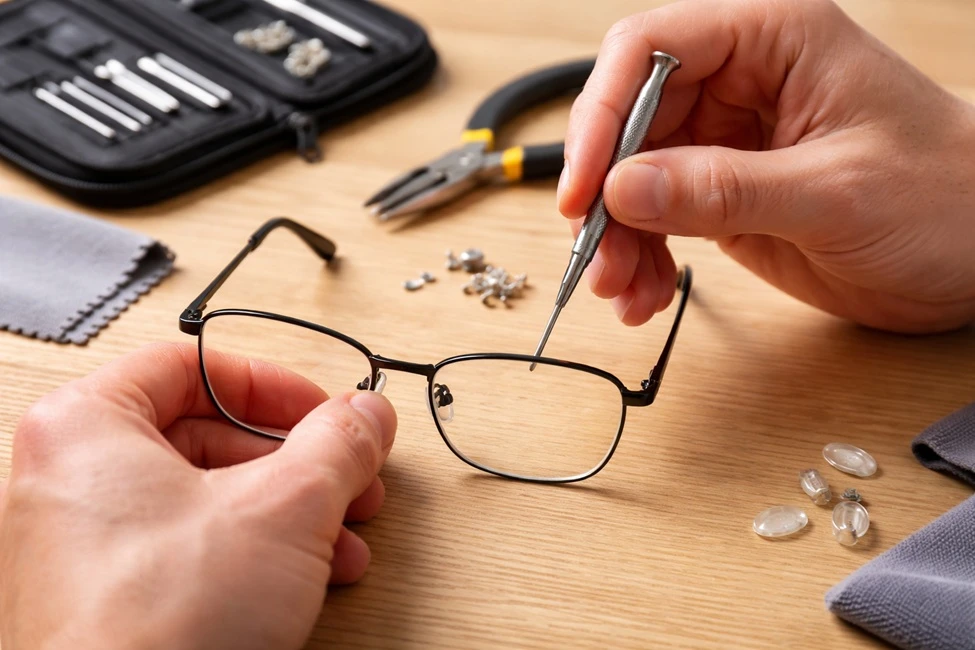
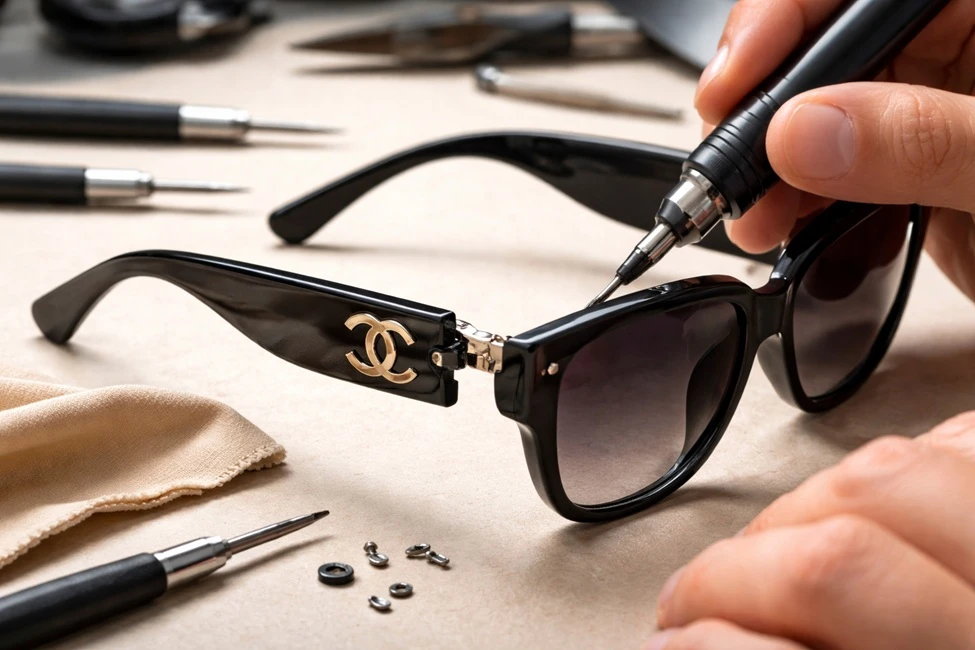
A precision screwdriver set is one of the most fundamental tools for repairing eyewear. Eyeglasses are assembled using tiny screws that connect the temples, bridge, and hinges. These screws require specialized drivers, usually in flathead or Phillips designs. Precision screwdrivers allow for accurate adjustments without damaging delicate metal or plastic parts.
Having multiple sizes ensures you can work with different frame styles, whether metal, acetate, or mixed material. Keeping a small magnetic screwdriver can also prevent losing screws during repair.
2. Replacement Screws
Screws often loosen or fall out, especially in frequently used frames. Keeping a small assortment of replacement screws can be a lifesaver. They come in different lengths and diameters, so it is best to have a screw organizer for easy access. When installing new screws, applying a small drop of clear nail polish or a thread-locking solution can help secure them in place.
3. Nose Pads and Pad Arms
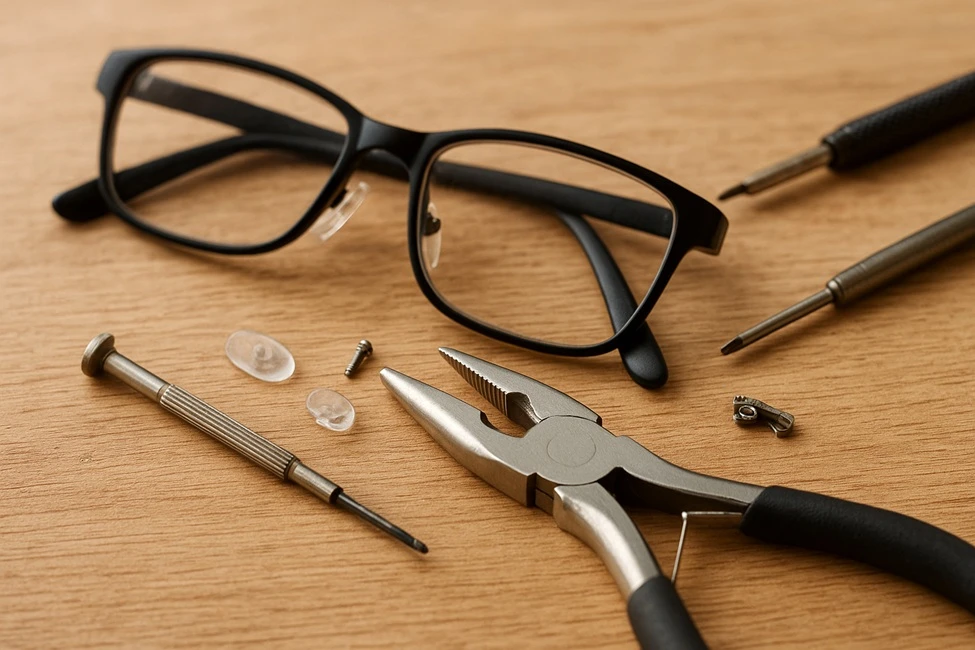
Nose pads provide comfort and stability by supporting the glasses on your nose. Over time, they can wear out, discolor, or detach. Replacing them is simple if you have a pair of tweezers and the correct type of pad—such as screw-in, push-in, or adhesive. When changing them, always ensure that the pad arms are not bent or misaligned, as this can cause uneven pressure and discomfort.
4. Lens Cleaning Cloth and Solution
Every restoration process should include cleaning the lenses. Dust and grime can accumulate around the edges and hinges, affecting both clarity and hygiene. Use a microfiber cloth designed for lenses, along with an alcohol-free cleaning solution. Avoid using household cleaners, as they may damage coatings or leave streaks.
5. Small Tweezers
Tweezers are incredibly useful for handling tiny screws, pads, and washers. A fine-point tweezer allows precision and control during delicate adjustments. This tool is especially valuable when repairing rimless or semi-rimless frames, where components are smaller and more fragile.
6. Mini Pliers
Mini pliers, particularly round-nose or needle-nose varieties, help adjust frame alignment, tighten hinges, and reshape temples. They are also useful for bending nose pad arms back into position. Always apply light pressure when using pliers to avoid breaking or scratching the frame.
7. Screw Holder or Organizer Box
Because eyeglass screws and washers are extremely small, keeping them organized is essential. A screw holder or a small plastic box with compartments helps prevent loss and makes future repairs easier. Labeling the compartments by screw type or size can further save time.
8. Magnifying Glass
Eyewear components are often tiny and difficult to inspect with the naked eye. A magnifying glass or head-mounted magnifier provides better visibility when tightening screws, aligning frames, or checking for cracks. Some magnifiers come with built-in lights for improved accuracy.
9. Heat Source for Plastic Frames
Plastic or acetate frames can lose shape due to daily wear. A controlled heat source, such as a hair dryer or a specialized frame warmer, can help adjust them safely. By gently heating the frame, you can make minor corrections to fit and balance. However, it is important not to overheat, as excessive heat can cause warping or discoloration.
10. Screw Extractor Tool
Sometimes, screws break or become stuck inside the hinge or bridge. A screw extractor tool helps remove these without damaging the frame. It grips the screw head and allows careful extraction, especially useful for metal frames.
Techniques for Safe Eyewear Restoration
Having the right tools is only half the process; understanding how to use them safely ensures lasting results. Start by placing your glasses on a flat, clean surface with good lighting. If the repair involves screws or lenses, work over a soft cloth to prevent scratches.
When tightening screws, avoid applying excessive force, as this can strip the threads. When cleaning or adjusting lenses, handle them from the edges to prevent fingerprints. For plastic frame adjustments, always test the temperature of the heat source before applying it to the frame.
Take your time with every step. Eyewear repair requires patience and attention to small details. Each adjustment, however minor, contributes to the overall comfort and durability of your glasses.
Knowing When to Seek Professional Help
While DIY eyewear restoration is practical for minor issues, certain repairs require professional expertise. If your lenses are cracked, your frame is severely bent, or the hinge mechanism is broken, attempting to fix it at home could cause further damage.
Professionals have specialized equipment that ensures precision repairs, especially for high-end or designer eyewear. Their experience allows them to identify problems that might not be visible to the untrained eye. Knowing when to seek expert help can prevent costly mistakes and preserve the quality of your glasses.
Professional Repair Services You Can Trust
For those who prefer expert attention, Eyeglass Repair USA provides nationwide professional repair services for all types of eyewear. Their team specializes in fixing metal, plastic, titanium, and rimless frames with precision and care. They use advanced tools and techniques to restore glasses to their original comfort and appearance. Whether you have broken hinges, missing screws, or damaged temples, their experienced technicians handle repairs efficiently and return your eyewear looking and fitting like new.
Conclusion
Restoring eyewear at home can be a rewarding experience when done with the right tools and care. A well-equipped toolkit allows you to perform basic maintenance, handle emergencies, and extend the life of your frames. From screwdrivers to magnifiers, every tool plays an important role in ensuring a perfect fit and long-lasting comfort. However, when repairs seem too complex or delicate, trusting professionals like Eyeglass Repair USA is the best way to ensure precision results. By balancing DIY care with expert service when needed, you can enjoy clear vision and perfectly fitting eyewear for years to come.

























Sign in to leave a comment.