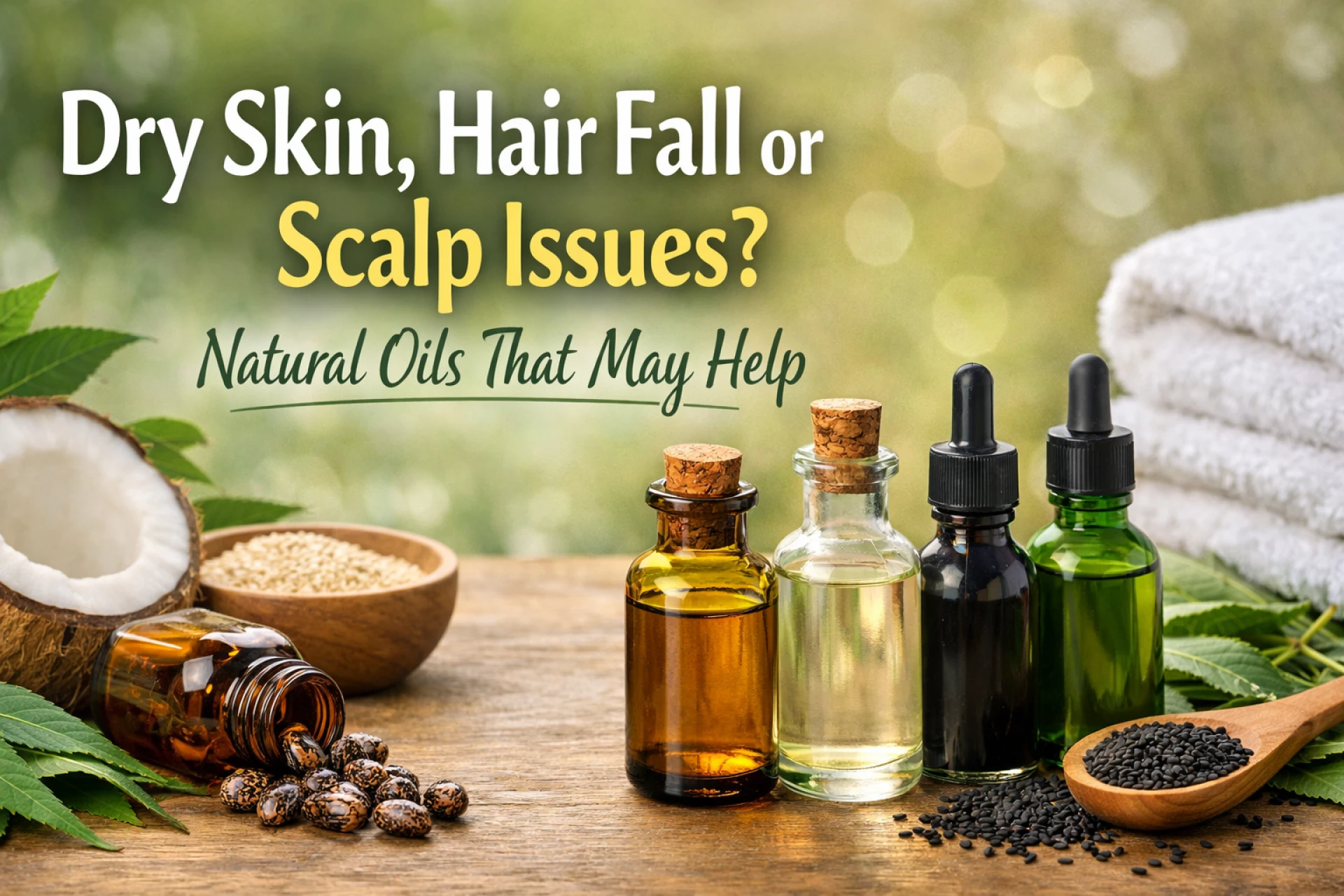

Dry, tight skin. More hair in the brush than usual. An itchy or flaky scalp that just won’t settle. These are common concerns, and many people look for gentle, plant-based options to support their regular skin and hair care routines. Among the most widely used traditional remedies are natural oils, valued for their simplicity, versatility, and long history of use in personal care.
Different oils have different textures, absorption rates, and traditional applications. Understanding how they’re typically used can help you choose one that suits your skin type, hair goals, and comfort preferences.
Why Natural Oils Are Popular in Skin and Hair Care
Natural oils have been used across cultures for centuries in beauty and grooming rituals. Today, they remain popular because they are generally simple, multi-purpose, and compatible with minimalist routines.
How oils help support the skin barrier
The outer layer of your skin plays a key role in keeping moisture in and environmental stressors out. Oils are often used on dry or rough areas because they help reduce moisture loss and leave the skin feeling softer and more comfortable. Richer oils are commonly chosen for very dry zones like elbows, knees, and heels, while lighter oils may suit everyday use.
The role of oils in scalp and hair care routines
Healthy-looking hair starts with a well-cared-for scalp. Traditional hair oiling practices involve massaging oil into the scalp and through the hair lengths before washing. This routine is often used to condition the scalp, improve manageability, and add shine to dull or dry hair.
Choosing oils based on thickness, absorption, and skin type
Some oils are light and fast-absorbing, making them suitable for daily moisturising. Others are thick and slow to absorb, which can be ideal for overnight treatments or massage. Selecting the right texture for your comfort level is just as important as choosing the oil itself.
Natural Oils Commonly Used for Dry Skin
Dry skin often needs both hydration and nourishment. While water-based moisturisers add hydration, oils are frequently used afterward to help lock that moisture in and soften rough areas.
Why dry skin needs both moisture and nourishment
When skin feels flaky or tight, it may be lacking protective lipids as well as moisture. Applying an oil after bathing, while skin is still slightly damp, is a method many people use to help improve softness and smoothness.
Lightweight vs deeply nourishing oils
Nature’s Shield Organic MCT Coconut Oil is a lightweight, fast-absorbing oil that many people prefer for daily skin moisturising. Because it feels less greasy than heavier oils, it can be easier to use on larger areas like arms and legs, especially in warmer weather.
For areas that feel particularly dry or in need of richer care, Nature’s Shield Wild-Crafted Black Sesame Oil is traditionally used as a deeply nourishing body oil. Sesame oil has a long history in massage practices and is often chosen for its warming, comforting feel on the skin.
Oils Traditionally Used for Hair Fall and Weak Hair
Seeing more hair shedding than usual can be concerning. While hair growth is influenced by many factors, supportive scalp and hair care habits are a common focus.
Why scalp care matters for healthy-looking hair
A dry or neglected scalp can affect how hair looks and feels. Gentle massage with oil is a traditional practice that may help condition the scalp and improve the overall feel of the hair.
Traditional hair oiling practices
Nature’s Shield Organic Castor Oil is a thick, viscous oil often used in hair and scalp massage routines. Because of its dense texture, it’s commonly applied in small amounts or blended with lighter oils. Many people use castor oil as part of an overnight hair oiling ritual before shampooing.
Nature’s Shield Wild-Crafted Black Sesame Oil is also widely used in traditional hair care. It is often chosen for nourishing dry hair lengths, improving softness, and adding a natural-looking shine.
Natural Oils for Scalp Care and Comfort
An uncomfortable scalp—whether dry, tight, or flaky—can make hair care frustrating. Some people prefer plant-based oils as part of their scalp care routine.
Common causes of scalp dryness and discomfort
Weather changes, harsh hair products, and frequent washing can all contribute to scalp dryness. Using a small amount of oil as a pre-wash treatment is a method many people use to help balance the scalp before cleansing.
Why some people prefer plant-based oils in scalp routines
Nature’s Shield Organic Neem Oil is a strong, distinctive oil traditionally used in both skin and scalp care routines. It is often selected when people want a more herbal-style oil as part of their weekly scalp care ritual. Due to its potent aroma and richness, neem oil is commonly diluted with a carrier oil before application.
Nature’s Shield Organic Castor Oil may also be used on the scalp, often blended with lighter oils to make application easier. Its thick texture makes it popular in intensive scalp massage routines.
How to Choose the Right Oil for Your Skin or Hair Type
With several options available, it helps to match the oil to your specific goal.
For lightweight daily moisturising
A lighter oil like MCT Coconut Oil may suit everyday use, especially if you prefer something that absorbs quickly without a heavy feel.
For deep nourishment and massage
Black Sesame Oil is often chosen for body massage and very dry skin areas due to its richer texture.
For thick, intensive hair oiling
Castor Oil is frequently used in small amounts for more intensive hair and scalp routines.
For herbal, traditional scalp care
Neem Oil is typically used as part of diluted blends for scalp and skin care when a strong, traditional oil is preferred.
Tips for Using Natural Oils Safely
Natural oils are simple, but a few precautions can help ensure a comfortable experience.
Patch testing before use
Apply a small amount to the inside of your arm and wait 24 hours to check for sensitivity.
Using small amounts and adjusting for skin type
Start with a few drops. You can always add more, but using too much may leave skin or hair feeling greasy.
When to seek professional advice
If you have ongoing scalp irritation, significant hair loss, or persistent skin conditions, it’s best to consult a qualified health professional for personalised guidance.
Final Thoughts
Natural oils continue to be popular in skin and hair care for their versatility and long-standing traditional use. From lightweight daily moisturising to richer massage and scalp rituals, different oils offer different experiences.
Choosing pure, high-quality oils suited to your needs and comfort level can make these routines more enjoyable and effective. With the right approach, natural oils can be a simple addition to everyday self-care for skin, hair, and scalp.





















Sign in to leave a comment.