
Natural stone blocks form the fundamental bedrock of classic architecture and modern civil infrastructure. Extracted directly from virgin geological formations, these monolithic masses undergo precision wire-saw dressing before entering global supply chains. For architects, builders, and fabricators, choosing the right block demands deep insight into structural density, porosity, mineral composition, and load-bearing properties. Galaxy Exports works directly at source quarries to extract, classify, and supply materials that satisfy international engineering standards.
Understanding the Physical and Mechanical Properties of Natural Stone Blocks
The performance of an unhewn or dressed stone block depends upon the geological phenomena that created it millions of years ago. Whether igneous, metamorphic, or sedimentary, each block exhibits specific mechanical metrics that determine its utility in heavy construction and dimensional fabrication.
Compressive Strength and Density
Compressive strength dictates how much vertical load a stone can endure before structural failure. High-density igneous formations like granite routinely reach compressive limits exceeding 150 to 200 MPa, making them impervious to crushing loads under skyscrapers or bridge abutments. Metamorphic stones such as marble, composed of recrystallized calcite or dolomite, offer balanced compressive strength alongside exceptional workability for detailed milling. Sourcing dressed natural stone blocks in India ensures access to these dense geological profiles, where low porosity directly correlates with resistance to freeze-thaw cracking and environmental deterioration.
Mineral Makeup and Hardness
The Mohs hardness scale outlines how easily a stone resists surface abrasion. Granite blocks contain abundant quartz and feldspar, achieving a hardness rating between 6 and 7. This mineral synergy prevents scratching from industrial traffic and airborne particulate matter. Conversely, calcium carbonate-rich marble blocks score around 3 to 4 on the Mohs scale, granting fabricators the softness required to shape clean chamfers, bullnose profiles, and intricate dimensional moldings without shattering internal crystal bridges.
Porosity and Absorption Rates
Low water absorption maintains structural integrity over centuries. High-grade stone blocks exhibit water absorption ratings below 0.5% by weight. Minimal porosity bars water infiltration, halting the accumulation of hydrostatic pressure, efflorescence, and chemical breakdown caused by acidic moisture or road de-icing salts.
Structural and Architectural Applications: Where Stone Blocks Excel
Because intact stone blocks possess consistent grain integrity, they serve demanding architectural and structural roles that pre-cut tiles or engineered composites cannot match.
Dimensional Slabs and Interior Stonework
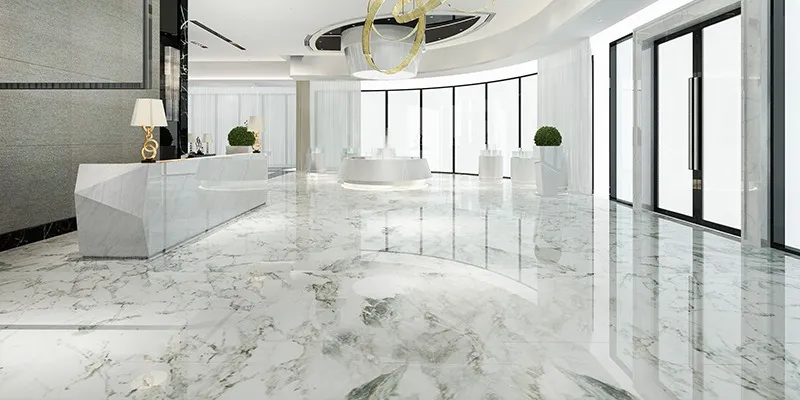
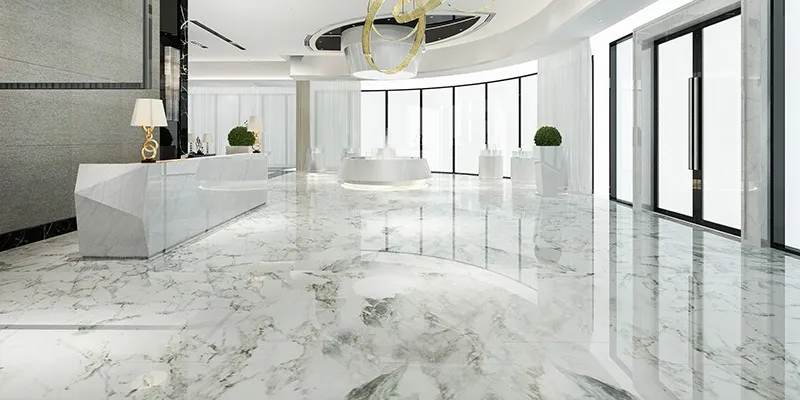
Blocks are primarily mounted onto heavy gangsaws and multi-wire cutting plants to yield large-format architectural slabs. These consecutive cuts preserve continuous veining patterns, which allow fabricators to achieve flawless book-matched feature walls, seamless kitchen islands, and expansive hotel lobby pavements. Partnering with an established marble exporter in India provides global processing facilities with raw blocks that yield pristine, fissure-free slabs with minimal quarry waste during downstream processing.
Heavy Civil Engineering and Marine Infrastructure
Rough-hewn, oversized stone blocks are indispensable in civil engineering. Their sheer mass and chemical inertness make them ideal for:
- Breakwaters and coastal revetments where tidal hydraulics erode concrete
- Gravity retaining walls engineered to prevent slope failures without metallic reinforcement
- Foundation footings and base piers for heavy bridges and historical restorations
Monumental Carving, Restoration, and Landscape Architecture
Sculptors and urban planners specify monolithic blocks when projects demand longevity across generations. From civic monuments and public fountains to carved balustrades and curbstones, raw blocks allow master artisans to chisel complex forms directly out of a single continuous mass. In landscape architecture, dressed stone blocks serve as natural stair steps, structural retaining terraces, and massive seating monoliths that weather gracefully over decades of outdoor exposure.
Quarry Selection and Quality Control at Galaxy Exports
Transforming a raw geological deposit into an export-grade block requires strict quality control at the quarry face. Galaxy Exports employs rigorous grading criteria to verify sound structural integrity across every extracted block before it leaves the processing yard.
Inspectors examine the extracted faces for micro-fissures, unwanted mineral concentrations, internal fractures, and directional grain alignment. Wire-saw extraction techniques ensure square, uniformly dressed geometries. This geometric accuracy reduces transportation costs, stabilizes container freight, and maximizes usable slab volume when the block meets gangsaw blades at finishing plants worldwide.
By honoring the natural variance of each quarry run, developers and stonemasons receive stone blocks engineered to endure demanding environments and ambitious designs.

























Sign in to leave a comment.