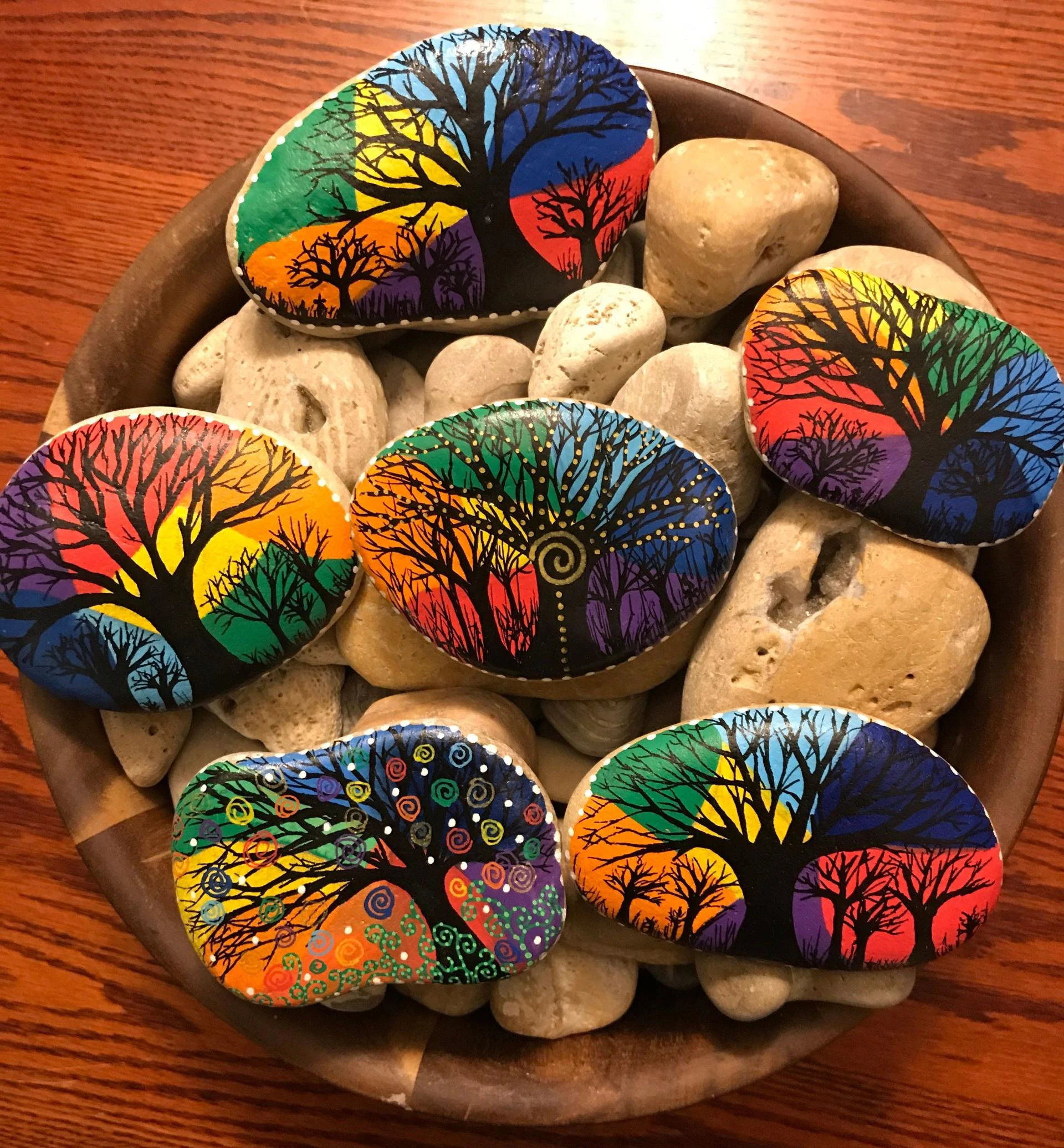

There is something deeply grounding about holding a simple stone in your palm. Cold, rough, and silent at first—until creativity breathes life into it. My journey with rock painting didn’t begin as an art project; it began as a quiet moment with nature. Over time, that moment transformed into a personal ritual, a form of expression, and a reminder of the timeless charm of rock painting.
How It All Begins: Choosing the Right Rock
Every rock painting starts long before the brush touches the surface. I often collect stones during peaceful walks—near rivers, gardens, or roadsides. I look for rocks that feel right in my hand: smooth, flat, and balanced. Each stone has its own personality, and I believe the design should respect its natural shape rather than fight it. This connection is what makes rock painting feel intimate and alive.
Preparing the Canvas Nature Gave Me
Before painting, I wash the rocks thoroughly and let them dry in the sun. This simple step feels symbolic—cleansing the past so something new can emerge. Sometimes I apply a thin white base coat to make colours pop, but other times I leave the stone raw, embracing its natural texture. This choice depends on my mood and the story I want the rock to tell.
Painting from the Heart, Not Perfection
When I start painting, I don’t always sketch first. I let my hands guide me. Florals, mandalas, leaves, eyes, abstract patterns—each design flows from emotion rather than rules.
Acrylic paints are my favourite because they blend well and dry quickly. Layer by layer, the rock begins to change, and in that process, so do I.
What makes this art special is not perfection, but presence. Every dot, every stroke carries a moment of mindfulness. This is why I feel the timeless charm of rock painting lies in its simplicity—it doesn’t demand mastery, only sincerity.
Learning Through Mistakes and Experiments
Not every rock turns out the way I imagine. Some colors clash, some lines go astray. But those imperfections teach patience. Over time, I’ve learned how different brushes behave, how much pressure to apply, and how to let mistakes become part of the design. Rock painting has taught me that art, like life, doesn’t need to be flawless to be beautiful.
Sealing the Story Forever
Once the painting is complete and fully dry, I seal it with a clear varnish. This protects the artwork and gives it a soft shine. It feels like preserving a memory—locking that moment of creativity in time. Whether the rock is kept at home, gifted to someone, or placed back into nature, it carries a piece of my story.
Why Rock Painting Feels Timeless
In a fast, digital world, rock painting slows me down. It connects me to ancient forms of expression—long before canvases and screens existed. Humans have always painted on stone, leaving marks of emotion, belief, and identity.
That’s why the timeless charm of rock painting continues to resonate today. It’s not just an art form; it’s a quiet conversation between hands, heart, and earth.
A Personal Reflection
Rock painting has become more than a hobby for me—it’s therapy, storytelling, and meditation combined. Every finished piece reminds me that beauty can come from the simplest things. A stone, some paint, and a moment of stillness are all it takes to create something meaningful.
If you’ve ever felt the urge to create but didn’t know where to start, begin with a rock. Hold nature in your hands, and you may discover your own connection to the timeless charm of rock painting.























Sign in to leave a comment.