
Introduction:
Investing in the financial markets comes with its share of uncertainties, and the volatile nature of markets can be a source of concern for many investors. In such scenarios, having a strategic approach to managing risk becomes imperative. One such tool that offers a disciplined and systematic way to navigate market fluctuations is the Systematic Transfer Plan (STP). In this blog, we'll explore the concept of STP, how it works, and why it can be a smart way for investors to manage risk effectively.
Understanding Systematic Transfer Plans (STP):
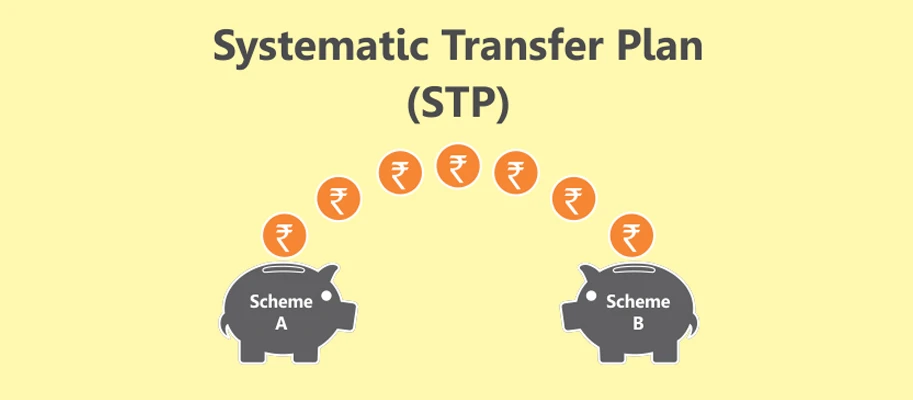
Definition and Basics:Systematic Transfer Plans involve the systematic transfer of funds from one investment scheme to another within the same fund house. This transfer occurs at regular intervals, providing investors with a disciplined approach to managing their investment portfolio.Two Components:STP involves two components: the source scheme, from which funds are transferred, and the destination scheme, where the funds are invested. Commonly, investors opt for the source scheme to be a liquid or debt fund, while the destination scheme is often an equity fund.How STP Works:
Transfer Frequency and Amount:Investors can choose the frequency and amount of transfers based on their risk tolerance and investment goals. Common frequencies include monthly, quarterly, or semi-annually.Mitigating Timing Risk:STP helps mitigate timing risk by allowing investors to gradually move funds from a relatively stable or low-risk asset class (like debt) to a potentially higher-risk and higher-return asset class (like equity) over time.The Advantages of STP in Managing Risk:
Rupee Cost Averaging:STP facilitates rupee cost averaging, where investors buy more units when prices are low and fewer units when prices are high. This averages out the cost of investment over time, reducing the impact of market volatility.Disciplined Approach:STP instils discipline in the investment approach. By sticking to a predetermined transfer plan, investors are less likely to succumb to emotional decision-making during market fluctuations.STP vs. Lump Sum Investments:
Gradual Exposure to Equity:STP allows investors to gain equity exposure gradually, reducing the impact of sudden market downturns that could affect a lump sum investment.Reduced Market Timing Pressure:Unlike lump sum investments, STP reduces the pressure of timing the market perfectly. Investors can navigate market volatility more comfortably by spreading their investments over time.Considerations for Investors:
Investment Horizon:Investors should align their STP strategy with their investment horizon. STP may be more effective for those with a longer-term perspective.Risk Tolerance:Assessing risk tolerance is crucial. Investors should choose the frequency and amount of transfers that align with their comfort level and financial goals.Case Study: STP in a Volatile Market:
Illustrative Example:Consider a scenario where an investor has a lump sum amount and is hesitant to invest in equities due to market volatility. By using STP, the investor can gradually transfer funds to an equity fund, benefiting from rupee cost averaging.Conclusion:
In the dynamic world of investments, where market volatility is inevitable, having a strategic plan to manage risk is essential. Systematic Transfer Plans (STP) provide investors with a disciplined and gradual approach to navigating market fluctuations while potentially benefiting from rupee cost averaging. By incorporating STP into their investment toolkit, investors can make more informed decisions, reduce timing risks, and navigate market volatility with greater confidence.
Get in touch to know more about details: Ajmera X-change
























Sign in to leave a comment.