


If you're comparing NCLEX PN courses right now, there's a question most candidates never think to ask: when was this course last updated?
It matters more than it used to. NCSBN's 2026 NCLEX-PN Test Plan took effect on April 1, 2026, and it will remain the governing blueprint through March 31, 2029. Every practice question, content outline, and study schedule your course uses should be built against that current blueprint - not a 2023 version that a lot of prep programs simply never got around to refreshing.
The tricky part is that this isn't a total overhaul, so an outdated course won't always be obvious. The exam's core structure - computerized adaptive testing, the Next Generation NCLEX (NGN) item types, the eight Client Needs categories - hasn't changed. What has shifted is terminology, emphasis, and the way certain topics are framed, and a course that skips those updates can quietly leave you underprepared on exam day.
Here are five signs your current NCLEX PN test prep course hasn't kept up.
1. It Still Uses Pre-2023 Question Formats Only
If your course material is built entirely around traditional multiple-choice and fill-in-the-blank questions, that's your first red flag. The Next Generation NCLEX format - which includes case studies, extended multiple response, cloze (drop-down) items, enhanced hot spot questions, and matrix or bow-tie style questions - was introduced back in 2023 and remains fully part of the exam today. Any legitimate NCLEX PN course in 2026 should have you practicing every one of these formats regularly, not just the classic single-answer style.
A course that leans almost entirely on recall-based multiple choice is training you for an exam that no longer exists in that form.
2. It Hasn't Updated Its Terminology or Content Framing
This is the subtlest sign, and it's exactly why so many outdated courses slip past students. The 2026 test plan didn't add new content categories, but it did modernize the language used to describe existing ones - for example, "Safety and Infection Control" is now officially "Safety and Infection Prevention and Control," and outdated phrasing like "substance abuse" has been replaced with "substance misuse" to reflect current, stigma-aware clinical language.
The 2026 update also brought a clearer, more consistent emphasis on health equity and unbiased, non-judgmental patient care throughout the content areas. If your course materials still use pre-2023 wording or don't touch on equity-focused, culturally competent care scenarios, they haven't been refreshed to match how NCSBN is currently framing entry-level nursing practice.
3. It Doesn't Center Clinical Judgment as the Core Skill
The single biggest shift in NCLEX PN test prep over the last few years isn't a content change - it's a philosophy change. The exam is built around the Clinical Judgment Measurement Model, which tests whether you can recognize cues, analyze information, prioritize hypotheses, generate solutions, take action, and evaluate outcomes, not just whether you memorized a fact.
If a course is still teaching you to memorize isolated answers rather than walking through that clinical reasoning process on every scenario, it's behind. Strong NCLEX PN test prep courses build every unit - pharmacology, safety, psychosocial care - around this same judgment framework, because that's genuinely how the questions are constructed now.
4. It Can't Tell You Which Test Plan It's Aligned To
Ask directly: is this course built on the April 2026 NCLEX-PN Test Plan? A program that can't answer clearly, or that points you to materials published before 2023, is a program working from an outdated blueprint. The eight Client Needs categories - things like Coordinated Care, Safety and Infection Prevention and Control, Psychosocial Integrity, and Pharmacological Therapies - carry updated percentage weightings under the current plan, and a course that hasn't cross-referenced its content against the official NCSBN test plan may be over- or under-preparing you in specific areas without realizing it.
This is a fair, direct question to ask any nclex pn courses provider before enrolling. A transparent program should be able to point to exactly which test plan version its curriculum reflects.
5. Its Practice Questions Look Nothing Like NGN Items
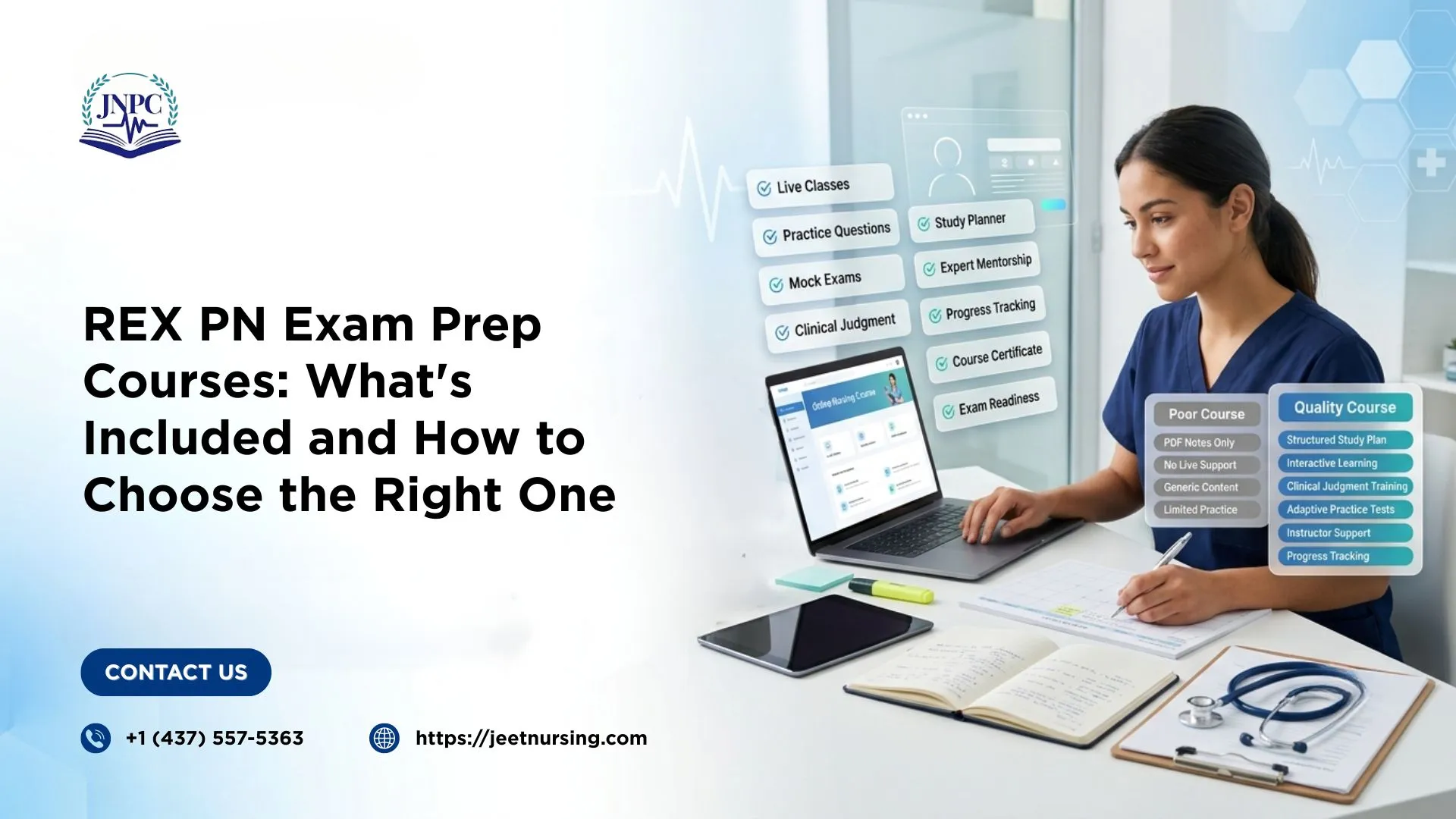
The clearest, fastest way to check is to look at a sample question. If every practice item is a single best-answer question with four options, that's a strong sign the question bank predates the Next Generation format. Current NCLEX PN test prep should include a meaningful mix of case-study clusters, bow-tie items, matrix/grid questions, and cloze-style questions with detailed rationales explaining not just the right answer, but why the wrong ones fail the clinical judgment test.
If you've never seen a bow-tie question in your practice sets, it's worth asking why.
What an Updated NCLEX-PN Course Should Actually Include
Put simply, a current nclex pn test prep course should give you:
- Practice across all current NGN formats - case studies, bow-tie, matrix/grid, cloze, and enhanced hot spot items
- Content organized around the eight Client Needs categories with weighting that reflects the current test plan
- Instruction built around the Clinical Judgment Measurement Model, not isolated fact recall
- Updated terminology and equity-focused care scenarios consistent with 2026 language changes
- Transparency about which test plan version the curriculum is aligned to
- Detailed rationales for every practice question, not just an answer key
How to Verify Before You Enroll
Before committing to any program, ask three direct questions: Which test plan version is the curriculum built on? What percentage of practice questions are NGN-format versus traditional multiple choice? And how often is content reviewed against NCSBN updates? A course confident in its material will answer all three without hesitation.
At Jeet Nursing Prep Center, our NCLEX-PN courses are structured around the current NCSBN test plan, with practice sets built across every NGN question format and instruction centered on clinical judgment rather than memorization. If you're unsure whether your current prep is up to date, it's worth a second look before your exam date locks in.
The NCLEX-PN itself hasn't changed dramatically in 2026 but your course materials should still reflect exactly what's being tested today, not what was tested three years ago.






















Sign in to leave a comment.