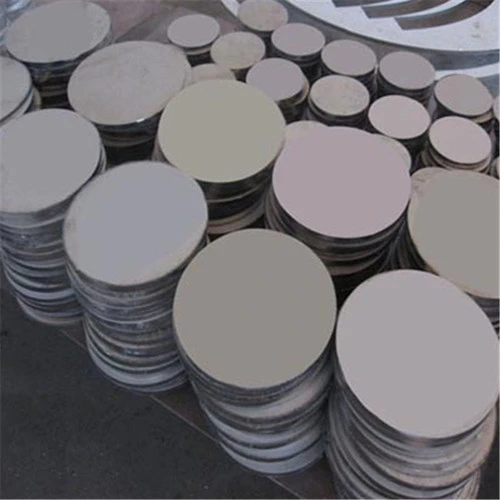

What are Stainless Steel 316L Circles?
Stainless steel 316L is an austenitic stainless steel alloy that contains 10-14% nickel, 16-18% chromium, and 2-3% molybdenum. It has excellent corrosion resistance and is resistant to pitting and crevice corrosion in chloride environments. It is also non-magnetic and can withstand high temperatures up to 1600°F. The L in 316L stands for low carbon content, making it more resistant to sensitization and carbide precipitation during welding.
Moreover, Stainless Steel 316L Circles are easy to clean and sanitize, making them the perfect choice in manufacturing industries which require hygiene. They’re also non-reactive, meaning they don’t interact with food, chemicals, or other substances in contact with them. This makes them safe and ideal for applications that demand high hygiene and safety standards..
Applications of Stainless steel 316L Circles
Stainless steel 316L circles have many applications in various industries. In the construction industry, they are used for roofing, wall cladding, and structural support due to their high strength and corrosion resistance. In the automotive industry, they are used in exhaust systems, mufflers, and catalytic converters. In the medical industry, they are used for surgical instruments, implants, and medical equipment. Stainless steel 316L is also commonly used in the food processing and brewing industries due to its corrosion resistance and ability to maintain product purity.
SS 316L Circles can be finished in various ways, including polishing, grinding, brushing, and bead blasting. Polishing involves buffing the surface to a high reflective finish. Grinding involves using an abrasive material to remove surface imperfections. Brushing involves using a wire brush or pad to create a non-reflective, matte finish. Bead blasting involves using tiny glass beads to create a textured finish.



























Sign in to leave a comment.