

Over 67% of manufacturers say disconnected systems are their top barrier to operational growth. A qualified NetSuite ERP partner for manufacturing connects your shop floor, warehouse, finance, and supply chain into one unified system eliminating data silos that slow decisions. This post explains what such a partner actually does, how to evaluate one, and what manufacturers should expect from a proper ERP implementation.
What Does a NetSuite ERP Partner Do for Manufacturers?
A NetSuite ERP partner for manufacturing configures, implements, and optimises the ERP platform to fit your specific production environment. They map your workflows from Bill of Materials (BOM) to finished goods and ensure the system reflects how your factory actually runs, not how a generic template assumes it does.
How Implementation Partners Differ from Resellers
Resellers sell software licences. Implementation partners go deeper. They conduct process discovery, design system architecture, migrate historical data, and train your team. The distinction matters because a misconfigured ERP can cost more to fix than it saved.
The Role of Industry-Specific Configuration
Manufacturing ERP is not plug-and-play. A good partner configures Work-in-Progress (WIP) tracking, production routing, and demand planning to match your output model whether discrete, process, or mixed-mode manufacturing. Generic configuration leads to workarounds that erode efficiency over time.
Post-Go-Live Support and Optimisation
Implementation is the starting point, not the finish line. Manufacturers need ongoing support as product lines expand, regulations shift, and volumes change. A committed partner provides continuous improvement cycles, not just a one-time deployment.
How Does NetSuite ERP Help Manufacturing Companies Scale?
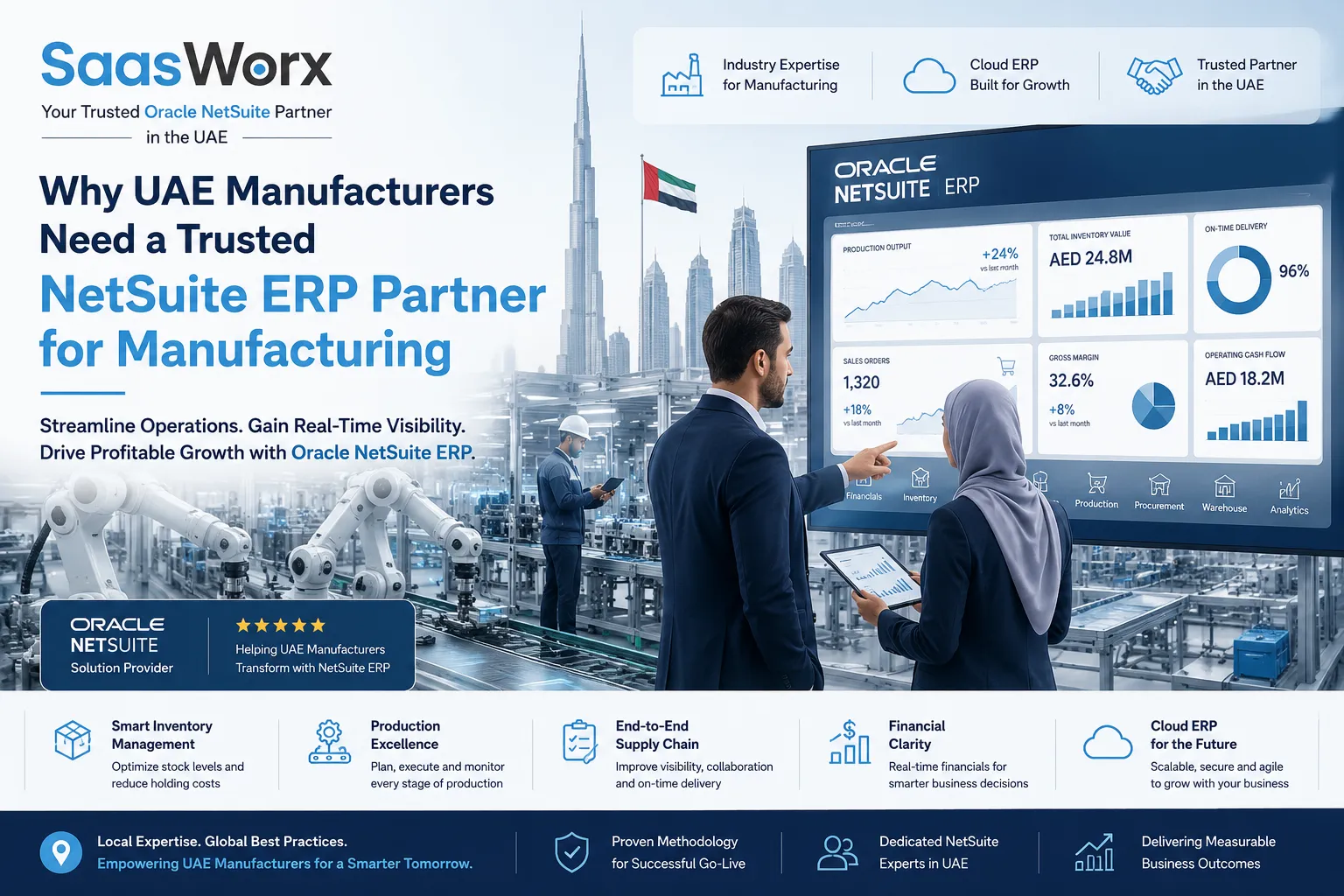
NetSuite ERP helps manufacturers scale by giving every department production, procurement, finance, and sales access to the same real-time data. This removes the lag between decisions and the information needed to make them, which is where most growth bottlenecks originate.
Real-Time Inventory and Available-to-Promise Logic
Manufacturers scaling across multiple locations need live inventory visibility. NetSuite's Available to Promise (ATP) logic calculates what stock is genuinely available after accounting for open orders and planned production runs. This prevents overselling and reduces emergency procurement costs.
Connecting Shop Floor Transactions to Finance
Every production event material consumption, labour hours, machine time flows directly into the General Ledger. This gives finance teams an accurate Cost of Goods Sold (COGS) analysis without manual reconciliation. According to McKinsey, manufacturers that close the gap between operational and financial data reduce reporting time by up to 30%.
Supply Chain Visibility and Landed Cost Tracking
Scaling manufacturers source from global suppliers. NetSuite tracks landed costs freight, insurance, duties against each purchase order. This gives procurement teams a true total cost view, not just the invoice price, which is critical for accurate margin management.
What Should Manufacturers Look for in a NetSuite Implementation Partner?
Manufacturers should look for a partner with direct manufacturing ERP experience, a structured implementation methodology, and a track record of post-live support. Domain knowledge matters more than general NetSuite certifications a partner who understands BOM structures and shop floor control will configure the system more accurately than one who does not.
Verified Manufacturing Industry Experience
Ask for case studies from manufacturers in your sector discrete, process, or make-to-order. A partner who has solved your exact production challenges will anticipate configuration needs that a generalist will miss. For a detailed look at how this applies in practice, this resource on NetSuite ERP implementation for manufacturing operations outlines the key modules and configuration considerations manufacturers should prioritise.
A Repeatable Implementation Methodology
Strong partners follow a documented process: discovery, process mapping, system design, data migration, testing, training, and go-live. Each phase should have clear deliverables and owner accountability. Ad hoc implementations consistently miss timelines and exceed budgets.
Team Depth and Onshore-Offshore Balance
Manufacturers often need rapid response during production disruptions. A partner with both onshore functional consultants and offshore technical resources delivers both the business context and the development capacity needed without inflating costs.
What Are the Biggest ERP Challenges for Manufacturing Companies?
The biggest ERP challenges for manufacturers include inaccurate costing, fragmented inventory data, poor supply chain visibility, and compliance complexity. Each of these becomes a compounding problem at scale small data gaps become large financial errors as volumes increase.
Costing Inaccuracy and Its Impact on Margins
Without real-time labour and material cost tracking, manufacturers work from estimated COGS figures. When actuals differ from estimates, margin erosion is invisible until month-end close. ERP systems that capture costs at the transaction level eliminate this delay.
Inventory Fragmentation Across Locations
Multi-site manufacturers often run separate spreadsheets or legacy systems per facility. This creates conflicting stock records, missed replenishment triggers, and excess safety stock. A unified cloud ERP consolidates all location data under one system of record.
Compliance and Regulatory Reporting
Manufacturers face layered compliance requirements quality standards, customs documentation, tax reporting, and audit trails. Manual compliance processes are error-prone and resource-heavy. ERP systems built with regulatory frameworks embedded reduce both risk and administrative overhead.
Conclusion
Choosing the right NetSuite ERP partner for manufacturing is a strategic decision, not a software purchase. The partner you select shapes how well your production, inventory, and financial data work together and that determines how fast you can grow without losing operational control. As manufacturers face increasing complexity in supply chains and customer expectations, the quality of ERP implementation becomes a direct driver of competitive ability. The real question is not whether to implement a cloud ERP it is whether your current partner has the manufacturing depth to do it right.

























Sign in to leave a comment.