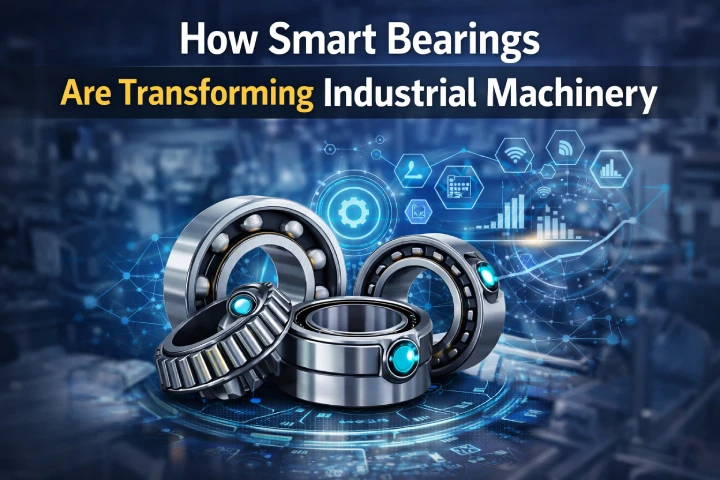

The rise of smart manufacturing and Industry 4.0 has significantly transformed how industrial machinery operates. Modern production systems are no longer limited to mechanical efficiency alone—they are now driven by data, automation, and intelligent monitoring. One of the most overlooked yet critical components in this transformation is the bearing. Traditionally seen as a simple mechanical part, bearings are now evolving into intelligent components that contribute to efficiency, predictive maintenance, and real-time performance monitoring.
With the integration of technologies like IoT, data analytics, and automation, industrial systems are becoming smarter, more responsive, and highly efficient. Bearings, which were once passive components, are now actively participating in this transformation by enabling data-driven decision-making and improving machine reliability. This shift is redefining how industries approach maintenance, performance optimization, and long-term operational planning.
The Role of Bearings in Modern Machinery
Bearings are essential for reducing friction and supporting rotational movement in machines. They ensure smooth operation, minimize energy loss, and protect machinery components from excessive wear and tear. Bearings are widely used across industries such as automotive, manufacturing, robotics, construction, and heavy engineering.
In today’s high-performance environments, industries require bearings that can meet demanding operational requirements. These include:
- Handling heavy loads without deformation
- Operating efficiently at high speeds
- Performing reliably under extreme temperatures and harsh conditions
- Delivering long operational life with minimal maintenance
To meet these demands, manufacturers are increasingly focusing on precision-engineered and application-specific solutions like OEM bearings. These bearings are designed to match exact machine requirements, ensuring optimal performance and durability across various industrial applications.
Integration of IoT in Bearings
The Internet of Things (IoT) has revolutionized industrial operations by introducing real-time monitoring and predictive maintenance capabilities. Smart bearings equipped with embedded sensors can collect and transmit critical data during operation, enabling industries to monitor machine health continuously.
These smart bearings can:
- Monitor temperature and vibration levels in real time
- Detect early signs of wear, imbalance, or misalignment
- Send performance data to centralized monitoring systems
- Alert operators before potential failures occur
This data-driven approach allows industries to shift from reactive maintenance to predictive maintenance. Instead of waiting for a breakdown, maintenance teams can take proactive measures based on real-time insights. This not only reduces downtime but also improves overall operational efficiency and machine reliability.
Benefits of Smart Bearing Technology
The integration of smart technology into bearings provides several significant advantages for modern industries.
Predictive Maintenance
One of the biggest benefits of smart bearings is predictive maintenance. By continuously monitoring machine conditions, these bearings help identify potential issues before they become critical. This reduces maintenance costs, prevents unexpected failures, and extends the lifespan of machinery.
Increased Efficiency
Smart bearings enable machines to operate at optimal performance levels by providing real-time feedback. This allows operators to make adjustments that improve efficiency, reduce energy consumption, and enhance overall productivity.
Reduced Downtime
Unexpected machine failures can result in costly production losses. Smart bearings minimize this risk by detecting problems early and allowing timely intervention. This ensures continuous operation and better production planning.
Improved Safety
In heavy industrial environments, equipment failure can lead to serious safety hazards. Smart monitoring systems help prevent accidents by identifying mechanical issues before they escalate, ensuring a safer working environment for operators.
Choosing the Right Bearings for Smart Systems
Even with advanced technology, selecting the right bearing remains a critical decision for engineers and manufacturers. The effectiveness of smart systems depends heavily on the quality and suitability of the bearing used.
Key factors to consider include:
- Load capacity (radial and axial loads)
- Operating speed (RPM requirements)
- Environmental conditions (temperature, moisture, dust)
- Material composition (stainless steel, ceramic, hybrid)
- Lubrication requirements
For industrial applications, businesses often rely on trusted suppliers offering high-quality OEM custom industrial bearings designed for durability, precision, and long-term performance. Selecting the right bearing not only improves efficiency but also enhances the effectiveness of smart monitoring systems.
Future of Bearings in Industry 4.0
As Industry 4.0 continues to evolve, bearings will become even more advanced with the integration of artificial intelligence, machine learning, and cloud computing. Future smart bearings will not only collect data but also analyze it to provide actionable insights automatically.
Integration with cloud platforms will allow real-time data access from anywhere, enabling remote monitoring and control of industrial systems. Machine learning algorithms will further enhance predictive maintenance by identifying patterns and predicting failures with greater accuracy.
From traditional mechanical components to intelligent systems, industrial custom bearings are becoming a key part of smart manufacturing ecosystems. Their role is expanding beyond motion support to becoming an integral part of connected industrial networks.
Conclusion
The combination of mechanical engineering and modern technology is reshaping the future of industrial machinery. Smart bearings are no longer optional—they are becoming essential for businesses aiming to stay competitive in the digital age.
By integrating IoT-enabled bearings into industrial systems, companies can achieve higher efficiency, reduced downtime, improved safety, and better overall performance. As industries continue to adopt smart manufacturing practices, the importance of advanced bearing solutions will only continue to grow.



























Sign in to leave a comment.