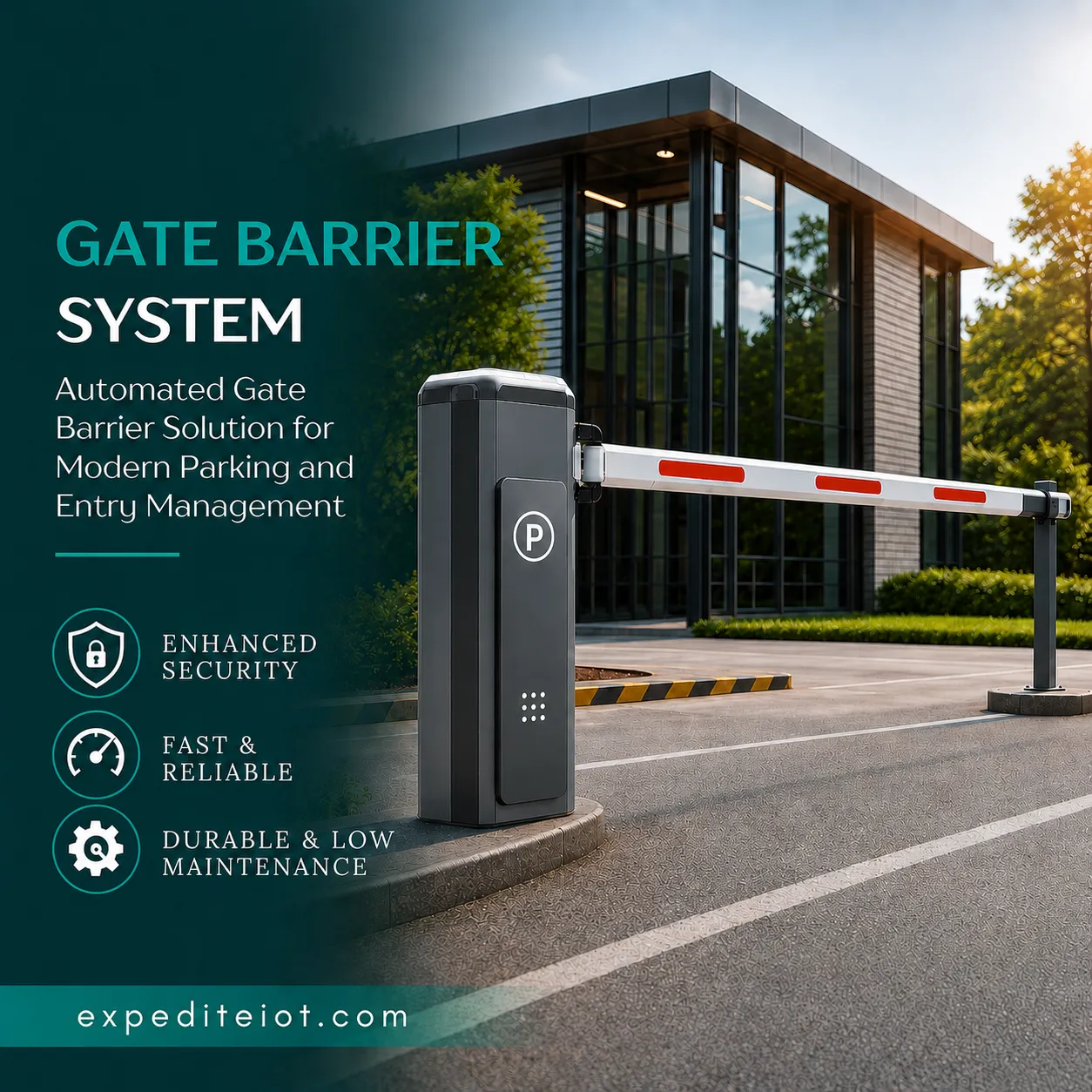

Saudi Arabia's rapid urban transformation under Vision 2030 demands infrastructure that is as intelligent as it is reliable. The modern Gate Barrier System has become one of the most critical components in this transformation — securing facilities, streamlining vehicular movement, and enabling data-driven site management across every major city in the Kingdom. Whether you are managing a corporate campus in Riyadh, a logistics hub in Dammam, or a mixed-use development in Jeddah, deploying the right barrier solution is no longer optional — it is a strategic necessity.
Why Saudi Arabia Is Embracing Intelligent Gate Barriers
The Kingdom's surge in mega-projects — NEOM, Red Sea Global, Diriyah Gate, and dozens of smart city nodes — has created an unprecedented demand for automated perimeter control. Intelligent Gate Barriers are at the heart of this movement, integrating artificial intelligence, IoT sensors, license plate recognition (LPR), and cloud-based management platforms to deliver frictionless entry and exit experiences while maintaining military-grade security.
Key drivers accelerating adoption across the KSA market include:
- Rapid growth of gated residential communities (compounds) in Riyadh and the Eastern Province
- Expansion of KAEC, industrial cities, and special economic zones requiring automated perimeter enforcement
- Government mandates for smart city infrastructure as part of Vision 2030 urban mobility goals
- Rising demand for contactless, touchless entry post-pandemic across corporate and retail environments
- Integration of barrier systems with national e-government platforms and Absher ID verification
Core Technologies Behind Modern Parking Access Barriers
Today's Parking Access Barriers are far removed from the simple electromechanical arms of a decade ago. They are fully networked nodes in a larger access ecosystem, communicating in real time with cloud dashboards, mobile apps, and enterprise security platforms. Leading deployments in Saudi Arabia now incorporate:
License Plate Recognition (LPR) Integration
AI-powered cameras read and validate number plates in under 500 milliseconds, enabling white-listed vehicles to pass without stopping. This technology is particularly valuable in high-throughput environments such as hospital complexes, airports, and university campuses, where queue build-up at entry points directly impacts operational efficiency.
RFID and UHF Long-Range Access
Ultra-high-frequency RFID transponders mounted on vehicle dashboards or windshields communicate with ground-level readers from distances of up to 10 metres. This hands-free, card-free method of vehicle authentication is standard practice across Saudi industrial parks and gated compounds.
QR Code and Mobile Ticketing
Visitors and temporary-access users scan a QR code generated via a mobile app or email. The barrier validates the code in real time against a cloud database, grants a single-use or time-limited entry, and logs the transaction — eliminating paper tickets and manned kiosks.
Loop Detectors and Safety Sensors
Ground-embedded inductive loops detect vehicle presence, preventing boom arms from lowering on occupied lanes. Photoelectric safety beams further protect pedestrians and vehicles from accidental arm strikes — a mandatory safety feature in all compliant KSA installations.
Boom Barrier Systems: The Workhorse of Saudi Access Control
Boom Barrier Systems remain the most widely deployed physical access control solution across the Kingdom, valued for their speed, reliability, and cost-effectiveness. High-speed models used in commercial parking facilities cycle the arm from horizontal to vertical in under 1.5 seconds, reducing wait times and improving driver experience.
Expedite IoT supplies and deploys boom barriers rated for duty cycles ranging from standard (up to 300 operations per day) to intensive (unlimited 24/7 operations), ensuring the right specification for every site type:
- Standard-duty barriers — ideal for residential compounds, small offices, and private car parks
- Medium-duty barriers — suited to mid-size commercial buildings, shopping centres, and mixed-use plazas
- Heavy-duty / intensive-duty barriers — engineered for petrol stations, hospitals, hotels, ports, and toll plazas
All barriers are built to withstand KSA's extreme heat — operating reliably in ambient temperatures exceeding 55 °C — and are finished with UV-resistant powder coatings for longevity in the desert climate.
Traffic Management Barriers: Controlling Urban Mobility at Scale
Traffic Management Barriers extend beyond simple entry/exit control to encompass dynamic road management, lane reversibility, congestion mitigation, and emergency vehicle priority. Municipalities in Riyadh, Jeddah, and Dammam are increasingly deploying road barriers integrated with central traffic management systems (CTMS) to respond in real time to accident-related congestion, VIP convoys, and mass-event crowd management.
Key application zones for urban traffic control barriers in Saudi Arabia:
- Perimeter protection around government ministries and royal palaces
- Entry restriction to pedestrianised zones in heritage districts such as Al-Balad (Jeddah)
- Dynamic lane management at major interchanges on King Fahd Road (Riyadh)
- Segregation of construction zones from public roads in rapidly developing areas
- Emergency access management at King Abdulaziz International Airport and King Khalid International Airport
Access Control Barriers: Unifying Physical and Digital Security
Access Control Barriers bridge the gap between physical perimeter enforcement and enterprise cybersecurity. When integrated with a unified access management platform, every barrier transaction — entry time, vehicle identity, operator override, and alarm event — is logged, timestamped, and synced to a centralised SIEM (Security Information and Event Management) system.
This integration is particularly critical for Saudi entities operating under the National Cybersecurity Authority (NCA) compliance requirements, where audit trails and incident response logs must be available for regulatory review. Expedite IoT's barrier platforms are designed with open APIs, enabling seamless connection to:
- CCTV and video management systems (VMS)
- HR and visitor management software
- Building management systems (BMS)
- Enterprise resource planning (ERP) platforms
- National identity verification services
Bollards: Anti-Ram and Aesthetic Perimeter Protection
Bollards offer a complementary — and often architecturally superior — form of perimeter control compared to traditional barrier arms. Fixed, removable, and electro-hydraulic bollards are installed across Saudi Arabia's high-security facilities to prevent unauthorised vehicular intrusion and protect against hostile vehicle attacks (HVA).
Expedite IoT supplies crash-rated bollards certified to IWA-14 and PAS-68 standards, capable of stopping a 7,500 kg vehicle travelling at 80 km/h. Applications include:
- Embassy and diplomatic mission entrances
- Critical national infrastructure (power stations, desalination plants, telecom facilities)
- Luxury retail and hotel frontages in Al Nakheel Mall, Jeddah Waterfront, and King Abdullah Economic City
- Public squares, pedestrian promenades, and sports stadia
Retractable bollards can be integrated with the same access control platform as barrier arms, enabling unified control from a single operator dashboard — raising and lowering both barrier arms and bollard arrays via a single command.
City-Specific Solutions Across Saudi Arabia
Gate Barrier System Riyadh
As the political and commercial capital, Riyadh hosts the Kingdom's densest concentration of corporate headquarters, government ministries, and luxury residential developments. A Gate Barrier System Riyadh deployment must accommodate extreme traffic volumes on arterial roads such as King Abdullah Road and King Fahd Road, while providing biometric and LPR-based access for gated villa compounds in Hittin, Sulaymaniyah, and Al Malqa.
Gate Barrier System Jeddah
Jeddah's status as Saudi Arabia's commercial port city and tourism gateway demands access control that is both high-throughput and aesthetically refined. A Gate Barrier System Jeddah solution is typically deployed across the Jeddah Waterfront development, King Abdulaziz University, and the rapidly expanding logistics zones surrounding the Jeddah Islamic Port. Slimline boom barriers with custom powder-coat finishes complement the city's modern architectural aesthetic.
Gate Barrier System Dammam
The Eastern Province's industrial heartland places unique demands on access control infrastructure. A Gate Barrier System Dammam installation must withstand corrosive saline air from the Arabian Gulf, heavy dust, and the extreme operational demands of oil and gas facility access points. Stainless-steel construction, conformal-coated electronics, and IP66-rated enclosures are standard for facilities in Jubail Industrial City, Ras Tanura, and Dhahran.
Why Choose Expedite IoT for Your Gate Barrier System KSA?
Expedite IoT is a specialist in smart access control and perimeter security across the GCC region, with proven deployments supporting the Gate Barrier System KSA ecosystem. Our engineering team brings together deep domain expertise in IoT integration, traffic engineering, and physical security to deliver solutions that are future-proof and regionally compliant.
Our credentials for this market are built on:
- Experience: Over a decade of access control deployments across residential, commercial, industrial, and government sectors in KSA
- Expertise: SIRA-certified engineers, CCTV integration specialists, and NCA-aligned cyber-physical security architects
- Authoritativeness: Partnerships with globally recognised barrier manufacturers including CAME, BFT, FAAC, Magnetic Autocontrol, and Sommer
- Trustworthiness: ISO 9001-aligned project management, transparent SLA commitments, and 24/7 remote monitoring and support
From initial site survey and barrier specification through to installation, commissioning, staff training, and annual maintenance contracts, Expedite IoT is a single-source partner for the entire project lifecycle.
Installation Best Practices and Compliance Standards
Deploying vehicular access barriers in Saudi Arabia requires adherence to local municipality regulations, Saudi Building Code (SBC) provisions for traffic facilities, and relevant international safety standards. Key compliance considerations include:
- EN 12453 — Safety in use of power-operated doors: ensures barrier forces and stop mechanisms protect users
- IEC 61508 — Functional safety of electrical control systems: applies to barrier logic controllers and safety PLCs
- IWA-14 / PAS-68 — Vehicle security barrier crash testing (for bollards and crash-rated barriers)
- SASO standards — Saudi Standards, Metrology and Quality Organisation requirements for electrical equipment
- NFPA 101 and local civil defence codes — Emergency vehicle access provisions for fire lanes and evacuation routes
Expedite IoT's project engineers conduct a full compliance review at the design stage, ensuring every specification meets regulatory requirements before civil works begin.
Related Smart Infrastructure Solutions
A gate barrier deployment rarely stands alone. World-class access control ecosystems in Saudi Arabia typically incorporate a range of complementary technologies that work in concert to deliver end-to-end site security:
- Speed gates and tripod turnstiles — for pedestrian access segregation in lobbies, metro stations, and stadiums
- Parking guidance systems (PGS) — real-time bay counting and wayfinding displays reducing internal vehicle circulation
- EV charging station integration — access control barriers linked to EV charging bay management platforms
- Smart lighting and IoT sensors — occupancy-based illumination in parking structures triggered by barrier entry events
- Intercom and video door phones — visitor verification at unmanned entry points with remote operator override capability
Conclusion
Saudi Arabia is building the future — and the infrastructure securing that future starts at the gate. From the towering skyline of Riyadh to the industrial corridors of Dammam and the heritage coastline of Jeddah, next-generation access control is transforming how people, vehicles, and assets move through the Kingdom's most valuable spaces.
Whether your project demands a high-speed Boom Barrier System, a crash-rated bollard array, or a fully integrated cloud-managed Parking Access Barrier platform, Expedite IoT has the engineering depth, regional experience, and product range to deliver. Explore our full portfolio of Gate Barrier System KSA solutions and discover how we are helping Saudi Arabia's most ambitious projects achieve the access control their vision demands.
FAQs
FAQ 1: What is the difference between a Boom Barrier System and Bollards?
A boom barrier arm controls vehicular access by physically blocking a lane and lifting to permit entry, making it ideal for managed access points such as car parks and compound entrances. Bollards are fixed or retractable vertical posts installed to prevent vehicle intrusion into protected zones, typically used at building frontages, pedestrian areas, or high-security perimeters. Both solutions complement each other in a layered physical security design and can be managed from a single unified access control platform.
FAQ 2: Can Intelligent Gate Barriers integrate with existing CCTV and alarm systems?
Yes. Modern Intelligent Gate Barriers are designed with open API architectures (REST, OSDP, Wiegand) that enable seamless integration with virtually any CCTV, video management, or intruder alarm platform. Expedite IoT's system architects assess your existing security infrastructure during the site survey phase and design a unified integration layer that eliminates data silos and provides operators with a single-pane-of-glass view of all access events.
FAQ 3: What maintenance is required for a Gate Barrier System in KSA's climate?
Saudi Arabia's extreme heat, sand, and saline coastal conditions accelerate mechanical wear on barrier components. A structured preventive maintenance programme typically includes quarterly inspection of motor and gearbox lubrication, cleaning of loop detector sensors and LPR camera lenses, testing of safety beams and obstacle detection, firmware updates for control boards, and UV inspection of arm coatings. Expedite IoT offers annual maintenance contracts (AMC) with guaranteed SLA response times and remote diagnostics to minimise downtime.
FAQ 4: What are the typical lead times for Gate Barrier System Riyadh, Jeddah, and Dammam projects?
Standard projects with off-the-shelf equipment typically deliver within 4–6 weeks from confirmed order, including site survey, civil works coordination, equipment supply, and commissioning. Complex projects involving custom crash-rated barriers, large-scale LPR deployments, or integration with national identity platforms may require 8–16 weeks. Expedite IoT maintains regional stock of leading barrier brands to accelerate delivery timelines for time-critical projects across Riyadh, Jeddah, and Dammam.
FAQ 5: How do Traffic Management Barriers support Vision 2030 smart city goals?
Traffic Management Barriers are a foundational component of the smart mobility infrastructure that Vision 2030 mandates across KSA's new urban developments. By integrating with smart city operating platforms, these barriers enable real-time congestion data collection, automated incident response, dynamic lane management, and carbon-footprint reduction through reduced vehicle idling. Data generated at every barrier transaction feed into municipal big-data dashboards, supporting evidence-based urban planning decisions aligned with Saudi Arabia's National Transformation Program (NTP) and NEOM's zero-emission transportation goals.

























Sign in to leave a comment.