
NFT marketplace development has rapidly transitioned from a speculative experiment into a strategic priority for forward-thinking enterprises. For years, digital growth strategies revolved around capturing attention through social media, paid advertising, and third-party platforms. While these channels increased reach, they did not provide true ownership of customer relationships. Brands operated within ecosystems controlled by external algorithms, data restrictions, and platform policies. The emergence of NFTs introduces a structural shift from the attention economy to the ownership economy. By issuing blockchain-based digital assets, businesses enable customers to hold verifiable, transferable tokens that represent membership, access, status, or collectible value. This shift transforms engagement from passive interaction into active participation, laying the foundation for deeper loyalty and recurring digital relationships.
At the strategic level, developing a proprietary NFT marketplace strengthens competitive advantage by giving brands full control over user experience, smart contract rules, data insights, and ecosystem design. Unlike relying solely on aggregated platforms such as OpenSea, a standalone marketplace allows seamless integration with CRM systems, eCommerce platforms, and loyalty programs. NFTs become programmable infrastructure capable of generating primary sales revenue, secondary royalties, and token-gated experiences that evolve over time. More importantly, early and well-planned adoption positions companies ahead of competitors in an emerging Web3 landscape where digital identity and ownership are increasingly central to commerce. Rather than treating NFTs as short-term marketing tools, brands that invest strategically in marketplace development are building long-term digital ecosystems designed for sustained engagement and value creation.
Defining Clear Business Objectives Before Building
Revenue Diversification Versus Brand Positioning Goals
Before investing in NFT marketplace development, organizations must clearly articulate what they aim to achieve. Some companies pursue NFTs as direct revenue generators through primary sales, secondary royalties, and premium memberships. Others focus on brand positioning, using NFT initiatives to signal innovation and attract digitally native audiences.
Clarifying this distinction is critical because it shapes pricing strategy, marketing messaging, and technical design. A revenue-first approach emphasizes sustainable monetization frameworks and long-term royalty models. A positioning-first approach prioritizes storytelling, cultural relevance, and community engagement. Without clear objectives, NFT projects risk becoming fragmented initiatives that fail to deliver measurable returns.
Community Growth and Customer Retention Strategy
NFT marketplaces are inherently community-centric. Ownership creates psychological attachment, but sustained engagement requires deliberate strategy. Brands must define how NFT holders will interact with the ecosystem beyond the initial purchase.
Retention strategies may include exclusive access to product launches, invitation-only events, evolving digital collectibles, or governance participation. Because NFTs are transferable and scarce, they often generate stronger emotional commitment than traditional loyalty points. When structured thoughtfully, NFT ownership becomes a badge of belonging, encouraging holders to remain active participants in the brand’s journey.
Data Ownership and First-Party Relationship Building
As privacy regulations tighten and third-party tracking declines, first-party data has become increasingly valuable. NFT marketplaces provide access to blockchain-based transaction insights, enabling brands to analyze wallet behavior, holding patterns, and trading activity.
When users voluntarily link wallet addresses to brand accounts, companies can gain deeper insights into engagement trends and lifetime value. This data strengthens personalization efforts, supports predictive revenue forecasting, and enhances targeted marketing strategies. NFT infrastructure therefore complements broader digital transformation initiatives centered on data-driven decision-making.
Internal Alignment Between Marketing, Technology, and Legal Teams
NFT marketplace development is not solely a marketing initiative or a technical upgrade; it requires cross-functional collaboration. Marketing teams define value propositions and community narratives. Technology teams design smart contracts and ensure security. Legal departments assess regulatory compliance and intellectual property considerations. Finance teams evaluate tax implications and revenue recognition models.
Without alignment among these departments, projects can face delays, compliance risks, or unrealistic public commitments. Successful NFT initiatives often begin with internal strategy workshops that establish shared objectives, governance frameworks, and risk management protocols. This collaborative approach ensures that the marketplace aligns with broader corporate strategy rather than operating as an isolated digital experiment.
Choosing the Right NFT Marketplace Model
Brand-Owned Standalone Marketplace
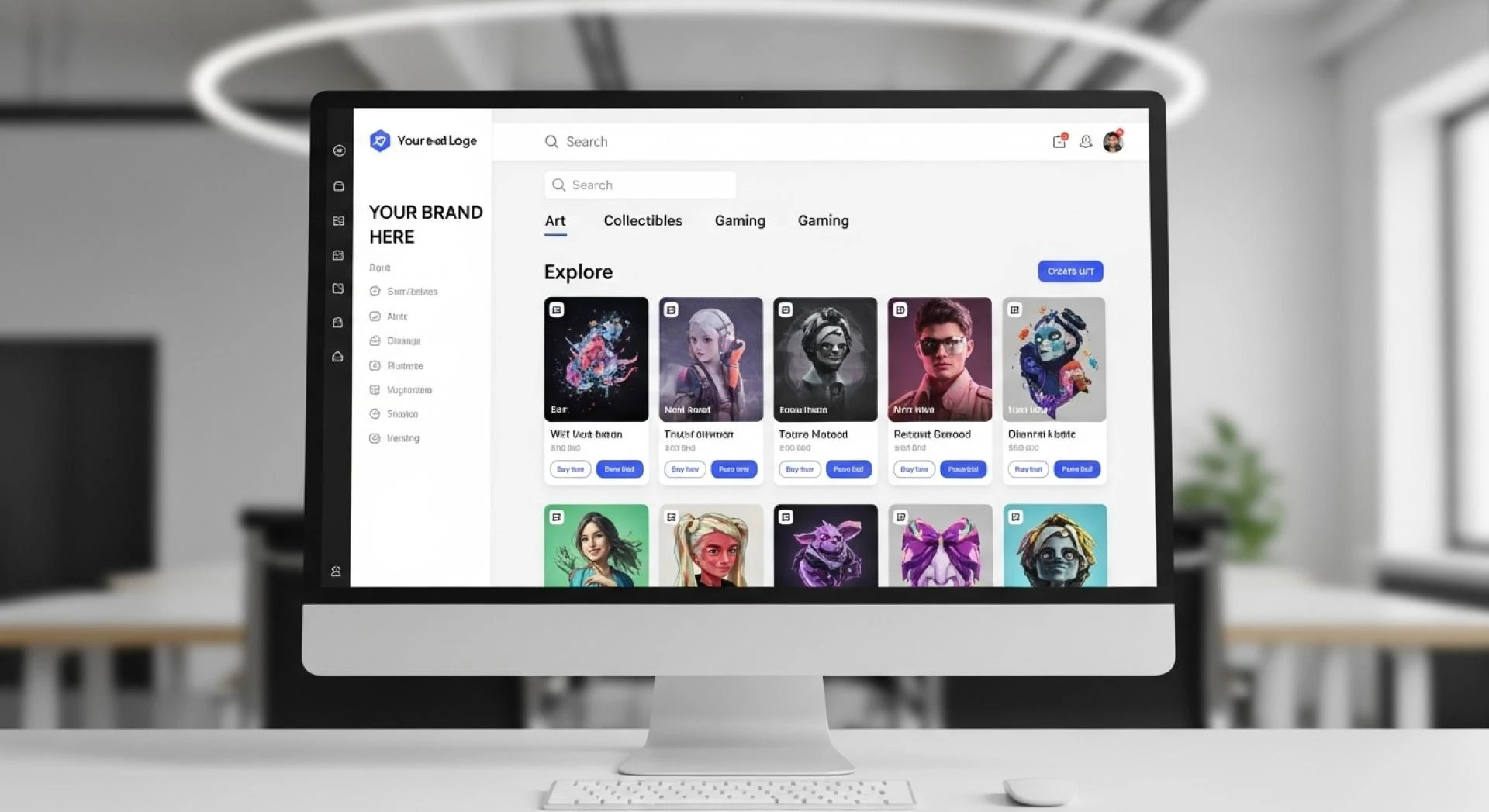
A fully standalone NFT marketplace offers maximum autonomy and customization. It allows brands to create immersive digital environments that reflect their identity, integrate directly with existing systems, and implement bespoke smart contract logic aligned with commercial goals.
This model supports deeper ecosystem development by ensuring that all transactions occur within a controlled environment. It strengthens brand equity, facilitates advanced analytics, and enables long-term innovation. However, it requires substantial investment in development, security audits, and ongoing maintenance. For enterprises with strong customer bases and long-term Web3 ambitions, the benefits often justify the costs.
White-Label Marketplace Solutions
White-label platforms provide a faster entry point into Web3 by offering pre-built infrastructure that can be customized with brand elements. This approach reduces development complexity and accelerates time-to-market, making it attractive for mid-sized organizations or pilot projects.
While cost-efficient, white-label solutions may limit flexibility in advanced customization and feature expansion. Brands must evaluate whether vendor dependency could restrict future scalability or innovation.
Hybrid Launch Strategy with Phased Independence
A hybrid model combines early exposure with long-term control. Brands may initially launch NFT collections on established marketplaces to validate demand and build community traction. Over time, they can transition users to a proprietary platform by offering exclusive utilities or enhanced experiences.
This phased approach mitigates early risk while preserving the option of full independence. It allows organizations to test assumptions, gather data, and refine strategy before committing to large-scale infrastructure investment.
Benchmarking Against Brand Ecosystems Like Nike
Global brands have demonstrated that NFTs can extend far beyond collectibles into integrated digital ecosystems. By linking digital assets with physical products, gaming experiences, and immersive environments, companies such as Nike illustrate how NFT marketplaces can complement broader brand strategies.
Benchmarking these initiatives highlights a critical insight: successful NFT marketplaces do not operate in isolation. They integrate seamlessly with existing brand narratives, customer journeys, and product strategies. The choice of marketplace model should therefore reflect not only budget and technical capability but also long-term vision. When aligned strategically, NFT marketplace development becomes a foundational pillar of a brand’s digital economy rather than a temporary experiment.
Designing a Profitable Monetization Framework
Moving Beyond One-Time Launch Revenue
A sustainable NFT marketplace cannot rely solely on the excitement of an initial drop. While primary sales generate early revenue and brand visibility, long-term profitability depends on structuring NFTs with ongoing relevance. Brands should design assets that unlock continuous benefitssuch as exclusive access, tiered privileges, or integrated product experiencesso that engagement extends well beyond the first transaction. When NFTs function as dynamic membership tools rather than static collectibles, they support repeat interaction and deeper customer loyalty.
Leveraging Secondary Royalties for Recurring Income
One of the most strategic advantages of NFTs is the ability to embed royalty mechanisms directly into smart contracts. This allows brands to earn a percentage of each secondary sale, transforming digital assets into recurring revenue channels. However, royalty structures must be calibrated carefully. Overly aggressive rates may discourage trading, while balanced percentages encourage liquidity and sustained ecosystem activity. When managed effectively, secondary royalties create a compounding revenue layer that traditional commerce models cannot replicate.
Prioritizing Utility Over Speculation
Long-term marketplace stability depends on intrinsic value. Speculation-driven NFTs may generate short-term demand, but utility-driven tokens foster stronger retention. Offering benefits such as early product access, private events, or premium services encourages longer holding periods and meaningful engagement. Tiered membership and subscription-style NFT models further enhance predictability by combining exclusivity with recurring value, aligning digital ownership with proven subscription economics.
Blockchain Infrastructure and Technology Decisions
Selecting a Scalable and Cost-Efficient Network
Blockchain selection directly affects user experience and operational scalability. High transaction fees and network congestion can deter participation, particularly among mainstream users. Brands targeting broader adoption often consider scalable ecosystems such as Polygon, which offer lower transaction costs and compatibility with widely adopted smart contract frameworks. Infrastructure decisions must align with projected transaction volumes and long-term growth ambitions.
Designing Secure and Flexible Smart Contracts
Smart contracts serve as the foundation of any NFT marketplace, governing ownership transfers, royalty enforcement, and asset functionality. Rigorous auditing is essential to prevent vulnerabilities and protect brand reputation. Additionally, contracts should be built with flexibility in mind, allowing future enhancements such as dynamic metadata updates or integration with external platforms. A forward-looking architecture reduces the need for disruptive redeployments.
Simplifying Payments and User Onboarding
Payment accessibility significantly influences conversion rates. Integrating fiat payment gateways alongside cryptocurrency options reduces onboarding friction and expands the addressable audience. Clear fee transparency, simplified wallet setup, and intuitive checkout processes enhance trust and user satisfaction. Technology decisions should prioritize accessibility to bridge Web2 familiarity with Web3 innovation.
Legal, Compliance, and Risk Governance
Clarifying Intellectual Property and Licensing Terms
NFT ownership does not automatically confer intellectual property rights. Brands must clearly define what rights holders receivewhether personal display rights, commercial usage permissions, or limited licenses. Transparent documentation protects both the brand and its community while reducing potential disputes.
Navigating Regulatory and Securities Considerations
Regulatory environments surrounding digital assets continue to evolve. In some jurisdictions, NFTs may face scrutiny if positioned primarily as investment opportunities. Emphasizing functional utility rather than speculative gain mitigates compliance risks. Legal teams should proactively assess regional regulations, including anti-money laundering and consumer protection requirements.
Establishing Strong Financial and Security Governance
Accurate accounting procedures are essential for managing primary sales revenue, secondary royalties, and cross-border taxation. Early financial structuring prevents compliance complications as the marketplace scales. Equally important is cybersecurity. Conducting smart contract audits, implementing robust infrastructure safeguards, and educating users about phishing risks protect both digital assets and brand reputation. Effective governance integrates legal foresight with technical security to ensure long-term sustainability.
User Experience and Customer Onboarding Strategy
Reducing Friction for Mainstream Adoption
Even the most technically advanced NFT marketplace will struggle if user onboarding is complex. For many consumers, blockchain wallets, seed phrases, and gas fees remain unfamiliar concepts. Brands entering Web3 must design experiences that minimize cognitive overload and reduce technical intimidation. A frictionless onboarding processfeaturing guided wallet setup, simplified authentication options, and intuitive navigationcan dramatically increase conversion rates.
Abstracting complexity is key. Users should not feel as though they are learning a new financial system just to purchase a digital asset. Instead, the marketplace should feel like a natural extension of the brand’s existing digital presence.
Custodial Versus Non-Custodial Models
One critical design decision involves choosing between custodial and non-custodial wallet systems. In a custodial model, the platform manages private keys on behalf of users, simplifying the experience but introducing greater responsibility for security. In a non-custodial model, users retain full control of their wallets, aligning with decentralized principles but increasing onboarding complexity.
Some brands adopt hybrid solutionsallowing beginners to start with custodial accounts while offering advanced users the ability to connect external wallets. This layered approach balances accessibility with autonomy, expanding market reach.
Designing for Transparency and Trust
Clear communication around transaction fees, ownership rights, and asset functionality is essential. Hidden costs or vague licensing terms can erode trust quickly. Transparent fee structures, easily accessible FAQs, and proactive customer support build confidenceparticularly among first-time NFT buyers.
A well-designed user experience does more than improve usability; it reinforces brand credibility in a space where skepticism remains common.
Community Building as a Core Growth Engine
Transforming Customers into Stakeholders
NFT marketplaces thrive on community participation. Ownership creates psychological investment, but structured engagement transforms holders into advocates. Brands should view NFT holders not merely as buyers, but as members of an evolving ecosystem.
Private forums, token-gated communities, and exclusive digital spaces foster belonging. When holders gain early access to products or participate in limited events, their attachment deepens. This sense of insider status strengthens retention and organic promotion.
Incentivizing Long-Term Participation
Sustainable ecosystems reward long-term commitment. Brands can incentivize holding behavior by offering loyalty upgrades, milestone rewards, or bonus NFTs for active participation. This reduces speculative flipping and stabilizes marketplace activity.
Governance mechanisms may also be introduced, allowing holders to vote on certain brand initiatives or future NFT designs. While full decentralization may not suit every enterprise, selective community input enhances engagement and trust.
Learning from Digital-Native Engagement Models
Platforms such as Reddit have demonstrated how digital communities can drive sustained participation through reputation systems and exclusive access structures. While NFT marketplaces operate differently, the underlying principle remains consistent: engagement must be rewarded, recognized, and continuously nurtured.
Community growth is not an auxiliary marketing tacticit is the foundation of long-term NFT marketplace viability.
Marketing and Launch Execution Strategy
Educating the Market Before Selling
Effective NFT launches begin with education. Many potential customers remain uncertain about blockchain technology and digital ownership. Pre-launch campaigns should focus on explaining value propositions clearlywhat the NFT provides, how it works, and why it matters.
Educational content, webinars, interactive demos, and FAQ resources build informed anticipation. This approach reduces confusion during launch and improves customer confidence.
Strategic Partnerships and Cross-Channel Promotion
Collaborations with influencers, creators, or complementary brands can expand reach significantly. Cross-promoting NFT initiatives across social media, email campaigns, and physical retail environments ensures consistent messaging.
Brands that successfully bridge Web2 and Web3 audiences often see stronger adoption rates. Integrating NFT promotions into existing loyalty programs or product launches amplifies impact and reinforces continuity.
Post-Launch Retention and Ecosystem Expansion
The true measure of success lies in post-launch engagement. Continuous updates, new benefits, and transparent roadmap communication maintain momentum. Brands should avoid treating the launch as the finish line; instead, it marks the beginning of ecosystem evolution.
Consistent engagement sustains trading activity, strengthens community bonds, and preserves marketplace liquidity.
Scaling, Optimization, and Long-Term Ecosystem Expansion
Integrating NFTs into Broader Commerce Infrastructure
For NFT marketplaces to deliver sustained value, they must integrate with existing digital systems. Connecting NFT ownership to CRM platforms, loyalty databases, and eCommerce toolssuch as Shopifyallows seamless reward redemption and personalized offers. This integration bridges blockchain transparency with operational efficiency.
Leveraging Data Analytics for Continuous Optimization
On-chain transaction data combined with customer behavior analytics enables brands to refine strategies over time. Metrics such as holding duration, resale frequency, and engagement participation provide actionable insights. These analytics inform future drops, pricing models, and community incentives.
Optimization should be ongoing, with iterative improvements based on measurable performance indicators rather than speculation.
Expanding into Immersive and Cross-Platform Experiences
As digital ecosystems evolve, NFT marketplaces may extend into gaming environments, virtual worlds, or augmented reality experiences. These integrations enhance utility and create new revenue streams. Brands that position NFTs as interoperable assetsusable across multiple digital spacesfuture-proof their investments.
Long-term ecosystem expansion requires strategic vision, technological adaptability, and sustained community engagement.
Conclusion
NFT marketplace development is no longer a speculative experiment but a strategic initiative that enables brands to own customer relationships, diversify revenue streams, and build long-term digital ecosystems. From defining clear business objectives and selecting the right infrastructure to designing monetization frameworks and fostering community engagement, every decision must align with broader corporate strategy and measurable outcomes. Brands that approach this transformation thoughtfully prioritizing utility, security, compliance, and user experience position themselves for sustained competitive advantage in the evolving Web3 economy. By investing in professional NFT marketplace development services, businesses can mitigate technical and regulatory risks while accelerating innovation, ensuring that their transition into decentralized commerce is structured, scalable, and future-ready.


Sign in to leave a comment.