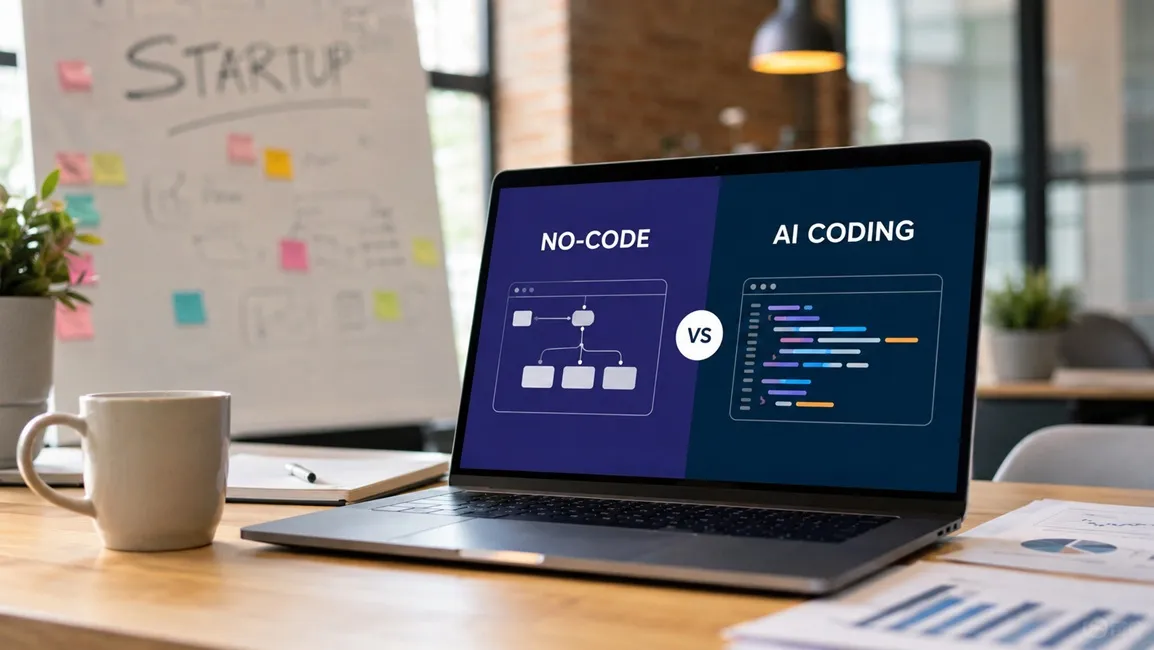

Building a startup has become faster and more accessible than ever before. Founders no longer need a large engineering team or months of development time to launch a product. Today, modern development platforms are helping businesses move from idea to execution in record time. Many founders comparing Lovable vs Replit are trying to understand which type of platform can help them build faster while staying within budget. At the same time, another important question is becoming more common: should startups rely on no-code platforms or shift toward AI-powered coding tools for long-term growth?
The answer depends on business goals, technical requirements, speed of execution, and future scalability. Both options are transforming the startup ecosystem, but each serves a different purpose.
The Rise of Faster Product Development
The startup world has changed dramatically over the past few years. Traditional software development often required hiring developers, creating technical documentation, writing thousands of lines of code, and spending several months before launching a minimum viable product.
Today, businesses are looking for faster alternatives.
According to industry research from Gartner, nearly 70 percent of new applications developed by enterprises now use low-code or no-code technologies in some part of the development process. This is a major increase compared to previous years and shows how rapidly the market is shifting.
At the same time, artificial intelligence is changing how software is built. AI-powered development tools can now generate interfaces, suggest application logic, automate repetitive development tasks, and significantly reduce engineering effort.
For startups with limited capital, these innovations create entirely new opportunities.
Understanding No-Code Platforms
No-code platforms allow users to build websites, applications, workflows, and automation systems without writing traditional programming code.
These tools usually provide drag-and-drop builders, visual editors, templates, and prebuilt integrations that allow non-technical founders to build functional products quickly.
The biggest advantage is accessibility.
A founder with no technical background can design an application, connect databases, build workflows, and launch products without hiring developers.
This creates several benefits.
First, startups save money by reducing engineering costs during the early stages.
Second, teams can test ideas faster and validate market demand before investing heavily in product development.
Third, product iteration becomes easier because changes can often be made instantly.
For businesses focused on speed, no-code platforms offer tremendous value.
How AI Coding Platforms Are Changing Development
Artificial intelligence is introducing a different approach.
Instead of removing coding entirely, AI coding platforms help developers build software faster by automating complex development tasks.
Modern AI development tools can understand natural language instructions and generate working applications based on user prompts.
Developers can describe what they want to build, and the system automatically creates interfaces, backend structures, workflows, and deployment environments.
This approach significantly reduces development time while still maintaining flexibility.
Recent data from McKinsey shows that generative AI could improve developer productivity by up to 45 percent by reducing repetitive engineering tasks and accelerating software delivery.
For startups planning complex products, AI-assisted development provides a strong advantage.
It allows faster development while preserving customization options.
Speed to Market Comparison
For early-stage startups, speed often determines survival.
No-code platforms usually offer the fastest path to launch.
A simple marketplace, internal dashboard, booking platform, or customer portal can often be built in days rather than months.
The learning curve is also lower.
AI coding platforms are also fast, but they often require some understanding of application structure, workflows, APIs, and technical architecture.
For founders without technical knowledge, the learning process may take longer.
If launching quickly is the highest priority, no-code often wins the speed battle.
If building a highly customized product is important, AI-powered development becomes more attractive.
Cost Considerations for Startups
Budget constraints affect nearly every startup.
Hiring developers is expensive, especially in competitive markets.
According to data published by Glassdoor and multiple hiring studies, experienced software developers in the United States often cost startups over $100,000 annually before additional operational expenses.
No-code platforms significantly reduce these costs.
Monthly subscription fees remain relatively affordable, making them ideal for bootstrapped startups and early-stage founders.
AI coding platforms also reduce engineering expenses but usually work best when some technical expertise already exists within the company.
In many cases, startups still need developers to refine generated applications and manage production-level deployments.
This creates a different cost structure.
No-code minimizes development spending.
AI coding reduces development time while keeping engineering quality high.
Scalability Challenges
Scalability becomes important once a startup begins growing.
This is where limitations often appear.
No-code platforms work extremely well during validation stages, but some products eventually outgrow platform limitations.
Complex integrations, advanced business logic, custom databases, and performance optimization can become difficult.
As user demand grows, startups may need to rebuild certain systems using traditional development methods.
AI coding platforms provide greater flexibility.
Because developers still work with actual code structures, businesses maintain more control over infrastructure, customization, and optimization.
This creates better long-term scalability.
Startups expecting rapid growth often prefer development systems that allow greater architectural control.
The Growing AI Development Market
Artificial intelligence is becoming one of the largest technology trends globally.
According to Statista research, the global artificial intelligence software market is projected to exceed $300 billion within the next few years.
This growth directly impacts software development.
Developers increasingly rely on AI tools to accelerate coding, reduce bugs, improve testing, and automate documentation.
Industry experts predict AI-assisted development will soon become a standard part of modern engineering workflows.
This shift means startups adopting AI development early may gain a competitive advantage.
Faster product development often leads to faster customer acquisition.
Which Option Is Better for Startups?
There is no universal answer because every startup operates differently.
For founders without technical backgrounds who want to validate an idea quickly, no-code platforms often provide the easiest starting point.
The ability to build without developers reduces both cost and complexity.
For startups building advanced SaaS products, scalable web applications, AI products, or custom software solutions, AI coding platforms offer stronger long-term advantages.
They provide greater flexibility while still reducing engineering workload.
The decision should be based on product complexity rather than trends alone.
Simple products benefit from simplicity.
Complex products require deeper control.
The Future of Startup Development
Software development is entering a new era.
Five years ago, building an application required dedicated engineering teams and long development cycles.
Today, startups can launch products significantly faster using modern development platforms.
No-code tools are empowering non-technical founders to bring ideas to life independently.
AI coding platforms are helping technical teams build sophisticated products in far less time.
Both technologies are reshaping entrepreneurship.
The future will likely combine both approaches rather than replacing one with the other.
Startups that understand when to use each method will move faster, reduce costs, and gain stronger competitive advantages in an increasingly crowded market.
Choosing the right development approach early can often determine whether a startup struggles to keep pace or successfully scales into a thriving business.






















Sign in to leave a comment.