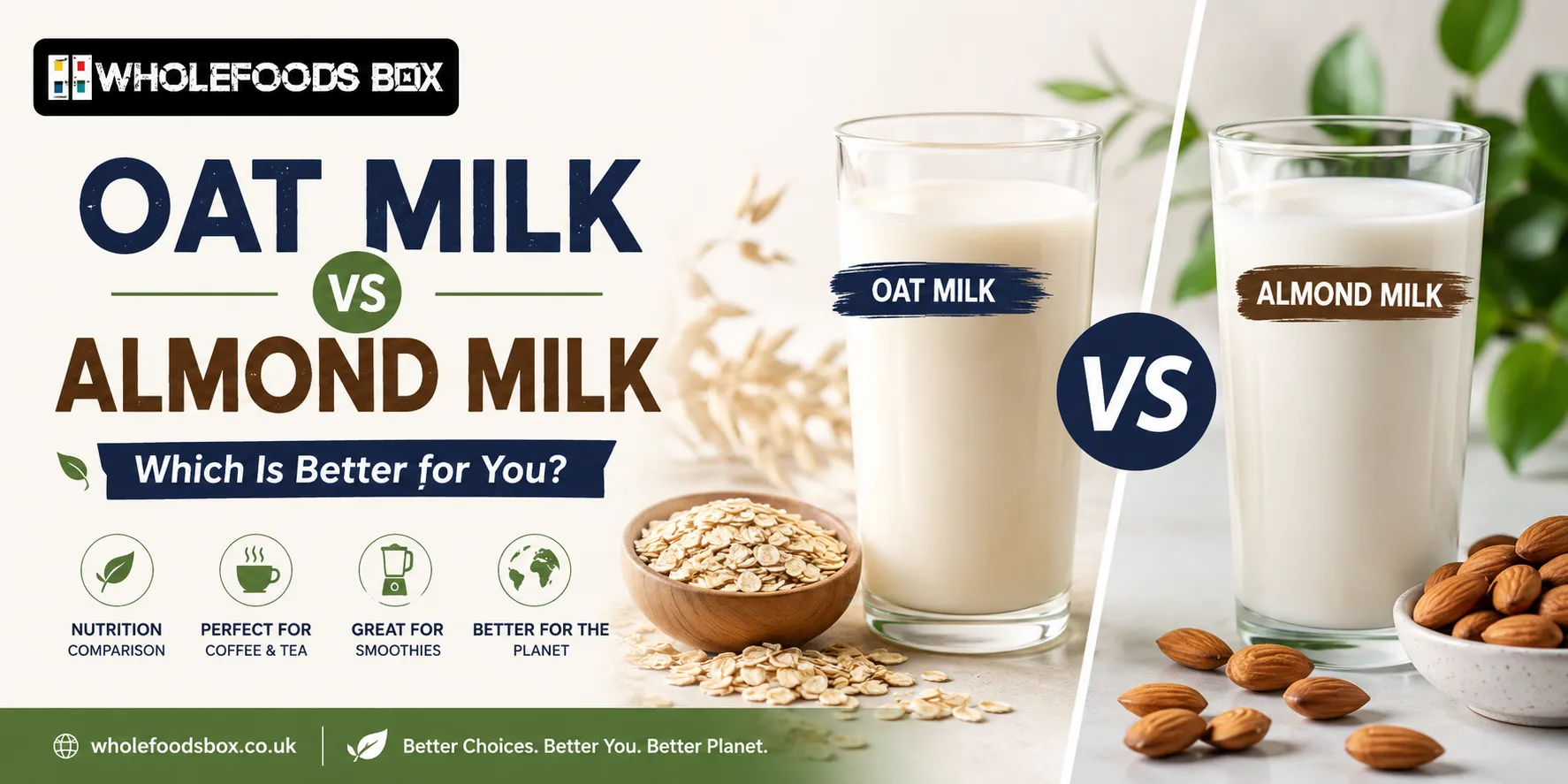

Plant-based milk alternatives have become a popular choice across the UK, with oat milk and almond milk now widely available in supermarkets, coffee shops and kitchens. But when it comes to oat milk vs almond milk, which option is actually better?
The answer depends on your dietary needs, taste preferences and how you plan to use your milk alternative. Both are dairy-free choices, but they differ in nutrition, texture, flavour and environmental considerations.
In this guide, we'll compare oat milk and almond milk to help you decide which one best suits your lifestyle.
What Is Oat Milk?
Oat milk is a plant-based drink made by blending oats with water and filtering the mixture to create a smooth beverage. Many commercially available oat milks are fortified with nutrients such as calcium, vitamin D and vitamin B12.
Oat milk has grown rapidly in popularity because of its creamy texture, mild sweetness and versatility. It can be used in a variety of foods and drinks, including:
- Coffee and tea
- Breakfast cereals
- Smoothies
- Baking
- Cooking and sauces
Its smooth consistency and naturally subtle flavour make oat milk an appealing alternative for people who want something closer to the texture of dairy milk.
What Is Almond Milk?
Almond milk is produced by blending almonds with water and filtering the mixture to create a light, dairy-free drink. It has been a popular milk alternative for many years and is widely available in supermarkets and health-food shops.
Almond milk is particularly known for its light consistency, subtle nutty taste and relatively low calorie content. It can be enjoyed in:
- Smoothies
- Cereals
- Protein shakes
- Baking
- Hot and cold drinks
- Everyday drinking
Like oat milk, many almond milk products are fortified with nutrients such as calcium and vitamins.
Oat Milk vs Almond Milk: Nutritional Differences
Nutrition is an important factor when choosing between oat milk and almond milk. However, nutritional values can vary considerably between brands, especially between sweetened, unsweetened and fortified varieties.
Calories
Unsweetened almond milk is generally lower in calories than oat milk. This can make it an attractive choice for people who are trying to reduce their overall calorie intake.
However, flavoured or sweetened versions can contain more calories, so checking the nutrition label is important.
Carbohydrates
Oat milk generally contains more carbohydrates because oats are naturally carbohydrate-rich. This contributes to its creamy texture and mildly sweet flavour.
Almond milk typically contains fewer carbohydrates, particularly when you choose an unsweetened variety.
Protein
Neither oat milk nor almond milk is usually considered a high-protein milk alternative. Their protein content can vary by brand, but some oat milk products provide slightly more protein than standard almond milk.
If protein is a priority, it's worth comparing individual products rather than relying only on the type of milk.
Fat
Almond milk contains fats naturally derived from almonds, including unsaturated fats. Despite this, standard almond milk is generally relatively low in total fat.
Oat milk can also contain a small amount of fat, although some barista-style varieties may have added oils to improve their texture and foaming properties.
Fibre
Oat milk may provide more fibre than almond milk, although this depends on how the product is manufactured and whether the fibre remains in the final drink.
For an accurate comparison, always check the nutrition panel of the specific products you're considering.
Taste and Texture: Oat Milk vs Almond Milk
Taste and consistency can make a significant difference when choosing a milk alternative.
Oat milk is usually creamy, smooth and slightly sweet. Its texture is often closer to cow's milk, making it particularly popular for hot drinks and recipes that require a richer consistency.
Almond milk is generally lighter and thinner, with a subtle nutty flavour. It can work particularly well in smoothies, cereals and cold drinks where a lighter texture is preferred.
If you enjoy a rich and creamy drink, oat milk may be the better choice. If you prefer something lighter with a mild nutty taste, almond milk could be more suitable.
Which Is Better for Coffee?
For coffee lovers, oat milk has become one of the most popular dairy alternatives.
Its creamy texture and ability to foam make it well suited to drinks such as lattes, cappuccinos and flat whites. Barista-style oat milks are specifically designed to produce a smooth texture and good foam when steamed.
Almond milk can also be used in coffee, but its lighter consistency may produce a different result. It may not provide the same creamy mouthfeel as oat milk.
For creamy coffee drinks, oat milk is often the preferred option.
Which Is Better for Smoothies?
Both oat milk and almond milk can be excellent smoothie ingredients, but they produce different results.
Oat milk can give smoothies a thicker and creamier consistency, making it a good choice for filling breakfast smoothies or richer blends.
Almond milk creates a lighter smoothie and can be useful when you want to keep the overall calorie content lower.
The right choice ultimately depends on the other ingredients in your smoothie and the texture you prefer.
Environmental Considerations
Sustainability is another factor that may influence your choice of plant-based milk.
Both oat milk and almond milk generally have environmental advantages compared with dairy milk, but their environmental footprints are not identical.
Oats can be grown in many parts of Europe and generally require less water than almonds. Almond farming, particularly in water-stressed regions, can require significant amounts of irrigation water.
For consumers who are particularly concerned about water usage and sustainability, oat milk may therefore be an appealing choice.
However, environmental impact can also depend on farming methods, processing, packaging and where ingredients are grown and transported.
Oat Milk vs Almond Milk for Different Diets
Your dietary requirements can also help determine which option is more suitable.
For Vegans
Both oat milk and almond milk can be suitable for a vegan diet, provided the specific product contains no animal-derived ingredients.
Always check the packaging for the relevant dietary information.
For Gluten-Free Diets
Almonds are naturally gluten-free, so almond milk is generally suitable for gluten-free diets.
Oat milk can also be gluten-free, but not every oat milk product is suitable for people with coeliac disease. If you need to avoid gluten strictly, look for products specifically labelled gluten-free and check the manufacturer's information.
For Weight Management
Unsweetened almond milk is often lower in calories than oat milk, which may make it useful for people trying to manage their calorie intake.
That said, overall diet quality matters more than choosing one type of milk alone. Oat milk may also provide more carbohydrates and, in some products, more fibre.
For Nut Allergies
Oat milk may be a suitable alternative for people who cannot consume almonds or other tree nuts.
However, anyone with a serious food allergy should carefully check the ingredient and allergen information because manufacturing facilities may handle multiple allergens.
How to Choose Between Oat Milk and Almond Milk
There is no single winner when it comes to oat milk vs almond milk. The best option depends on what matters most to you.
Choose oat milk if you:
- Prefer a creamy and smooth texture
- Regularly add milk to coffee
- Enjoy a naturally mild and slightly sweet flavour
- Want a versatile option for cooking and baking
- Place a strong emphasis on sustainability
Choose almond milk if you:
- Prefer a lighter consistency
- Want a lower-calorie milk alternative
- Enjoy a subtle nutty flavour
- Prefer a lower-carbohydrate option
- Want an alternative to oat-based products
Final Thoughts: Oat Milk or Almond Milk?
So, which is better: oat milk or almond milk?
Neither is universally better. Oat milk stands out for its creamy texture, versatility and suitability for coffee, while almond milk is often preferred for its light consistency, lower calorie content and mild nutty flavour.
The best choice comes down to your individual dietary goals, taste preferences and how you intend to use the product.
Whichever you choose, look for options with minimal added sugar and check the nutrition label, especially if you're choosing a fortified product for specific nutritional benefits.
Both oat milk and almond milk can be convenient additions to a balanced, dairy-free lifestyle and can work well across drinks, breakfasts, smoothies, baking and everyday recipes.


























Sign in to leave a comment.