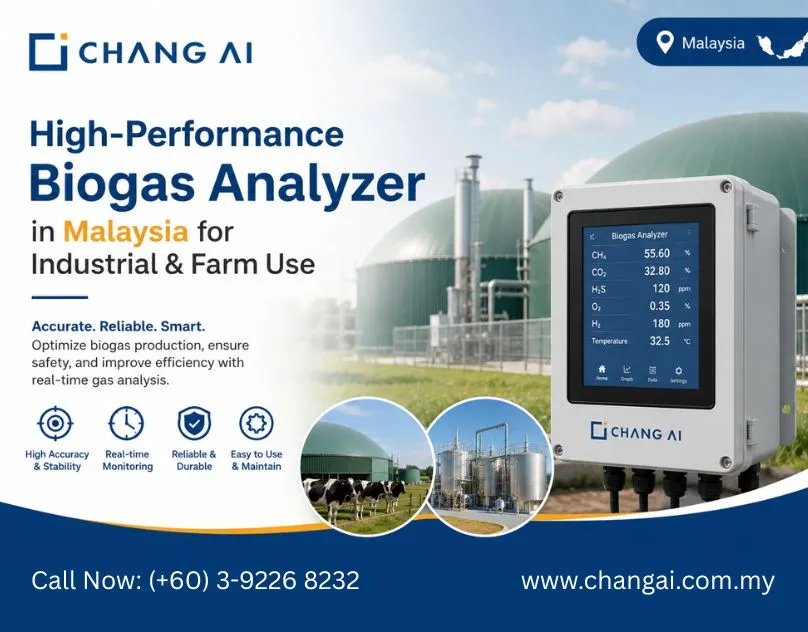

The biogas analyzer is used to measure the concentration of gasses mainly methane (CH4), carbon dioxide (CO2) and hydrogen sulfide (H2S) produced in the decomposition process of organic matter. It’s used in anaerobic digesters, waste water treatment plants and landfills to monitor process efficiencies, safety and maximize energy recovery from gas streams.
For anyone involved in wastewater treatment, biogas generation or environmental compliance, it’s essential to know the place and role of gas analysis in the work you do.
Why Gas Composition Monitoring Matters in Biological Systems
Anaerobic digestion is a sensitive process. The microbial communities that break down organic waste operate within narrow chemical conditions. When something shifts — a pH drop, a feedstock change, a temperature fluctuation — the gas composition changes first. A reliable analyzer catches that signal before it becomes a costly process failure.
Across Malaysia and the broader Southeast Asian region, wastewater treatment plants and palm oil mill effluent (POME) biogas systems are increasingly required to monitor and report gas outputs as part of environmental compliance. The Department of Environment (DOE) Malaysia mandates emission monitoring at certain facilities, making continuous gas analysis a regulatory necessity, not just an operational tool.
Biogas Analyzer Applications Across Key Industries
1. Anaerobic Digesters in Municipal and Industrial Wastewater
Wastewater treatment plant anaerobic digesters turn sewage sludge into biogas and digestate. The digestion process produces a gas mixture which is usually 55–70% methane and 30–45% CO₂ with trace amounts of H₂S and moisture. An anaerobic digester gas analyzer continuously monitors these ratios to inform the operator whether the digestion process is healthy or stressed.
Key reasons operators rely on gas analyzers here:
- Detecting early signs of digester souring (rising CO₂, dropping CH₄)
- Monitoring H₂S build-up, which corrodes pipework and poisons gas engines
- Confirming gas quality before it enters a combined heat and power (CHP) unit
- Meeting discharge and emission reporting obligations
Without this data, operators are essentially flying blind. Even experienced engineers cannot assess digester health from visual inspection alone.
2. Palm Oil Mill Effluent (POME) Biogas Plants
Malaysia is one of the world's biggest palm oil producers with the recovery of POME biogas increasing markedly in the past decade. Untreated ponds (PONES) produce a large amount of CH4 when not covered. This gas is collected by a covered lagoon system but depends on organic loading, temperature and retention time.
At POME facilities, a wastewater gas analyzer is used to monitor the purity of the methane for energy recovery feasibility, to measure the CO₂ concentration for reporting carbon credits, and to detect any increase in H₂S up to a critical level that would impact the efficiency of downstream equipment operation. A few mills in Malaysia have already installed a biogas to electricity plant in which the continuous monitoring directly affect the efficiency in power generation and revenue.
3. Landfill Gas Monitoring and Recovery
Over the years, landfills emit gas as long buried organic material slowly breaks down. The composition of the landfill gas consists of 40-60% methane, 40-60% CO₂ and traces of other compounds. The use of a landfill gas analyzer at extraction wells, header pipes and flare stations contributes to the safe collection and combustion of landfill gases.
Key applications include:
- Optimising vacuum extraction to maintain methane yield
- Detecting air infiltration (nitrogen and oxygen indicate leaks in the collection system)
- Verifying gas quality at flare inlet points for regulatory compliance
- Supporting renewable energy certification where landfill gas powers generators
Sanitary landfills in Malaysia operating under the Solid Waste and Public Cleansing Management Act are increasingly expected to manage landfill gas responsibly. Monitoring infrastructure, including gas analyzers, is central to this.
4. Biogas Upgrading and Biomethane Production
When biogas quality is high enough, it can be upgraded to biomethane — a natural gas substitute. This upgrading process removes CO₂ and H₂S, leaving near-pure methane. Gas analyzers are critical at multiple points in this process: before the upgrader to assess inlet quality, within the upgrading unit to monitor scrubbing efficiency, and at the outlet to verify product purity.
For facilities feeding biomethane into a grid or selling it as compressed fuel, purity measurements must be accurate, documented, and repeatable. Analyzer data directly supports these commercial and compliance requirements.
What Does a Biogas Monitoring System Actually Measure?
A complete biogas monitoring setup typically measures the following parameters:
| Gas Parameter | Typical Range | Why It Matters
|
|---|---|---|
| Methane (CH₄) | 40–75% | Primary energy carrier; indicates process health |
| Carbon Dioxide (CO₂) | 25–45% | Balances CH₄ ratio; rises during acidification |
| Hydrogen Sulfide (H₂S) | 0–5,000 ppm | Toxic and corrosive; limits must be controlled |
| Oxygen (O₂) | 0–2% | Indicates air ingress; explosive risk if elevated |
| Ammonia (NH₃) | 0–1,000 ppm | High levels inhibit methanogens |
Modern analyzers also measure gas flow rate and temperature, providing a more complete operational picture. Some systems log and transmit data to SCADA platforms for remote monitoring and automated alerts.
Choosing the Right Analyzer for Your Application
Not every biogas environment has the same requirements. A high-moisture POME lagoon presents different challenges than a dry landfill extraction header. The right analyzer needs to handle the specific gas matrix, ambient conditions, and maintenance realities of your site.
Consider these factors when selecting:
- Measurement technology: Infrared (NDIR) sensors are common for CH₄ and CO₂; electrochemical cells are typically used for H₂S and O₂
- Sample conditioning: Wet, corrosive biogas must be dried and filtered before it reaches sensitive optical sensors
- Output and connectivity: 4–20 mA analog, Modbus, or digital outputs for SCADA integration
- Calibration frequency: Field calibration capability reduces downtime in remote or difficult-access locations
- Certification and safety rating: ATEX or IECEx certification for use in potentially explosive atmospheres
Durability and after-sales support matter in tropical climates where humidity, heat, and dust put additional strain on instrumentation.
Integration with Process Control and Reporting
A standalone analyzer provides data. An integrated monitoring system turns that data into decisions. In modern biogas operations, analyzers feed into distributed control systems (DCS) or SCADA platforms, triggering alarms, adjusting feed rates, and generating compliance reports automatically.
This integration is particularly valuable for facilities that must submit periodic emission reports to DOE Malaysia or participate in carbon accounting programs. Continuous, logged gas data provides the audit trail needed to support these submissions.
For smaller operations without full automation, portable analyzers offer a practical alternative — allowing operators to conduct regular spot-checks across multiple sampling points without the cost of fixed installations at every location.
Conclusion
From municipal digesters to POME lagoons and landfill extraction systems, gas analysis sits at the centre of safe and efficient biogas operations. The data it generates informs process decisions, protects equipment, supports regulatory compliance, and ultimately determines how much value can be recovered from waste-derived gas streams.
If you are evaluating instrumentation for a new installation or upgrading an existing monitoring setup, Chang Ai Technology offers biogas analyzer solutions configured for the specific demands of anaerobic and landfill environments across Malaysia. Explore their range at Chang Ai Technology.
Frequently Asked Questions
What gases does a biogas analyzer typically measure?
Primary parameters measured by a biogas analyzer include methane (CH₄), carbon dioxide (CO₂) and hydrogen sulfide (H₂S) with oxygen (O₂) and ammonia (NH₃) sometimes included. These measurements indicate the health of the digestion process and provide information on how the gas can be used for energy recovery or needs to be treated before further use.
Why is H₂S monitoring critical in biogas systems?
Hydrogen sulfide is very poisonous at low levels and is very corrosive to metal pipework, engines and heat exchangers. Operators can use continuous H₂S monitoring to initiate the desulfurization system before H₂S levels exceed the limits that cause damage to downstream equipment or safety issues on site.
Can a biogas analyzer be used outdoors in tropical climates?
Yes, but the analyzer has to be high humidity rated, ambient heat rated and dust ingress rated. Check the IP rating at least IP65 and ensure that the sample conditioning system can cope with condensation in wet biogas streams that are typical of tropical POME or wastewater applications.
What is the difference between a fixed and portable biogas analyzer?
A fixed analyzer monitors continuously, automatically and in one point and can be integrated to SCADA systems. Portable Unit – Handheld or movable unit, useful for multi-point spot checks or for sites not instrumented. Many facilities utilize both, depending on their operating and regulatory needs.
Is biogas monitoring required by regulators in Malaysia?
The DOE Malaysia guidelines require that some facilities such as licensed effluent treatment plant and landfill have emission monitoring obligations. Continuous or periodic gas monitoring helps to achieve compliance reporting and is becoming a more common requirement in environmental management system audits.
How often should a biogas analyzer be calibrated?
Calibration frequency depends on the analyzer type, gas matrix, and manufacturer recommendations — typically every three to six months under normal conditions. High H₂S environments or heavily loaded digesters may require more frequent calibration checks to maintain measurement accuracy and data integrity.


























Sign in to leave a comment.