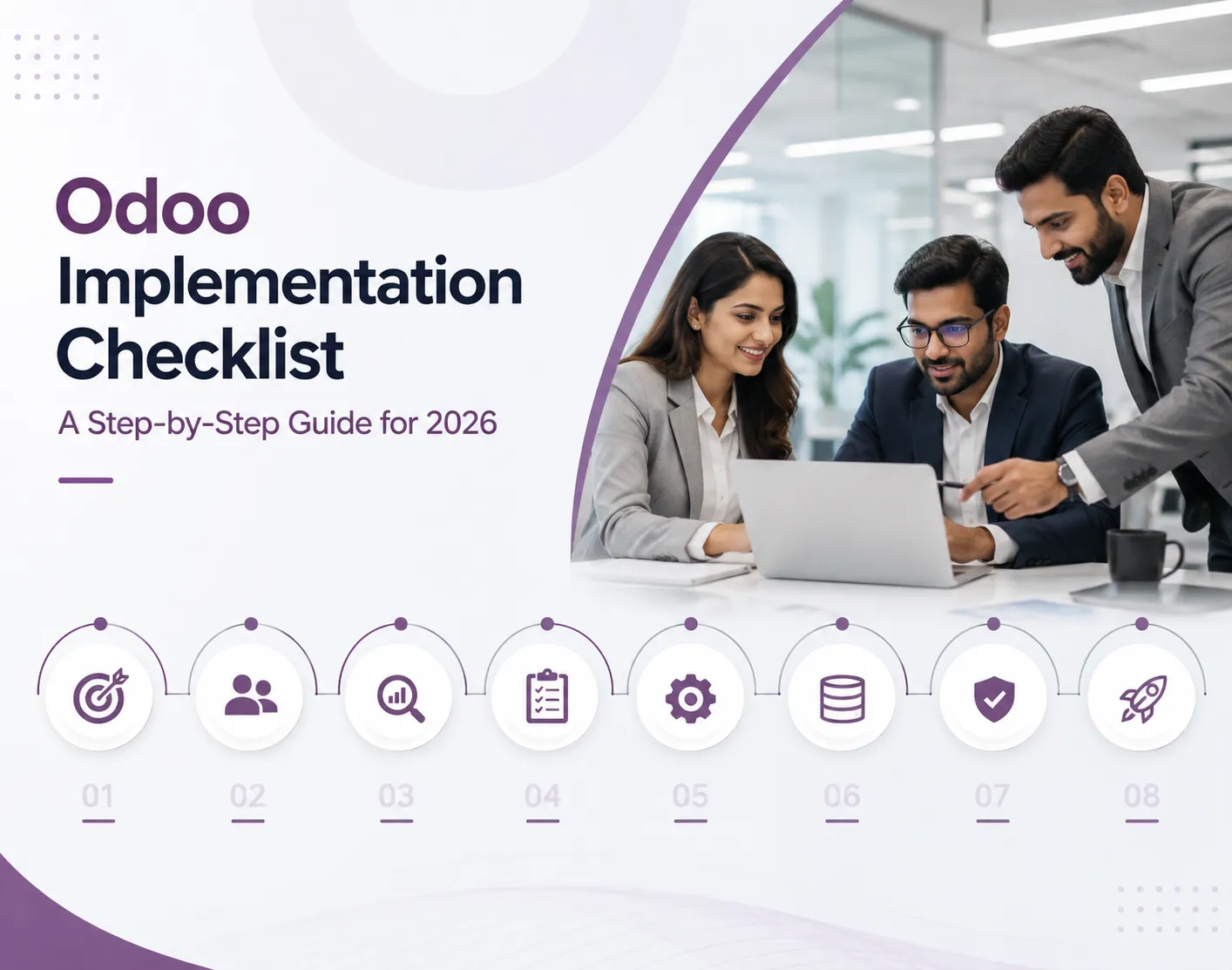

Odoo is an open-source ERP platform that runs sales, CRM, inventory, accounting, HR, and manufacturing from a single system instead of a dozen disconnected tools. It's used by businesses in 100+ countries, and its "One App Free" plan has one module, unlimited users, no cost is often how companies test it before committing to a full rollout.
Odoo 19 is the version most businesses are running or moving to in 2026, and it comes loaded with AI agents, expanded industry packages, and a redesigned interface that makes older versions feel dated. But a new release doesn't fix a rushed rollout. Most Odoo implementations that go sideways don't fail because of the software they fail because a step got skipped somewhere between "we bought it" and "we're actually using it."
Here's the sequence that tends to hold up in practice.

1. Start With the Problem, Not the Platform
Before anyone opens the software, write down the specific problems you're solving: disconnected inventory and accounting, manual invoicing, no real-time reporting, whatever it is. This list becomes the yardstick for every decision that follows modules, budget, timeline, all of it.
If you're still deciding between Odoo and another platform at this stage, it helps to see the two side by side. Our breakdown of Odoo CRM vs Microsoft Dynamics 365 compares pricing, customization, and fit so you're choosing with numbers, not guesswork.
2. Match the Edition to Your Actual Size
Odoo comes in three tiers, and picking the wrong one gets expensive to unwind later:
| Edition | License Cost (per user/month)* | Typical One-Time Implementation Cost | Best For |
| Community | Free (self-hosted) | $3,000 – $15,000 | Very small teams with in-house IT |
| Standard | $25 – $35 | $10,000 – $50,000 | Most small and mid-sized businesses |
| Custom | $49 – $76 | $50,000 – $250,000+ | Multi-entity or heavily customized setups |
US list pricing at renewal; rates vary by region and billing term. Implementation cost depends on user count, module scope, and customization needs.
Standard covers most small and mid-sized teams Custom earns its cost once you need deep customization or multiple legal entities on one database.
3. Don't Go It Alone on Your First Rollout
A first-time Odoo implementation run entirely in-house tends to take longer and cost more in rework than one guided by a partner who's done it before. Look for a team that's handled your specific industry's workflows, not just a general software vendor.
Our Odoo implementation and consulting services start with a discovery phase built for exactly this, working out what you actually need before any configuration begins.
4. Fix Your Data Before It Moves
Migration is where most delays start. Duplicate customer records, outdated stock counts, and inconsistent formatting will follow you straight into the new system if you don't catch them first. Audit and clean the data in your old system, then map every field to its new home in Odoo before the transfer, not during it.
5. Configure First, Customize Second
Odoo's default modules cover more ground than most teams expect. Configure what's already there fields, approval flows, permissions and write custom code only for the gaps configuration genuinely can't close. Heavy customization early on makes every future version upgrade slower and pricier.
6. Keep the Tools That Already Work
Most of the time, Odoo does not completely eliminate anything. Identify all the present tools like payment gateways, e-commerce platforms, shipping providers, and email that actually need communication with Odoo. And only after verifying those integrations properly work in a test environment shall you proceed, not the other way around.
7. Let Real Users Break It Before Customers Do
Skip the temptation to run user acceptance testing with only the project team. Pull in a few end users from sales, the warehouse, and finance, and have them run real transactions through the system. They'll catch workflow gaps a project manager won't.
8. Train Close to Launch, Not Weeks Before
A single training day held too early rarely sticks. Break training up by role, schedule it close to go-live so it stays fresh, and leave people a reference guide they can return to once they're working in the system under real pressure.
9. The Real Work Starts After Go-Live
Go-live isn't the finish line; the first few weeks of real usage are when most configuration gaps surface. Keep a support channel open, track recurring issues, and set aside a budget for ongoing development as your processes evolve.
If you need extra engineering capacity for custom modules or integrations down the line, you can hire software developers on a dedicated or project basis rather than scaling an in-house team from zero.
Conclusion
Odoo 19's AI agents as well as its industry packages have made 2026 a pretty safe bet when it comes to deployment or upgrading. Still, what's really going to be important and make the difference is the checklist we have highlighted. The companies who derive real value out of Odoo are those who were able to get all their requirements and data together correctly, figure out the right order for implementation and carry it out to the tee on day one, not necessarily the ones who are running the latest version though.























Sign in to leave a comment.