
In today’s digital age, businesses rely heavily on their online presence to attract customers and build their brand. Two essential components of a successful online strategy are Online Reputation Management (ORM) and Search Engine Optimization (SEO). While both ORM and SEO aim to enhance a company’s online visibility, they differ significantly in their purpose and methods. In this article, we will delve into the intricacies of these two strategies and explore their distinct roles in shaping a company’s online reputation and search engine rankings.
What is Online Reputation Management?
Online Reputation Management (ORM) is the process of monitoring, influencing, and managing the online reputation of a business or individual. It involves proactively monitoring online mentions, reviews, and feedback about a company to build and maintain a positive perception among its target audience. ORM focuses on enhancing brand credibility, addressing negative reviews and comments, and promoting positive content to shape public opinion.
ORM employs several techniques, such as:
Online Review Management: Responding to customer reviews promptly and professionally to demonstrate excellent customer service and address any concerns.Social Media Management: Actively engaging with followers, managing online communities, and addressing customer queries or complaints across various social media platforms.Content Creation and Promotion: Generating and promoting positive and informative content like blog posts, articles, and press releases to establish a favorable online presence.Understanding Search Engine Optimization (SEO)
Search Engine Optimization (SEO) refers to the techniques and strategies employed to improve a website’s visibility and ranking on search engine results pages (SERPs). The primary goal of SEO is to increase organic (non-paid) traffic to a website by optimizing its structure, content, and backlink profile.
Key aspects of SEO include:
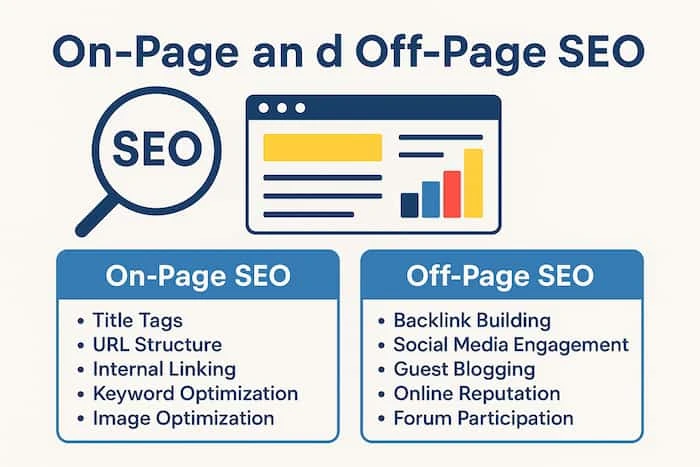
Keyword Research: Identifying relevant keywords and incorporating them strategically throughout website content to improve search engine rankings for those specific terms.On-Page Optimization: Optimizing various on-page elements like meta tags, headings, and image alt texts to make the website more search engine-friendly.Off-Page Optimization: Building high-quality backlinks from authoritative websites to improve the website’s credibility and authority in the eyes of search engines.Contrasting ORM and SEO
Although ORM and SEO are distinct strategies, they are closely intertwined and can mutually benefit each other. However, it is crucial to understand their differences:
1.Focus and Objective:
ORM primarily focuses on shaping and maintaining a positive online reputation by monitoring and influencing online conversations. The objective is to build trust, credibility, and brand loyalty among the target audience.
On the other hand, SEO aims to optimize a website’s visibility on search engines, increasing organic traffic and improving search rankings. The goal is to attract more visitors and generate leads or conversions.
2.Techniques and Approach:
ORM involves actively managing online mentions, responding to reviews, and promoting positive content to shape public perception. It focuses on building relationships with customers and addressing any negative feedback promptly.
SEO, on the other hand, emphasizes technical and content optimizations to improve a website’s visibility on search engines. It relies on keyword research, on-page optimization, and link building strategies to enhance search engine rankings.
3.Metrics and Measurement:
ORM success is measured by various reputation metrics, such as sentiment analysis, customer satisfaction ratings, and online reviews. Positive sentiment, increased brand mentions, and decreased negative feedback indicate a successful ORM campaign.
In contrast, SEO success is measured by search engine rankings, organic traffic, bounce rates, and conversion rates. Improved visibility on SERPs and increased organic traffic demonstrate the effectiveness of SEO efforts.
4.Timeframe and Results:
ORM results are often visible in the short term, as immediate responses to customer feedback and complaints can have an instant impact on brand perception. However, it requires continuous monitoring and management to maintain a positive reputation.
SEO, on the other hand, is a long-term strategy that requires patience and consistent efforts. Improvements in search rankings and organic traffic may take several months to materialize.
Conclusion
While Online Reputation Management (ORM) and Search Engine Optimization (SEO) are distinct strategies, they are both vital components of a comprehensive online marketing plan. ORM focuses on managing a company’s online reputation, while SEO aims to improve its search engine visibility. By understanding the differences and leveraging the strengths of each approach, businesses can effectively build a positive reputation and enhance their online presence, ultimately leading to increased brand awareness, customer trust, and business success in the digital landscape.
So here IBRAND tech is the best online reputation management agency in Pune that provides the best ORM service online. Its job is to create/recover/revamp/restore & manage the online reputation of the clients, and take their brand globally. If you want to boost your online presence and sales then you should contact IBRAND tech. This is the only company that permanently removes negative reviews from Trustpilot, Glassdoor, Google My Business, Indeed, AmbitionBox, Jobbuzz, Quora, Goodfirm etc.







Sign in to leave a comment.