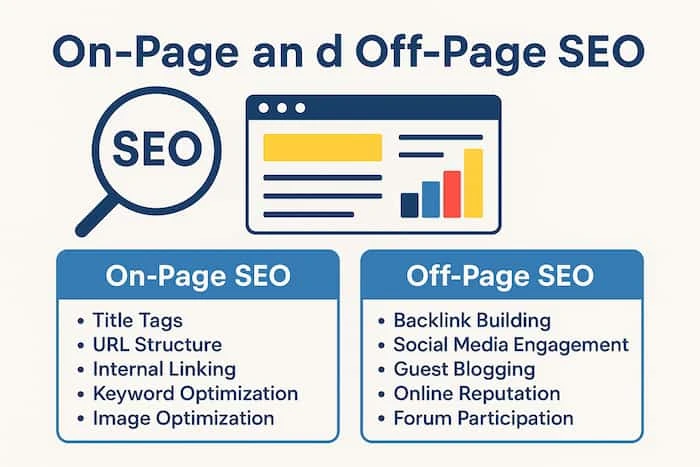

In the digital age, having a website isn’t enough—you need visibility. And that’s where SEO (Search Engine Optimization) steps in. Whether you’re a blogger, business owner, or digital marketer, understanding both on-page and off-page SEO is crucial to improving your site's ranking, increasing organic traffic, and outperforming competitors.
In this guide, we’ll break down the key elements of on-page and off-page SEO, explain their differences, and show you how to apply both to get maximum results.
What Is On-Page SEO?
On-page SEO refers to all optimization techniques that are directly implemented within your website to help search engines understand your content better.
🔍 Key Elements of On-Page SEO:
- Title Tags & Meta Descriptions
- Include your primary keywords and keep them within the recommended character limits.
- Header Tags (H1, H2, H3...)
- Use headers to structure your content for easy reading and keyword optimization.
- URL Structure
- Keep it short, descriptive, and keyword-rich (e.g.,
example.com/on-page-seo-guide). - Internal Linking
- Link to other related pages on your site to enhance user experience and crawlability.
- Keyword Optimization
- Use relevant keywords naturally throughout the content—avoid keyword stuffing.
- Image Optimization
- Use descriptive file names and include alt text to help search engines index your images.
- Mobile Responsiveness & Site Speed
- Ensure your site loads fast and is optimized for all screen sizes.
What Is Off-Page SEO?
Off-page SEO refers to actions taken outside your website to impact your rankings within search engine results pages (SERPs).
🌐 Key Elements of Off-Page SEO:
- Backlink Building
- Acquire high-quality backlinks from authoritative and relevant websites.
- Social Media Engagement
- Promote your content across social media platforms to drive traffic and build brand awareness.
- Guest Blogging
- Write for other blogs in your niche to gain visibility and backlinks.
- Online Reputation Management
- Encourage reviews on platforms like Google, Yelp, or Trustpilot.
- Forum & Community Participation
- Share insights and link back to your content in relevant forums (e.g., Reddit, Quora).
On-Page vs. Off-Page SEO: What’s the Difference?
FeatureOn-Page SEOOff-Page SEOLocationOn your websiteOutside your websiteControlFull controlLimited controlExamplesTitle tags, internal links, keywordsBacklinks, social shares, reviewsFocusContent quality and site structureAuthority and trust building
Both are equally important and must be used together to boost search rankings effectively.
Learn More: Deep Dive into On-Page & Off-Page SEO
If you're serious about SEO and want a more detailed breakdown of strategies, tools, and examples, don’t miss this in-depth guide:
👉 On-Page and Off-Page SEO: What You Need to Know
This comprehensive post explains the core principles of SEO with clarity and includes practical tips for beginners and experts alike.
(This is a dofollow link and worth bookmarking if you're building a long-term SEO strategy.)
Final Thoughts
Mastering both on-page and off-page SEO is essential for growing your online presence. On-page SEO sets the foundation, while off-page SEO builds your site's authority and credibility.
🔑 Pro Tip: Think of SEO like building a house—on-page SEO is the structure and interior, while off-page SEO is the curb appeal and neighborhood reputation.
Stay consistent, follow best practices, and remember: SEO is a long-term investment that pays off with increased traffic, higher conversions, and better user engagement.

























Sign in to leave a comment.