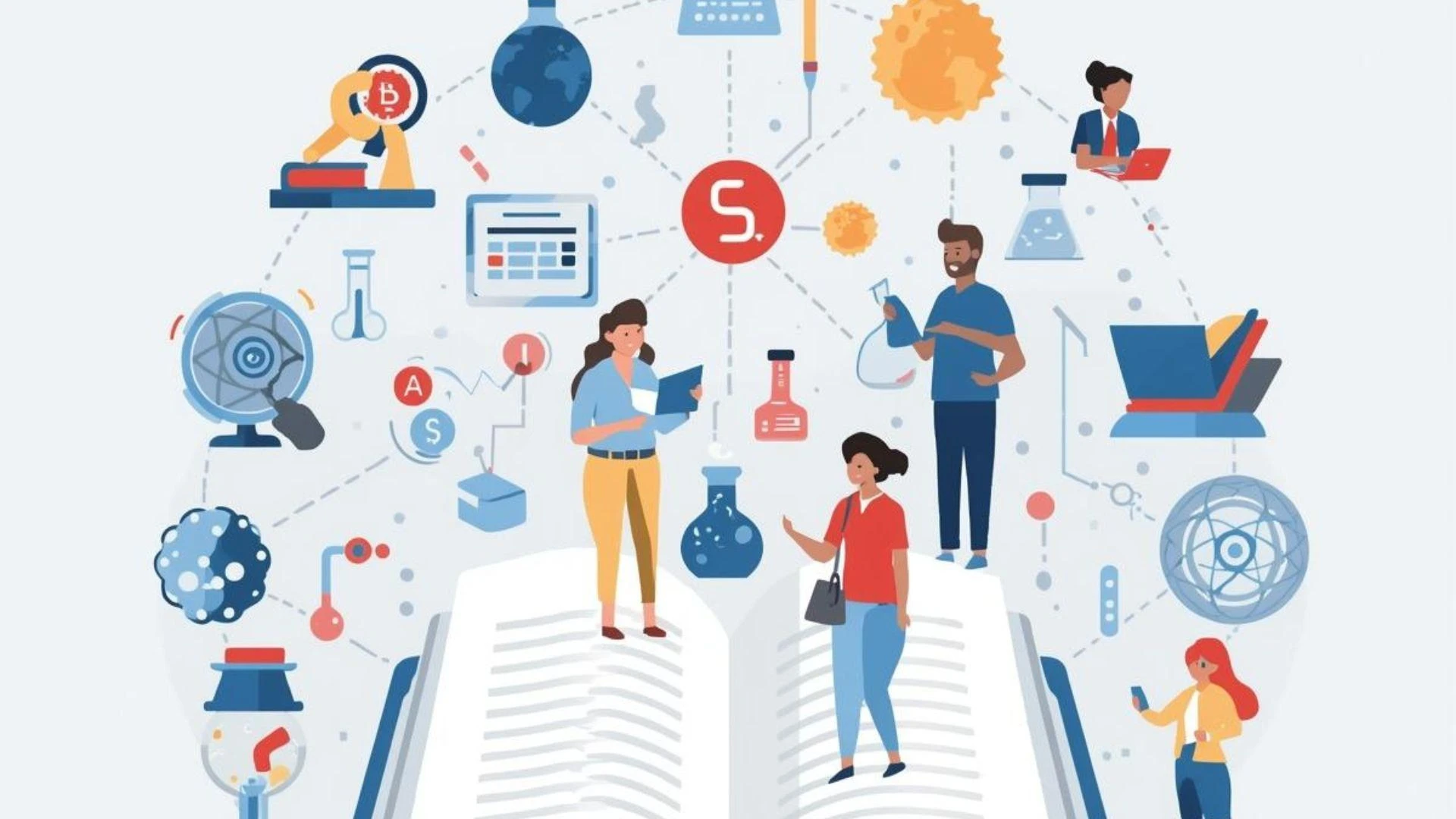

Reproducibility has become one of the most uncomfortable topics in modern research. Everyone acknowledges the problem, yet it lingers. A well-known Nature survey found that almost 70 percent of scientists couldn’t reproduce another researcher’s findings, and roughly half couldn't reproduce their own. When numbers like these sit in plain sight, you can’t help but ask: how did we let reproducibility become optional?
A big part of the answer is that research quietly drifted toward opacity. Data remained locked away, methods were summarized instead of documented, and code often lived in private folders. The result was predictable. Studies became harder to verify, and the foundation of scientific credibility started to wobble.
Open science is a powerful tool that empowers us to reverse this drift towards opacity. It's not just a philosophical concept, but a practical, operational approach that changes how our work is published, shared, checked, and reused. It puts the control back in our hands, allowing us to shape the future of .
What Open Science Actually Means (Not the Buzzword Version)
Open science isn’t just about throwing everything into the public eye and sharing it endlessly. It’s much more practical than that. At its heart, it’s about making the essential parts of research accessible to everyone.
Open data so other researchers can examine the basis.
- Open code so analyses aren’t black boxes that no one can inspect.
- Transparent methods and protocols so others know exactly what was done.
- Preprints so feedback comes earlier and publication bias weakens.
- Registered reports so studies aren’t steered by the pressure to produce positive findings.
Strip away the jargon, and the idea is simple: let others see enough of your work to verify, question, and improve it.
Why Reproducibility Falls Apart (and How Open Science Directly Fixes Each Problem)
1. Hidden Data Makes Verification Almost Impossible
A rigorous study can still be irreproducible if the dataset never sees the light of day. Closed data forces replicators to rely on descriptions rather than evidence. Researchers often want to comply but get stuck behind institutional rules, privacy concerns, or simple inertia.
Open data repositories like Zenodo, OSF, and Dryad reduce this friction. They provide standardized methods for storing raw data, metadata, and documentation. When a dataset is open, others can test the same assumptions, spot inconsistencies, or build follow-up studies without reinventing the wheel.
2. Methods Are Often Reported Like Recipes, Missing Half the Ingredients
A considerable portion of reproducibility failures has nothing to do with fraud or bad science. It’s incomplete reporting. Even well-meaning researchers summarize steps in a way that strips away critical detail: parameters, calibration settings, environmental conditions, or preprocessing steps.
Open science practices encourage the use of protocol repositories, method-sharing tools, and supplemental documentation that allow others to replicate the procedural reality instead of the idealized summary.
3. Computational Research Breaks Down Without Open Code
Modern research leans heavily on computational pipelines. Unfortunately, analysts regularly inherit scripts that work only on the original author’s machine. Missing packages, undocumented workflows, version mismatches, the usual suspects.
When code is open, version-controlled, and tied to reproducible environments (like Binder or containerized workflows), those barriers drop. In computational fields where code is routinely shared, replication rates jump dramatically, often above 80 percent. That alone tells you transparency works.
Open Science Tools That Change Reproducibility in Practice
Open Data Enables Real Verification, Not Just “Trust Me” Science
Studies with open data receive more scrutiny and, interestingly, more citations. But the real win is qualitative: open data forces clarity. It invites re-analysis and correction. And yes, sometimes errors get exposed, which is a feature, not a problem.
Open Code Turns Black-Box Research into Inspectable Workflows
A replicator shouldn’t have to guess which version of Python or R was used. Version-controlled repositories like GitHub and GitLab force visibility. Anyone can inspect the logic, flag assumptions, or propose improvements.
Preprints Create Early-Stage Accountability
Traditional publishing is slow. Months of silence allow methodological issues to slip through untouched. Preprints shorten that window. When a paper hits a platform like arXiv or bioRxiv, scrutiny begins instantly. The community spots weaknesses long before a journal’s peer reviewers do.
Registered Reports Change the Incentive Structure
This is one of the most brilliant innovations to come out of the open science movement. Researchers preregister their research questions, hypotheses, and analysis plans. Journals accept the report before the results exist. This wipes out the incentive to massage data for “publishable” outcomes.
Not surprisingly, registered report replications succeed more often than traditional studies. Transparency outperforms pressure.
The Cultural Shift: Openness Reduces the Replication Burden
Reproducibility is more than just a technical challenge; it's about changing our research culture. For a long time, researchers were celebrated for their groundbreaking discoveries, often prioritizing being the first to publish over transparency about their methods and findings.
Thankfully, we're starting to see a shift in this mindset. Open science is changing the game for everyone involved. Funding agencies are now encouraging researchers to share their data openly, and universities are promoting policies that support open research. Even journals are getting on board and asking for clear statements about data availability.
These changes are essential because reproducibility isn't just the responsibility of one lab or one study. It's a communal effort. Open science invites all of us to take part in this mission to enhance the quality and trustworthiness of research. Together, as a research community, we can work towards a shared goal of advancing knowledge more transparently and collaboratively.
Real-World Examples: Where Openness Boosted Reproducibility
Some fields serve as proof that transparency works. For instance, in the field of genomics, which has one of the highest reproducibility rates, raw sequences and analysis pipelines are routinely shared, resulting in reliable, replicable results.
- Genomics has one of the highest reproducibility rates because raw sequences and analysis pipelines are routinely shared.
- Climate science operates on open datasets that have been re-analyzed for decades, producing reliable long-term models.
- The Reproducibility Project in psychology exposed deep issues precisely because its methods, replication attempts, and data were openly shared.
When openness is baked into the workflow, reproducibility follows almost automatically.
The Remaining Barriers (and Why They’re Shrinking)
There are still legitimate concerns:
- Fear of being scooped.
- Sensitive or restricted data.
- Time and technical skill are needed to prepare data for sharing.
But these barriers are gradually eroding. Better platforms, clearer policies, more substantial incentives, and recognition for open practices are normalizing transparency.
You can even argue that not sharing data increasingly looks suspicious — a reversal from how the culture used to operate.
Conclusion: Reproducibility Becomes Easier When Science Stops Hiding
Open science doesn’t magically fix everything. It doesn’t guarantee that every study will replicate, nor does it eliminate human error. But it fundamentally changes the environment in which research is produced.
When data, code, and methods are open, the scientific process becomes verifiable. When workflows are visible, mistakes get caught earlier. When incentives shift toward transparency, credibility becomes a communal, not individual, outcome.
Reproducibility improves when science stops being a closed box. Open science isn’t an idealistic movement. It’s the most pragmatic path toward research that more people can trust, and more researchers can build on.



























Sign in to leave a comment.