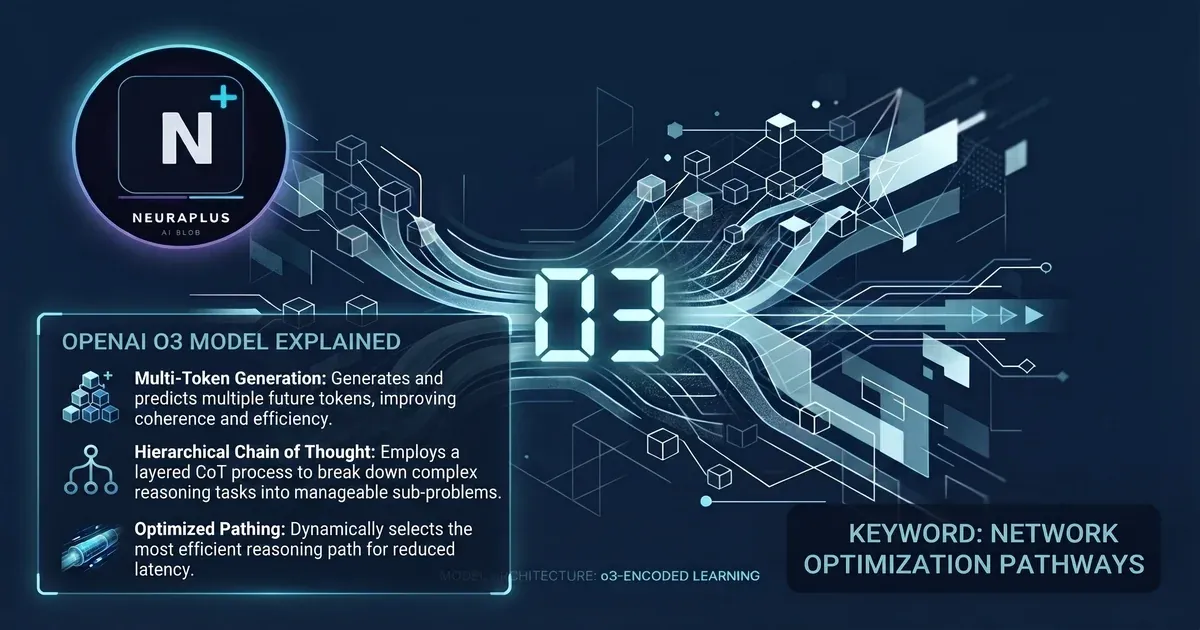

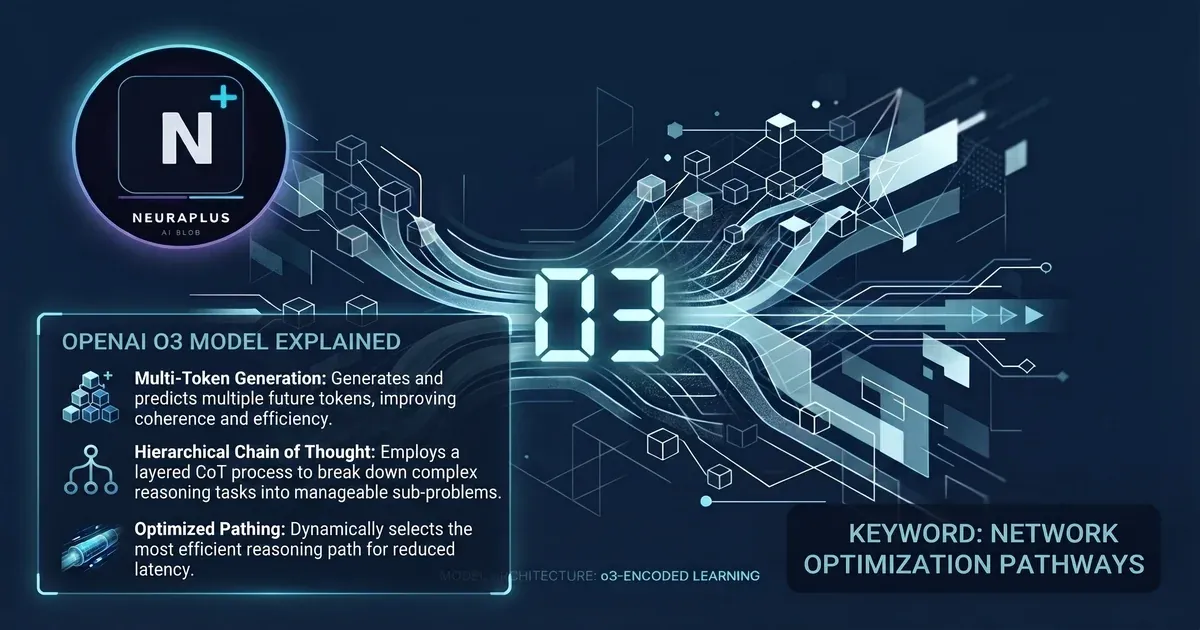
Artificial intelligence is evolving rapidly, and one of the most significant advances is the emergence of reasoning-focused AI models. OpenAI's o3 model represents a major step forward by emphasizing deeper reasoning, structured problem-solving, and more reliable responses across complex tasks. Unlike traditional language models that primarily predict the next word, reasoning models are designed to analyze information, break down complicated problems, and produce more accurate answers.
In this guide, we'll explore what the OpenAI o3 model is, how it works, its key features, practical use cases, advantages, limitations, and why it represents the next frontier in AI reasoning.
What Is the OpenAI o3 Model?
The OpenAI o3 model is a reasoning-focused AI model designed to handle complex questions that require logic, analysis, planning, coding, mathematics, and multi-step decision-making. Instead of relying only on pattern recognition, it is optimized to evaluate information more carefully before generating a response.
This makes it particularly useful for tasks where accuracy and structured thinking are more important than simply producing fluent text.
Why Was the o3 Model Developed?
Earlier AI models became extremely good at conversation, writing, and summarization. However, they sometimes struggled with:
- Multi-step reasoning
- Complex mathematics
- Programming logic
- Scientific analysis
- Long-term planning
- Decision making
The o3 model addresses these challenges by improving its reasoning capabilities, enabling it to solve more difficult problems with greater consistency.
Key Features of OpenAI o3
Advanced Reasoning
The biggest strength of o3 is its ability to reason through problems step by step. This allows it to perform better on tasks that require logical thinking rather than simple text prediction.
Improved Coding Assistance
Developers can use o3 to:
- Debug code
- Explain algorithms
- Generate software solutions
- Optimize existing programs
- Review code quality
- Build automation scripts
Its reasoning abilities make it especially useful for software engineering workflows.
Better Mathematical Performance
The model performs well on:
- Algebra
- Calculus
- Statistics
- Probability
- Financial calculations
- Data analysis
Instead of relying on memorized answers, it works through mathematical problems more effectively.
Stronger Scientific Understanding
Researchers and students can use the model for:
- Scientific explanations
- Research summaries
- Data interpretation
- Experimental design
- Literature reviews
The reasoning improvements help produce more structured and coherent analyses.
Long Context Processing
The model can understand large documents, making it useful for:
- Legal contracts
- Research papers
- Technical documentation
- Business reports
- Academic articles
This enables users to ask detailed questions about lengthy content.
How Does OpenAI o3 Differ From Earlier Models?
Compared to previous generations, o3 places greater emphasis on reasoning quality.
Some notable improvements include:
- More reliable answers
- Better planning
- Stronger logical consistency
- Improved code generation
- More accurate mathematical reasoning
- Enhanced document understanding
- Better instruction following
Rather than focusing only on speed, it prioritizes thoughtful and well-structured responses.
Real-World Applications
The OpenAI o3 model can be used across many industries.
Software Development
Developers use it for:
- Code generation
- Debugging
- API development
- Documentation
- Refactoring
Education
Students and educators benefit from:
- Personalized tutoring
- Homework assistance
- Concept explanations
- Exam preparation
- Research support
Business
Companies can use o3 for:
- Strategic planning
- Market analysis
- Customer support
- Report generation
- Workflow automation
Healthcare
Potential applications include:
- Medical documentation
- Clinical research support
- Healthcare administration
- Knowledge management
AI should assist professionals rather than replace expert medical judgment.
Finance
Financial professionals can use reasoning models for:
- Risk analysis
- Financial forecasting
- Investment research
- Spreadsheet automation
- Report preparation
Benefits of OpenAI o3
Organizations adopting reasoning-focused AI can experience several advantages:
- Higher accuracy on complex tasks
- Better problem-solving
- Improved productivity
- Faster software development
- More reliable automation
- Better research assistance
- Stronger analytical capabilities
These benefits make reasoning models valuable across technical and professional domains.
Limitations
Despite its capabilities, the o3 model still has limitations.
Users should remember that AI can:
- Make mistakes
- Produce outdated information if not connected to current data
- Misinterpret ambiguous prompts
- Require human verification for critical decisions
For legal, financial, or medical matters, expert review remains essential.
Best Practices for Using OpenAI o3
To get the best results:
- Write clear prompts.
- Provide relevant context.
- Break large tasks into smaller steps.
- Verify important information.
- Ask follow-up questions for clarification.
- Use structured prompts for complex projects.
Good prompting often leads to significantly better outputs.
The Future of AI Reasoning
Reasoning-focused AI models represent an important shift in artificial intelligence. Future developments are expected to include:
- Better long-term planning
- Stronger scientific reasoning
- Improved autonomous workflows
- More reliable coding assistance
- Enhanced multimodal understanding
- Greater collaboration between humans and AI
As reasoning models continue to improve, they are likely to become essential tools for professionals across industries.
Final Thoughts
The OpenAI o3 model marks an important milestone in the evolution of artificial intelligence. By emphasizing reasoning, logic, and structured problem-solving, it goes beyond traditional text generation to tackle complex real-world challenges more effectively. Whether you're a developer, researcher, student, or business professional, o3 can help streamline workflows, improve decision-making, and enhance productivity.
While no AI system is perfect, reasoning-focused models like OpenAI o3 demonstrate how AI is moving toward more thoughtful, reliable, and capable assistance. Understanding these advancements will help individuals and organizations make the most of the next generation of AI technology.

























Sign in to leave a comment.