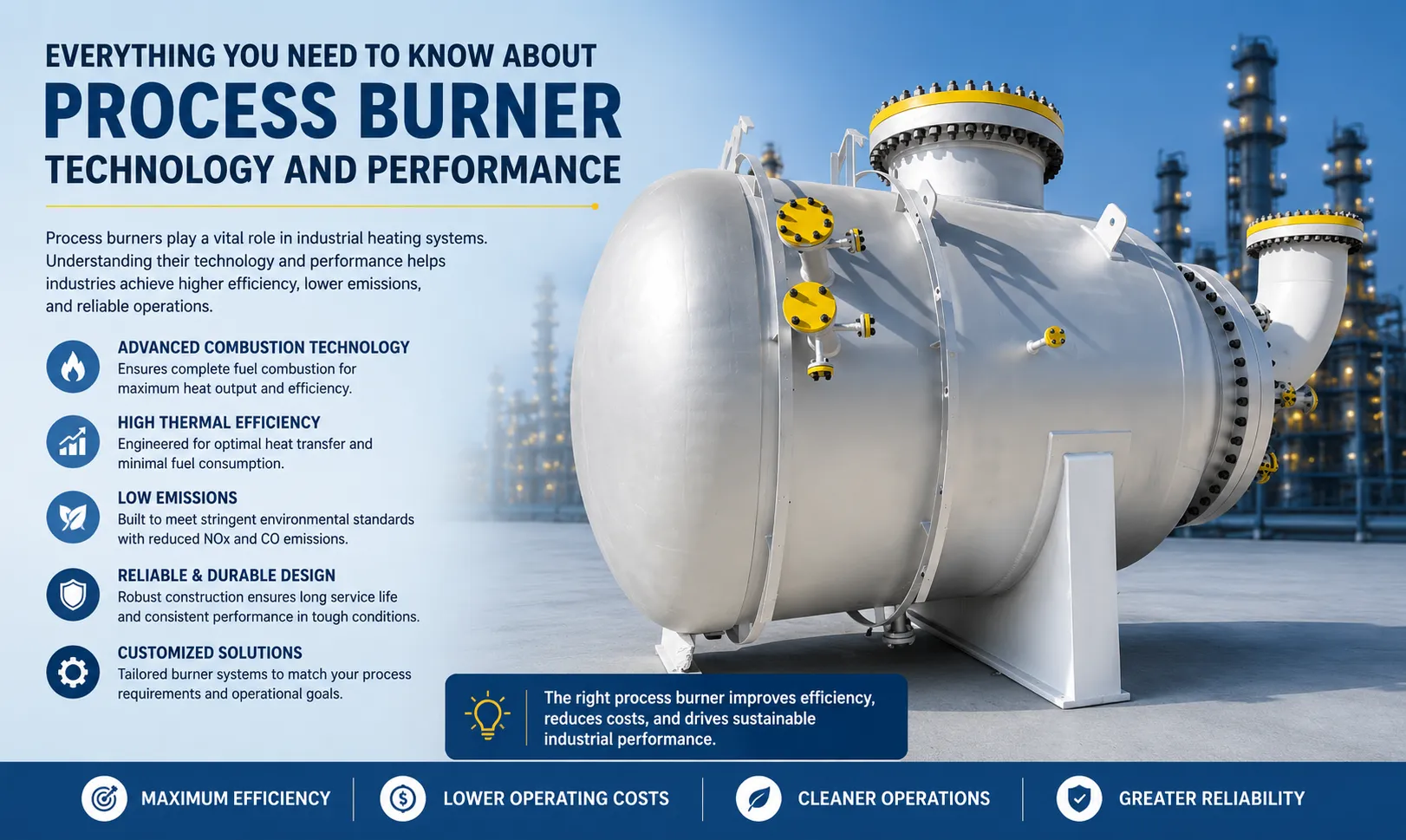
Industrial heating systems are at the heart of manufacturing, power generation, refineries, chemical plants, and process industries. A process burner is one of the most important components in these systems because it converts fuel into controlled heat with high efficiency and safe operation. Selecting the right burner not only improves combustion performance but also reduces fuel consumption, lowers emissions, and extends equipment life.
Whether you're designing a new heating system or upgrading an existing one, understanding how process burners work can help you make better engineering and procurement decisions. This guide explains the fundamentals, common burner types, selection factors, and practical tips for improving combustion efficiency.
What Is a Process Burner
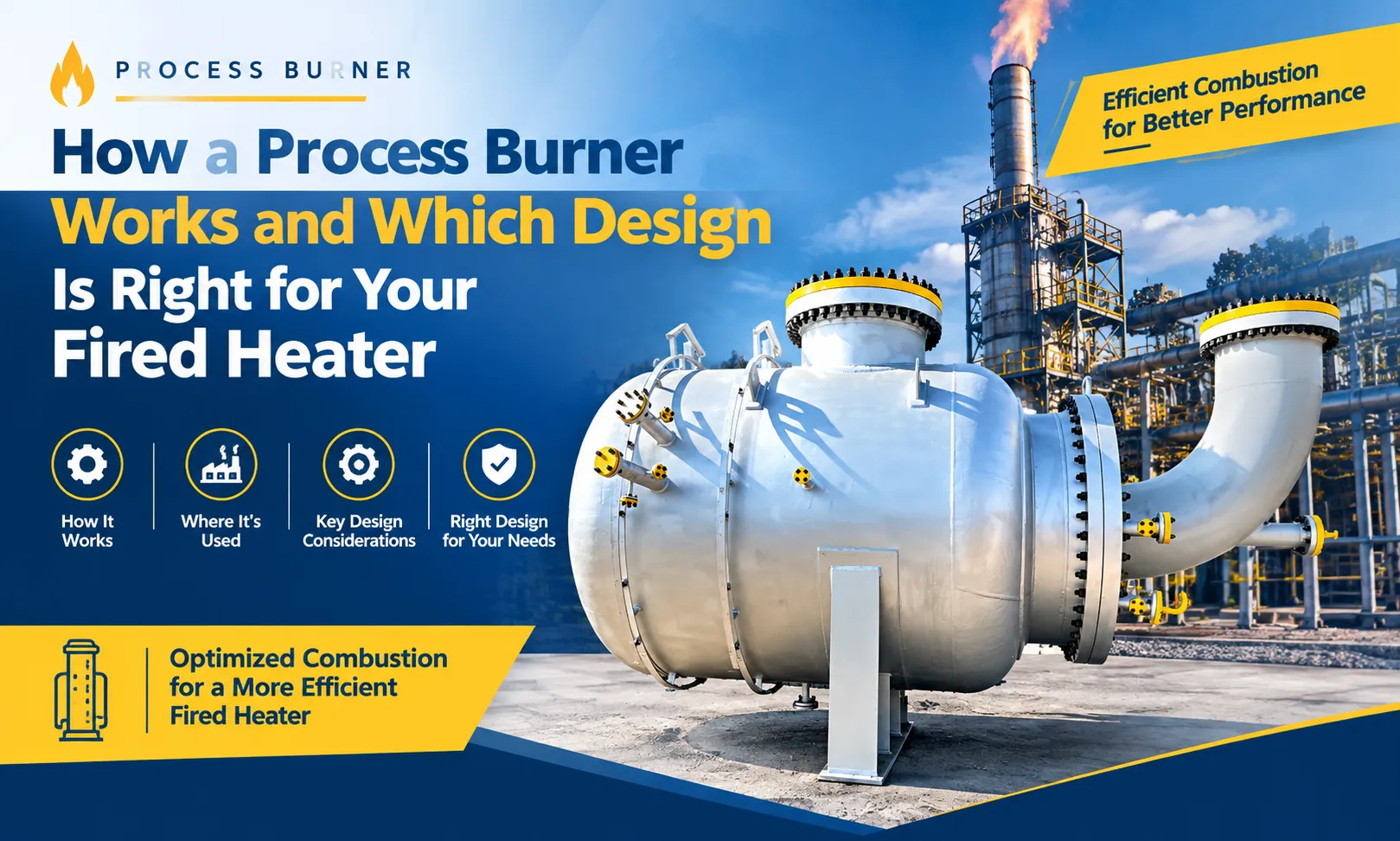
A process burner is an industrial combustion device designed to generate controlled heat for process equipment such as fired heaters, furnaces, boilers, kilns, thermal oxidizers, and reactors. It combines fuel and air in the correct ratio to create a stable flame that transfers heat efficiently to the process.
Modern burners are engineered to deliver consistent performance while meeting increasingly strict environmental regulations. Advanced combustion technology also allows industries to reduce emissions without sacrificing thermal efficiency.
Why Choosing the Right Burner Matters
A properly selected burner provides several long-term benefits.
- Higher fuel efficiency
- Lower operating costs
- Reduced NOx and CO emissions
- Stable flame under varying loads
- Improved process reliability
- Better equipment lifespan
- Enhanced workplace safety
Even a small improvement in combustion efficiency can result in significant annual fuel savings for large industrial facilities.
Common Types of Process Burners
Different industrial applications require different burner designs. Understanding these options helps match the burner to the process requirements.
| Burner Type | Best Application | Main Advantage |
|---|---|---|
| Gas Burner | Refineries, boilers, furnaces | Clean combustion and high efficiency |
| Oil Burner for Process Heating | Heavy industries and backup fuel systems | Reliable operation with liquid fuels |
| Dual Fuel Burner | Plants requiring fuel flexibility | Can switch between gas and oil |
| Hydrogen Ready Process Burner | Future ready industrial facilities | Supports low carbon fuel transition |
| Flameless Process Burner | High temperature industrial furnaces | Extremely low NOx emissions and uniform heating |
Each design is optimized for specific combustion characteristics, fuel availability, and emission requirements.
Understanding Combustion Performance
Efficient combustion occurs when fuel and air mix in the correct proportion and burn completely. Poor combustion can lead to excessive fuel use, unstable flames, soot formation, and increased emissions.
Several factors influence burner performance, including fuel quality, combustion air supply, furnace pressure, flame stability, burner design, and operating conditions. Regular maintenance and tuning help maintain peak efficiency throughout the equipment's life.
How Low Emission Burners Improve Performance
Environmental regulations continue to become more stringent across industries. Modern burners use advanced combustion techniques to minimize emissions while maintaining excellent thermal performance.
Common emission reduction technologies include:
- Staged combustion
- Internal flue gas recirculation
- Lean combustion
- Premixed combustion
- Optimized flame shaping
These technologies reduce peak flame temperatures, helping lower NOx formation without significantly affecting efficiency.
Applications Across Industries
Process burners are used in a wide range of industrial heating applications.
- Refineries
- Petrochemical plants
- Fertilizer manufacturing
- Steel production
- Cement plants
- Pharmaceutical processing
- Food manufacturing
- Thermal oxidizers
- Industrial boilers
- Heat treatment furnaces
A process burner for heat exchanger systems is also used in indirect heating applications where precise temperature control and energy efficiency are essential.
Importance of Process Burner Combustion Testing
Performance should never be assumed after installation. Process burner combustion testing verifies whether the burner operates within the designed efficiency and emission limits.
Testing typically measures:
- Oxygen level
- Carbon monoxide
- Nitrogen oxides
- Flue gas temperature
- Excess air
- Combustion efficiency
- Flame stability
Periodic combustion testing helps identify performance issues before they become expensive maintenance problems.
Factors to Consider Before Selecting a Burner
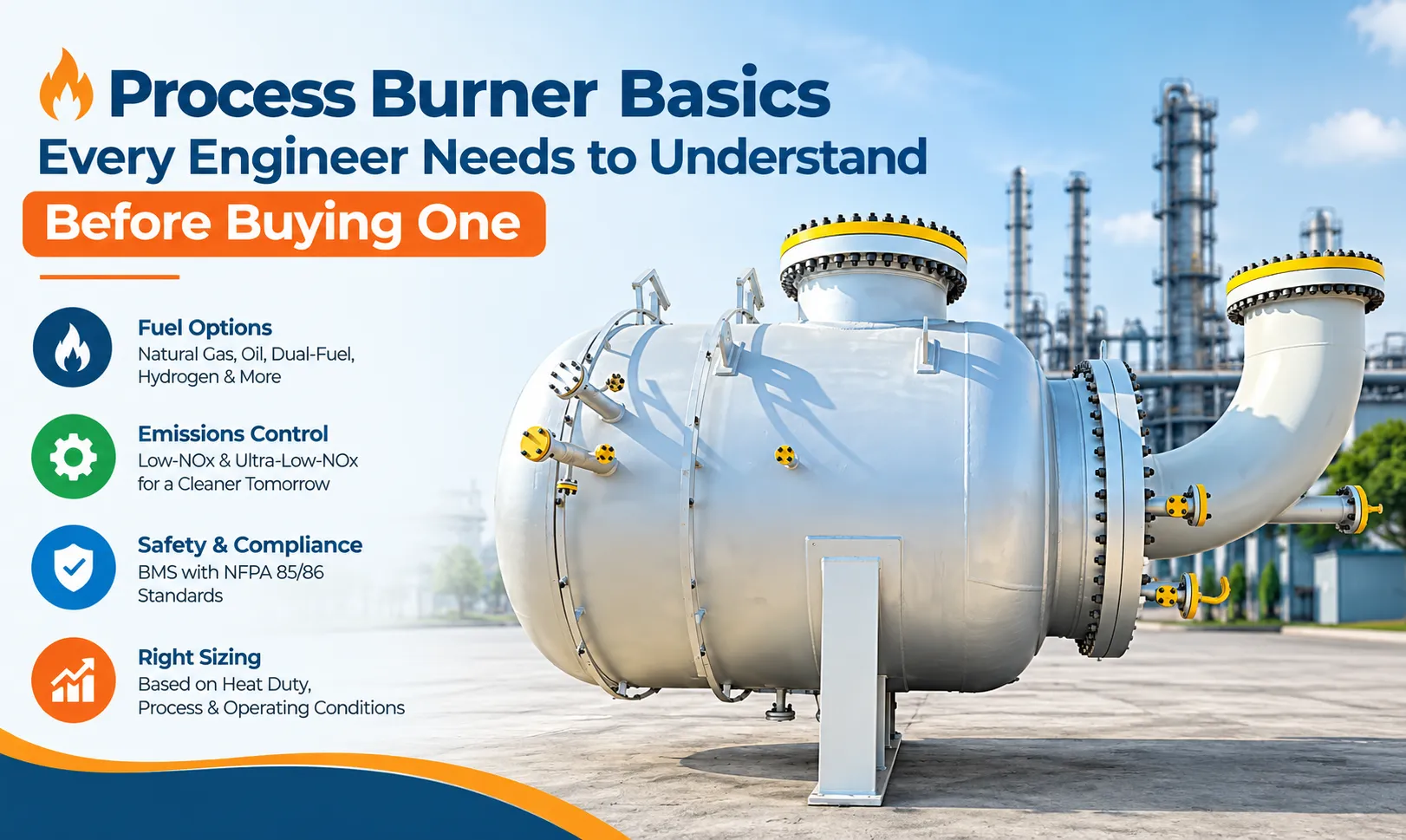
Every industrial heating application has unique operating requirements. Before purchasing a burner, engineers should evaluate several important factors.
- Required heat duty
- Fuel availability
- Furnace dimensions
- Emission regulations
- Turndown ratio
- Control system compatibility
- Maintenance accessibility
- Future hydrogen compatibility
Considering these factors early helps avoid costly redesigns and operational challenges later.
Industry Tips for Better Combustion Efficiency
Improving burner performance does not always require replacing equipment. Small operational improvements can deliver measurable energy savings.
Practical tips include:
- Schedule regular burner inspections.
- Monitor combustion efficiency with flue gas analyzers.
- Clean burner nozzles and air registers periodically.
- Verify fuel pressure and combustion air settings.
- Calibrate flame monitoring devices.
- Check refractory conditions during shutdowns.
- Upgrade to low NOx burners where regulations require.
- Evaluate hydrogen compatibility when planning future investments.
These simple practices improve reliability while reducing operating costs over time.
Working with the Right Manufacturer
Choosing a reliable process burner manufacturer is just as important as selecting the burner itself. Experienced manufacturers provide engineering support, combustion calculations, burner sizing, installation guidance, commissioning assistance, and long-term technical support.
Similarly, trusted process burner suppliers help industries source certified equipment that complies with applicable safety and performance standards. Reliable suppliers also assist with spare parts, maintenance services, and future upgrades, ensuring consistent performance throughout the burner's lifecycle.
The Future of Industrial Burner Technology
Industrial combustion technology is evolving rapidly. Digital monitoring, predictive maintenance, smart combustion controls, artificial intelligence, and hydrogen-compatible systems are becoming standard features in modern installations.
Industries are increasingly investing in cleaner combustion technologies to reduce operating costs and meet sustainability goals. As hydrogen adoption grows, the demand for hydrogen ready process burner solutions is expected to increase significantly over the coming years.
At the same time, advanced combustion methods such as the flameless process burner are gaining popularity because they deliver extremely low emissions, improved temperature uniformity, and higher thermal efficiency for high-temperature industrial processes.
Final Thoughts
A well-designed process burner is more than just a heat source. It directly influences energy efficiency, production reliability, emissions compliance, and plant safety. Understanding burner technology, combustion principles, and proper selection criteria enables industries to maximize performance while reducing long-term operating costs.
Whether your application requires a conventional gas burner, an oil burner for process heating, a dual-fuel solution, a process burner for heat exchanger, or the latest hydrogen-ready technology, investing in the right equipment and regular combustion optimization will deliver measurable benefits for years to come. By partnering with experienced manufacturers and conducting routine process burner combustion testing, facilities can achieve safer operations, improved efficiency, and greater confidence in every heating application.
















Sign in to leave a comment.