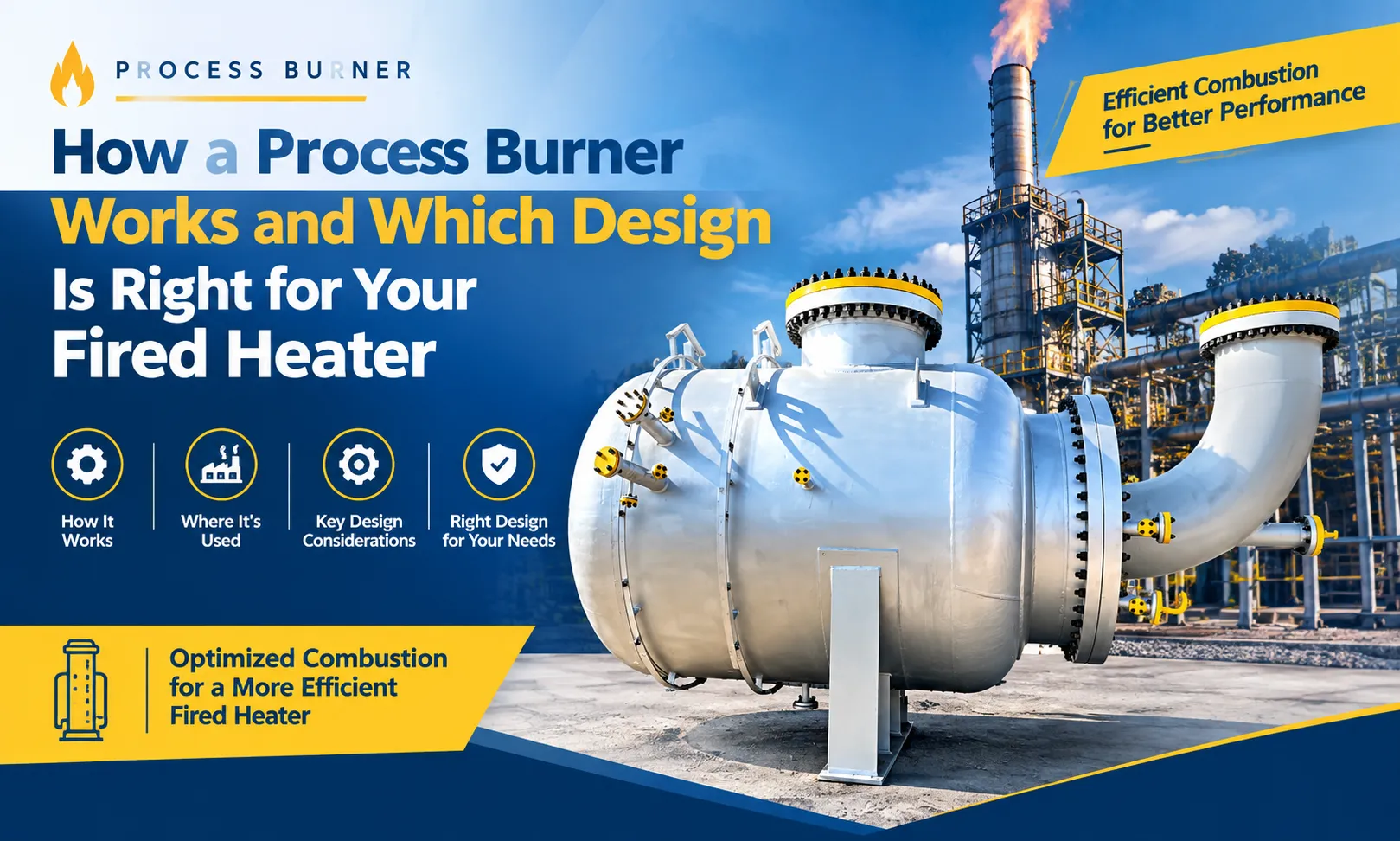

A process burner is the heart of every fired heater. It mixes fuel and air, holds a stable flame, and delivers the heat your process needs around the clock.
Choosing the wrong design can lead to tube overheating, high fuel costs, and emission problems. This guide explains how burners work and how to match one to your heater.
How a Process Burner Works
Every process burner follows the same sequence. Fuel and air are delivered, mixed, ignited, and monitored.
- Fuel supply. Natural gas, refinery fuel gas, or oil passes through a fuel train with regulators and shutoff valves.
- Air supply. Air enters by natural draft or through a forced draft fan.
- Mixing and ignition. A pilot lights the main flame, and a scanner proves it.
- Heat transfer. The flame heats the radiant section, then flue gas moves through the convection section.
- Control. Instruments adjust the firing rate to hold the target process temperature.
Too little air creates CO and unburned fuel. Too much air sends heat up the stack and wastes money. Mixing quality also shapes the flame and drives NOx formation.
Where an Industrial Process Burner Is Used
An industrial process burner supports any direct fired heating duty. Common applications include:
- Refinery crude and vacuum heaters
- Petrochemical cracking furnaces and reformers
- Chemical plant heaters and reboilers
- Boilers, dryers, and calciners
- Thermal oxidizers and metal processing furnaces
Process Burner Types and Design Options
| Classification | Options | Typical fit |
|---|---|---|
| Draft | Natural, forced, balanced | Natural draft for simple heaters, forced draft where air control matters |
| Flame pattern | Flat, round | Flat for wide radiant coverage, round for narrow furnaces |
| Orientation | Upfired, downfired, sidefired | Match furnace geometry and tube layout |
| Fuel | Gas, oil, dual fuel, hydrogen blend | Match fuel supply and future plans |
Flame shape deserves attention. A long or poorly aimed flame can strike tubes or refractory, causing hot spots, coking, and shorter tube life.
Low NOx Burner Technology
Low NOx designs lower peak flame temperature. Common methods include air staging, fuel staging, flue gas recirculation, and lean premix.
Do not select on the emission number alone. Check turndown, flame length, fuel variability, and maintenance access as well.
Process Burner Sizing Basics
Process burner sizing starts with heat duty. Define maximum, normal, and minimum firing rates, including start up and upset conditions.
An oversized burner struggles at low fire, while an undersized one cannot meet demand. Turndown matters too. A burner firing from 10 MW down to 1 MW has a 10:1 turndown ratio.
Gather these inputs before requesting data from suppliers:
- Heat release per burner and number of burners
- Fuel composition, heating value, and supply pressure
- Furnace dimensions, clearances, and allowable flame length
- Radiant heat flux limits and tube layout
- Emission limits and available draft
How to Choose the Best Process Burner
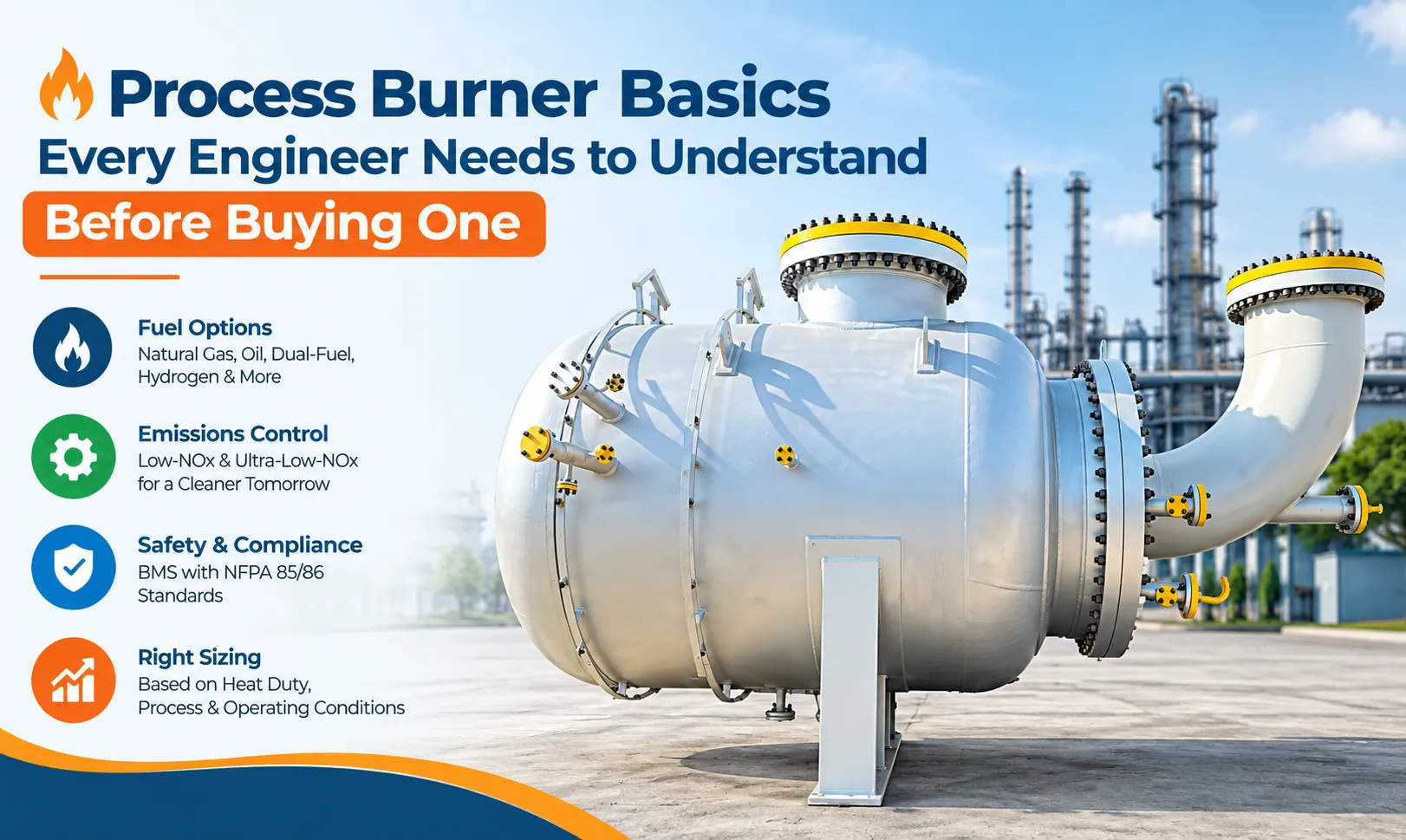
The best process burner is not the biggest or the cheapest. It is the one engineered for your heater, fuel, and compliance targets. Use this checklist.
- Confirm operating data for all loads and fuels.
- Request guarantees for NOx, CO, and flame length.
- Review burner management, purge logic, and flame detection.
- Ask for references in similar service.
- Plan for fuel switching or hydrogen blends.
Hydrogen changes flame speed and NOx behavior, so conversions need review by qualified specialists.
Working With a Process Burner Manufacturer
A reliable process burner manufacturer provides test furnace data, field references, and commissioning support. Flame modeling is valuable for complex furnace geometry.
When you request an industrial process burner quote, send a complete datasheet so pricing reflects real conditions. Compare offers on guarantees, spare parts, and lifecycle cost, not price alone.
| Quote request item | Why it matters |
|---|---|
| Heat duty range | Sets burner size and turndown |
| Fuel analysis | Affects flame stability and emissions |
| Furnace drawings | Confirms spacing and flame length |
| Emission limits | Determines low NOx technology |
| Controls scope | Defines safety and ignition hardware |
Process Burner Maintenance Tips
Consistent process burner maintenance protects efficiency and safety. Build these steps into your routine.
- Inspect tips and tiles for coking, erosion, and cracks
- Clean air registers and pilot assemblies
- Test flame scanners and interlocks on schedule
- Calibrate oxygen analyzers and fuel pressure instruments
- Watch the flame for impingement or instability
- Record settings and trends after every adjustment
Never change safety interlocks or burner settings without authorized engineering review.
Common Mistakes to Avoid
- Selecting on price without checking turndown or flame length
- Ignoring fuel variability in refinery gas
- Running high excess air to hide poor mixing
- Skipping scanner and interlock tests
- Adding burners or changing fuel without recalculating heat flux
Key Takeaways
- Match the burner to heater geometry, fuel, and duty, not just capacity.
- Complete data leads to accurate sizing and a useful quote.
- Compare suppliers on guarantees and support.
- Maintain and tune regularly to hold efficiency.
- Treat safety systems as part of the design.
Frequently Asked Questions
1. What is the difference between a process burner and a boiler burner?
A process burner heats a process stream or furnace directly, while a boiler burner mainly produces steam or hot water. Heater geometry and controls also differ.
2. How often should maintenance be done?
Follow the manufacturer schedule, with visual checks during operation and detailed inspections at shutdowns.
Conclusion
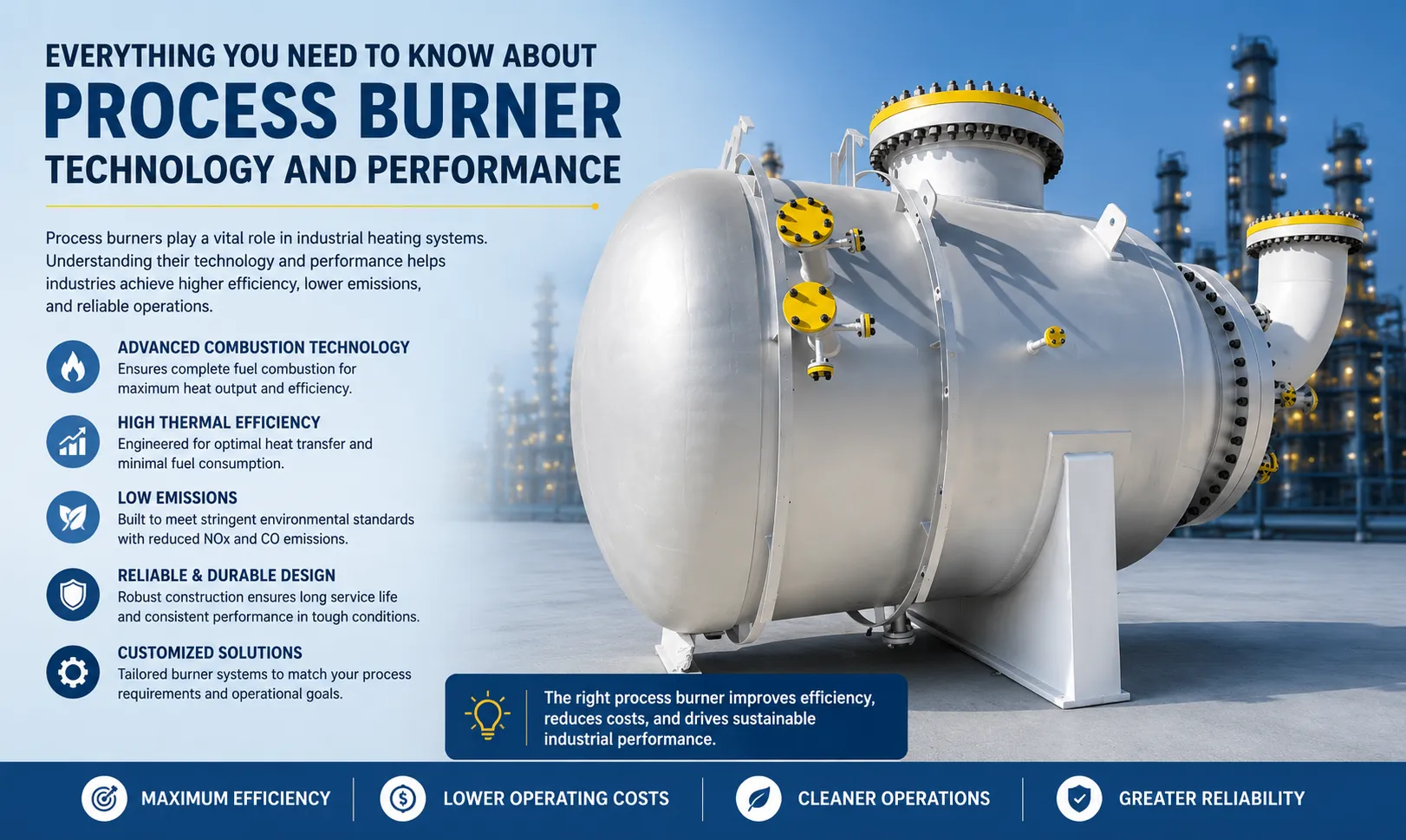
A well chosen process burner improves fuel efficiency, protects tubes, and keeps emissions in check. Start with accurate data, sound sizing, and a capable manufacturer, then maintain it carefully. Have your final design reviewed by qualified combustion engineers before purchase.














Sign in to leave a comment.